Posts Tagged ‘vitamin d insomnia’
Greetings to you,
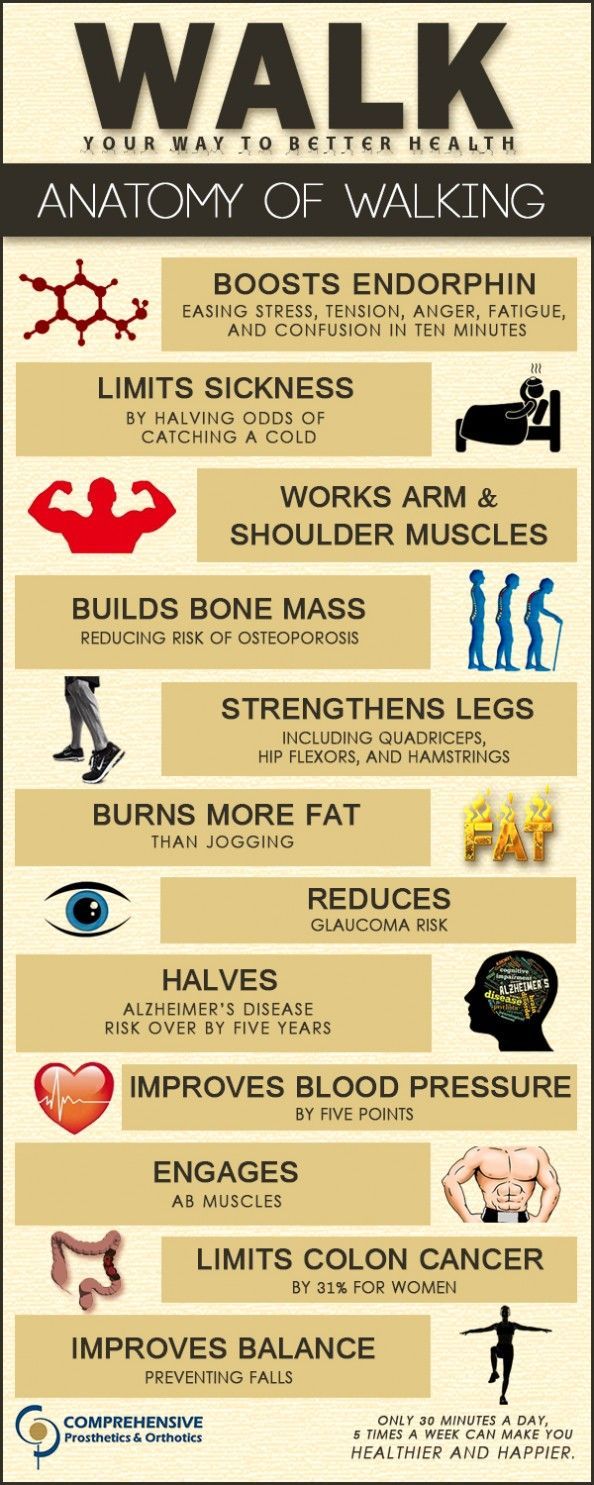
I’ve included an intriguing chart below that contains the top 12 health benefits of walking. Take a look at the chart below to see some of the amazing boosts one can obtain. Go out and walk and have some fun.
Walking can help increase “endorphins”, which are protein-like chemicals made in the brain that can have a relaxing effect, a pain-relieving effect, and can also reduce stress and increase well-being.
Regarding sounder, deeper sleep resulting from walking, studies at the University of Arizona have found that walking more than six blocks a day at a normal pace significantly improves sleep at night for women. Scientists suspect that walking helps to set our biological clock into a consistent wake/sleep pattern.
This health news is provided by Nutrition Breakthroughs, maker of the effective natural insomnia remedy with calcium and magnesium: Sleep Minerals II, and the natural solution for arthritis, joint relief, pain relief and more energy, Joints and More.
Best of health,
Jobee Knight
Nutrition Breakthroughs
Provided by www.NutritionBreakthroughs.com
According to the National Sleep Foundation (NSF), almost six out of ten Americans report having insomnia and sleep problems at least a few nights a week. Insomnia is defined as “An inability to fall asleep or remain asleep long enough to feel rested, especially when the problem continues over time.” In an effort to combat this, as many as 25 percent of the people in the United States use medications to help them sleep.
Most sleeping pills can have multiple side effects, staying in the bloodstream and giving a hangover effect the next day and beyond. They tend to be addictive, can increase the risk of car and work accidents and may impair one’s memory and performance on the job and at home.
Sleep Minerals II is the original drug-free calcium and magnesium based sleep aid. The minerals are uniquely formulated in a softgel with natural oils, making them highly absorbable. The product soothes insomnia and helps everyone from older adults, to teenagers, to women with menopause symptoms, to get a good night’s sleep. It also calms restless leg syndrome.
James F. Balch, M.D., author of “Prescription for Nutritional Healing,” writes: “A lack of the nutrients calcium and magnesium will cause you to wake up after a few hours and not be able to return to sleep.”
Alex R. of Ramseur, North Carolina shares his review and says: “Sleep Minerals II has been a blessing for me. It has given me the opportunity to withdraw from a highly addictive sleep medication over time, and has allowed me to sleep while going through this most difficult ordeal. What’s great about it is it doesn’t lose its effectiveness, which is something that happens with medications. I am most thankful for this product.”
Chris M. of the United Kingdom says: “I take one softgel of Sleep Minerals II before bed every night and within 20 minutes I am asleep. The difference in the quality of my sleep and the ease with which I get to sleep using this product is monumental. I have stopped obsessing about sleep or dreading bedtime — I just take a softgel and drift off. If I stop taking them, within a week my sleep starts to lighten in quality, the amount of my sleep diminishes, and my old insomniac patterns reappear.”
Richard P. of Parkville, Maryland says: “The Sleep Minerals are making quite a difference. I was regularly waking at around 3:00 a.m. and after a few days use my sleep improved quite a lot. I wake once a night to go to the bathroom, but the great thing is; I then fall back asleep and sleep several more hours. This has been a great improvement.”
Sadie D. from The Netherlands says: “I am ever so grateful that I discovered Sleep Minerals II after suffering with premenopause and now the real menopausal insomnia. I felt like I was slowly losing my mind due to the continual lack of sleep. I can’t express the relief of getting a good night’s sleep and being able to function properly.”
For more information on Sleep Minerals II, visit this information page.
Jill C. of Ellensburg, Washington says: “My husband has been struggling with restless leg syndrome (RLS) his whole life. Coming back from a deployment in Iraq five years ago made his RLS become magnificently worse, creating nightly insomnia. He couldn’t sleep more than three to five hours unless taking an addictive prescribed narcotic, which he became tolerant to and the insomnia came back with no answers. Now he’s been taking Sleep Minerals II for a week and every night has had a great night’s sleep. We are thrilled.”
Tammy M. of Meridian, Idaho says: “I was plagued with insomnia for five years and desperate for a breakthrough. Nothing has helped me more than the Sleep Minerals — I’m so sold on them I could go door to door promoting them. I’m 60 years old and have never slept so soundly. Thank you for making sleep a reality for so many people.”
This news is provided by http://www.NutritionBreakthroughs. Since 2001 Nutrition Breakthroughs has provided natural health articles and effective natural remedies. Their mission is to provide nutritional supplements that get results and help people to avoid drugs and their side effects.
For more information on Sleep Minerals II, visit this information page.
 Magnesium is an essential mineral for staying healthy and is required for more than 300 biochemical reactions in the body. Multiple health benefits of magnesium include transmission of nerve impulses, body temperature regulation, detoxification, energy production, and the formation of healthy bones and teeth.
Health specialists have always emphasized the importance of including adequate amounts of vitamins and minerals in our daily diet. Zinc, calcium, and magnesium are three of the most important minerals essential for good health. Magnesium aids in the absorption of calcium by the body, while zinc actively supports the body’s immune system.
Women of all ages benefit immensely from the intake of magnesium. Besides keeping osteoporosis at bay, magnesium health benefits in women include relief from symptoms of menopause and premenstrual syndrome (PMS). It also minimizes the risk of premature labor.
The other crucial health benefits of magnesium include protein synthesis, relief from bronchospasm (constricted airways) in the lungs, and improvement of parathyroid function. It boosts the bio-availability of vitamin B6 and cholesterol, improves muscle functioning, and prevents osteoporosis, insomnia, constipation, heart attacks, hypertension, constipation, migraines, kidney stones, and gallstones.
Good dietary sources of magnesium include nuts (especially almonds), whole grains, wheat germ, fish, and green leafy vegetables. As with most nutrients, daily needs for magnesium cannot be met from food alone which is why magnesium dietary supplements are recommended as well.
The top five health benefits of magnesium are:
Magnesium may reverse osteoporosis
Multiple research studies conducted have suggested that calcium supplemented with magnesium improves bone mineral density. Magnesium deficiency alters calcium metabolism and the hormones that regulate calcium, resulting in osteoporosis. Intake of recommended levels of magnesium is important because it averts osteoporosis.
Magnesium prevents cardiovascular diseases
One of the most important benefits of magnesium is that it is associated with lowering the risk of coronary heart diseases. Dietary surveys have suggested that sufficient magnesium intake may reduce the chance of having a stroke. Magnesium deficiency increases the risk of abnormal heart rhythms, which increases the risk of complications after a heart attack. Therefore, consuming recommended amounts of magnesium dietary supplements may be beneficial to the cardiovascular system.
Magnesium regulates high blood pressure
Magnesium plays a key role in regulating blood pressure naturally. Magnesium supplements and a diet including plenty of fruits and vegetables, which are good sources of potassium and magnesium, are consistently associated with lowering blood pressure.
Magnesium treats diabetes
Studies show that individuals with a magnesium deficiency have a risk of developing type-2 diabetes and severe diabetic retinopathy. Magnesium aids in carbohydrate metabolism and influences the release and activity of insulin, thereby controlling blood glucose levels. It has been proven that for every 100 milligrams of increase in magnesium daily intake, there was a 15 percent decrease in the risk of developing type-2 diabetes.
Magnesium treats migraines, insomnia and depression
The numerous magnesium health benefits also include the treatment of migraines, insomnia, and symptoms of depression. Magnesium is also known to cure panic attacks, stress, anxiety, and undue agitations. Magnesium supplements considerably reduce the severity of such attacks and may also help in reducing the rate of recurrence.
Because magnesium is so essential to energy production, common symptoms of magnesium depletion include fatigue, along with headaches, insomnia, and muscle pain, cramps, and spasms.
A note from the blog author: Taking a daily magnesium supplement is a great help that supports many areas of our health and using it before bed is a great help for better, deeper sleep.
***********************************************************************
This news is brought to you by Nutrition Breakthroughs, maker of the effective natural sleep aid Sleep Minerals II. Sleep Minerals II contains highly absorbable forms of magnesium and calcium, along with vitamin D and zinc.
Article by Dr. Carolyn Dean, courtesy of NewsMaxHealth – http://www.newsmaxhealth.com/mktnews/magnesium-health-benefits-of-magnesium-supplements/2014/08/27/id/591254/
Greetings to you,
I’ve included an interesting chart below on how to use cinnamon sticks in beverages, foods and cereals. Cinnamon is supported by several research studies showing its many health benefits.
Studies from the University of Toronto and Ball State University in Indiana have confirmed that consuming cinnamon can significantly reduce blood pressure (with 1,200 milligrams per day) as well as blood sugar levels (by adding cinnamon to the morning cereal). Cinnamon can also help heart health by lowering cholesterol.
Interestingly, a recent study in an anti-aging medical journal showed that cinnamon acts as an antioxidant (a substance that prevents harmful effects of oxygen in the body) and it effectively reduces age-related inflammation. Inflammation is known to be a contributing cause in arthritis, heart disease, diabetes and other illness.
To your good health,
Jobee Knight
Nutrition Breakthroughs
Maker of Sleep Minerals II and Joints and More
Toll Free: 888-861-0326

Brought to you by www.NutritionBreakthroughs.com
Studies Show Taking Calcium May Deplete Zinc – Both Minerals Help Insomnia
Posted on: January 6, 2015
Consuming extra calcium from dairy products or supplements could put older women at risk of low zinc — unless they get extra zinc, too. That’s the word from two studies at the U.S. Dept of Agriculture, Human Nutrition Research Center in Boston.
Zinc’s many functions include helping to maintain a healthy immune system, skin and appetite.
Calcium supplement sales have soared with the growing awareness that high intakes of this mineral help prevent osteoporosis. Richard J. Wood and associates looked for a zinc-calcium interaction in elderly women because, as a group, they tend to have low zinc intakes.
About half of U.S. women consume less than two-thirds the Recommended Dietary Allowance of 12 mg, according to survey data. And the amount of zinc people absorb from their meals decreases with age.
In one of the new studies, 18 relatively healthy women past menopause increased calcium intake to 1,360 milligrams daily — a little higher than the 1,200 mg now recommended for people over age 50. Their zinc absorption dropped by an average of about 2 milligrams. This happened regardless of whether they got the extra calcium from milk or from a calcium supplement. The study lasted 36 days.
In a second study, zinc absorption dropped by half when a group of 10 men and women took a calcium supplement with a single test meal. But adding nearly 8 milligrams of zinc to the calcium supplement offset this effect.
This data points in the direction that people taking extra calcium should also increase their zinc intake. The richest dietary sources of zinc are oysters, liver and beef, followed by whole grains, nuts, popcorn, poultry and lamb. Zinc supplements are also widely available.
Comments from the blog author Nutrition Breakthroughs: Calcium is directly related to our cycles of sleep. In one study, published in the European Neurology Journal, researchers found that calcium levels in the body are higher during some of the deepest levels of sleep, such as the rapid eye movement (REM) phase.
The study concluded that disturbances in sleep, especially the absence of REM deep sleep or disturbed REM sleep, are related to a calcium deficiency. According to Lawrence Wilson, MD zinc is also considered a “sedative mineral” due to its effect on the central nervous system. It can help reduce excessive brain activity. This makes zinc, along with calcium and magnesium, one of the best insomnia remedies.
This news is provided by Nutrition Breakthroughs. Since 2001 Nutrition Breakthroughs has provided natural health articles and effective natural remedies. Their mission is to provide nutritional supplements that get results and help people to avoid drugs and their side effects.
Since 2009, their natural sleep remedy Sleep Minerals II has been keeping that promise — by soothing even the worst insomnia with absorbable calcium, magnesium, vitamin D and zinc, and helping everyone from teenagers, to women with menopause symptoms, to those with restless leg syndrome, to get a good night’s sleep.
Kimberly B. of Troy Michigan says: “I have been taking Sleep Minerals II for about a month now. I have tried everything out there and this supplement is amazing. I have suffered with insomnia for two and a half years and have had restless leg syndrome my entire life. This is the first relief I’ve ever had…it’s gone for a month now.”
For more information on Sleep Minerals II, visit here.
Article Source: http://www.ars.usda.gov/is/pr/1998/980120.htm#
 Article Courtesy of WorldHealth .net
Carotenoids, the colorful plant pigments which can turn into Vitamin A in the body, are powerful antioxidants that can help prevent heart disease and also enhance immune response to infections.
Previous research suggests that people who consume diets rich in carotenoids may have less chronic diseases. Food sources of carotenoids include carrots, sweet potatoes, spinach, kale, collard greens, papaya, bell peppers, and tomatoes.
Researchers from the National University of Singapore analyzed data collected from 63,257 men and women enrolled in the Singapore Chinese Health Study. The team identified a total of 1,630 incident hip fractures during the study. Analysis revealed that in the men, hip fracture risk decreased with increasing intakes of total vegetables and of total carotenoids – particularly beta carotene, found in carrots and dark leafy vegetables.
As well, in that a low body mass index (a measure of body fat) was found to be a strong risk factor for hip fracture risk among the male subjects, the researchers observed that the protective effect of carotenoid consumption was higher in lean men than in men with higher body fat.
This news is brought to you by Nutrition Breakthroughs, providing natural health articles and effective natural remedies since 2001. Their mission is to provide nutritional supplements that get results, and therefore help people to avoid drugs and their side effects.
Since 2009, their natural sleep aid Sleep Minerals II has been keeping that promise – by providing highly absorbable forms of calcium and magnesium that soothe even the worst insomnia and help everyone from teenagers, to women with menopause symptoms, to seniors, to get a good night’s sleep.
Their newest product Joints and More, contains ingredients that provide natural joint relief, increased energy, better hair growth, allergy and asthma relief, and more.
For more information on Sleep Minerals II, visit http://www.NutritionBreakthroughs.com/html/sleep_remedy_for_insomnia_help.html
For more information on Joints and More visit
http://www.nutritionbreakthroughs.com/html/joints_and_more_natural_relief.html
Article Source: http://www.nutraingredients-usa.com/Research/Carotenoids-may-reduce-hip-fracture-risk-in-lean-men-say-researchers/
 (From NaturalNews) For better sleep, the body needs healthy foods and nutrients. Many nutrients are known to have a calming effect on the nervous system and help promote good sleep. Whole foods contain many of these natural insomnia cures, but supplements are also available to ensure that you obtain the proper dietary amounts.
Calcium
Nature’s tranquilizer. Some feel that calcium is best absorbed in the evening, suggesting that the folk medicine suggestion of a glass of milk before bedtime might be a good idea. Natural forms of calcium are dairy foods as well as green vegetables and sesame. A spoon of sesame seeds has ten times the calcium as a similar amount of milk. Spinach is also high in calcium. Take 1000 milligrams of calcium daily.
Magnesium
Needed to absorb calcium. Many calcium supplements also contain magnesium. Epsom salts are made of magnesium and an Epsom salt bath is one way to absorb magnesium. Magnesium is a muscle relaxant as well as important for balancing blood sugar and blood pressure. Natural sources of magnesium are halibut, peanuts, whole grains, spinach, bananas, avocadoes, and nuts and seeds. Diabetes and those on diuretics need to insure proper intake of magnesium, as much magnesium is lost through urine. Symptoms of deficiency are muscle spasms, nausea and loss of appetite.
Vitamin D
Another nutrient needed to support calcium uptake in the body. Milk products are regularly fortified with vitamin D. Research has shown that it is difficult to obtain enough vitamin D from exposure to the sun, especially in winter months, or north of New York or San Francisco, so supplementation is advised.
L-theanine
One of the ingredients of green tea. This amino acid is known to have calming properties. Research has shown theanine to calm the brain by producing alpha waves. Aside from its calming effects, theanine may also lower blood pressure.
5-HTP
The abbreviation for L-5-hydroxlytryptophan, which is a chemical byproduct of the amino acid L-Tryptophan. These nutrients are high in the protein contained in turkey and some say is responsible for the post-Thanksgiving sleepiness. Some have used tryptophan as a mood enhancer, as well, as it is known to help with serotonin mechanisms in the brain.
GABA is one of the brain’s neurotransmitters. The full name of this nutrient, which used to treat depression, is gamma-Aminobutyric acid. Its function is to regulate muscle tone and the excitability of nerves.
This health news is brought to you by http://NutritionBreakthroughs.com. Since 2009, their natural sleep remedy Sleep Minerals II (featuring highly absorbable calcium, magnesium and vitamin D) has been soothing even the worst insomnia and helping everyone from teenagers, to women with menopause symptoms, to (those with restless leg syndrome) seniors to get a good night’s sleep.
Richard P. of Parkville, Maryland says: “The Sleep Minerals are making quite a difference. I was regularly waking at around 3:00 a.m. and after a few days use my sleep improved quite a lot. I wake once a night to go to the bathroom, but the great thing is, I then fall back asleep and sleep several more hours. This has been a great improvement.”
For more information visit the Sleep Minerals II page.
via Vitamins Help You Sleep Better and Cure Insomnia – NaturalNews.com.
Greetings to you,
Included is an informative chart below with some practical “Do’s” and “Don’ts” for falling asleep and sleeping better. One suggestion is to avoid using electronics that have a back-lit screen within an hour before bedtime. This refers to texting, working on a computer or watching TV.
A recent study from the Journal of Applied Physiology found that the bright light of a computer screen may alter the body’s biological clock by suppressing the natural production of melatonin.
Two tips to add to the chart are to take walks and to use some absorbable calcium before bed. Studies at the University of Oklahoma Health Sciences Center have found that exercise improves sleep as effectively as sleeping drugs, but without the side effects.
Calcium is directly related to our cycles of sleep. In one study, published in the European Neurology Journal, researchers found that calcium levels in the body are higher during some of the deepest levels of sleep, such as the rapid eye movement (REM) phase. The study concluded that disturbances in sleep, especially the absence of REM deep sleep or disturbed REM sleep, are related to a calcium deficiency.
One sleep remedy becoming popular for those who wish to avoid sleeping drugs is Sleep Minerals II from Nutrition Breakthroughs. This sleep aid contains highly absorbable forms of calcium, magnesium and vitamin D. The ingredients are delivered in a softgel form with healthy carrier oils, making them more easily assimilated than capsules or tablets and providing a deeper, longer-lasting sleep.
Alex R. of Ramseur, North Carolina shares his review of Sleep Minerals II and says: “Sleep Minerals II has been a blessing for me. It has given me the opportunity to withdraw from a highly addictive sleep medication over time, and has allowed me to sleep while going through this most difficult ordeal. What’s great about it is it doesn’t lose its effectiveness, which is something that happens with sleep medications. I am most thankful for this product.”
Here’s to your good sleep,
Jobee Knight
Nutrition Breakthroughs
Maker of Sleep Minerals II
 Provided by NuritionBreakthroughs.com
Greetings,
Below is an informative chart containing five signs of magnesium deficiency. These include poor sleep and insomnia, ringing ears, muscle cramps, abnormal heart function and kidney stones.
Chronic insomnia is one of the main symptoms of magnesium deficiency. Sleep in magnesium deficiency is usually agitated with frequent nighttime awakenings. On the other hand a high magnesium diet has been found to be associated with deeper, less interrupted sleep. This was proven in a study done at the Human Nutrition Research Center in North Dakota.
When taking magnesium supplements it is important to balance it with calcium. The recommended ratio is twice as much calcium as magnesium.
This health news is provided by Nutrition Breakthroughs. Since 2001 Nutrition Breakthroughs has provided natural health articles and effective natural remedies. Their mission is to provide nutritional supplements that get results and help people to avoid drugs and their side effects.
Since 2009, their natural sleep remedy Sleep Minerals II has been keeping that promise — by soothing even the worst insomnia and helping everyone from teenagers, to women with menopause symptoms, to seniors to get a good night’s sleep.

Greetings to you,
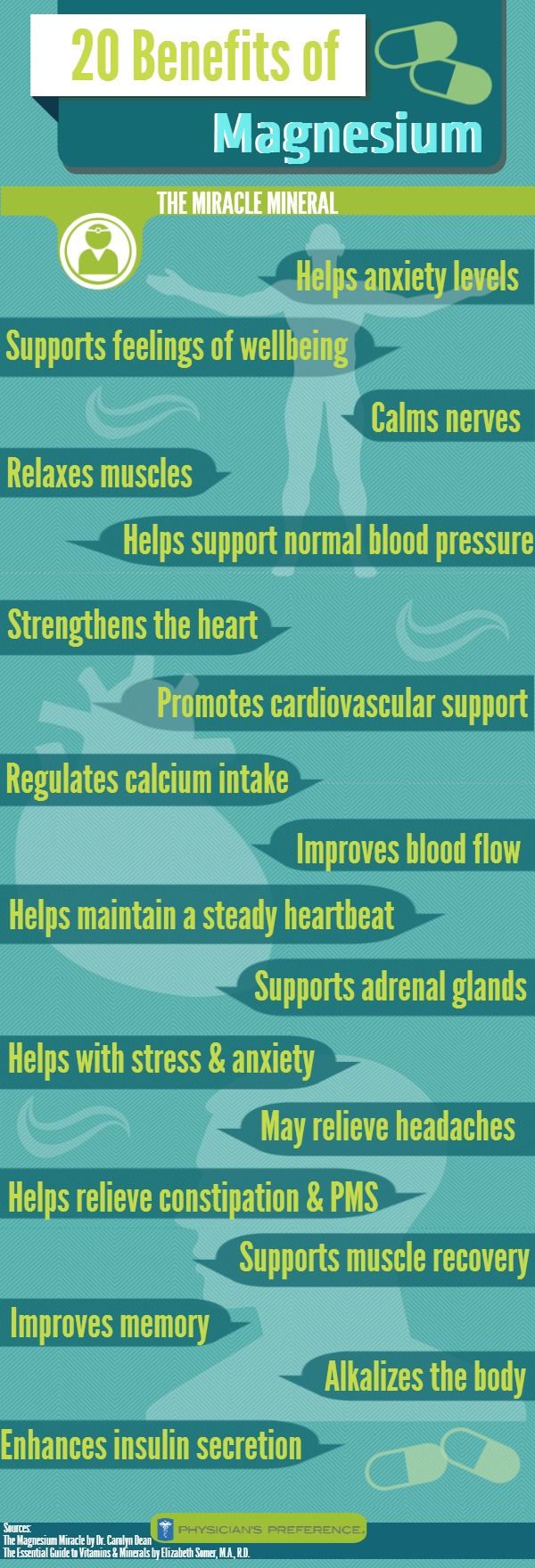
Included below is a vital health chart that contains the top 20 health benefits of magnesium. Some of these benefits include remedying sleeplessness and insomnia, calming the nerves, strengthening the heart, lowering blood pressure, relieving headaches and soothing PMS.
Chronic insomnia is one of the main symptoms of magnesium deficiency. Sleep in magnesium deficiency is usually agitated with frequent nighttime awakenings. On the other hand, a high magnesium diet has been found to be associated with deeper, less interrupted sleep. This was shown in a study done by the Human Nutrition Research Center in North Dakota.
This news is brought to you by Nutrition Breakthroughs, maker of Sleep Minerals II. Sleep Minerals II is the original magnesium and calcium based sleep remedy, known for soothing even the worst insomnia. It helps everyone from teenagers, to women with menopause symptoms, to older seniors, to get a good night’s sleep. For more information, visit the Sleep Minerals II page.
To your health,
Jobee Knight
Nutrition Breakthroughs
Provided by http://Nutrition Breakthroughs.com
 News on Natural Remedies, Good Sleep and Good Health