Posts Tagged ‘sleep minerals ii’
New Study Shows Magnesium Effective for Hot Flashes and Night Sweats in Menopause
Posted on: August 16, 2014
 The North American Menopause Society (NAMS) reports that an estimated 6,000 US women reach menopause each day, which translates to over 2 million women every year. The average age of natural menopause, which is the point of a woman’s last menstrual period, is 51. The Women’s Health Initiative study, which followed 16,608 women being given hormone replacement therapy (HRT) for menopause symptoms, discovered a high risk of breast cancer, coronary heart disease and stroke from the use of these drugs.
As a result, more and more women today are seeking the use of natural remedies for menopause discomforts such as hot flashes, night sweats, migraine headaches, anxiety, fatigue, and insomnia.
Mineral supplements such as magnesium and calcium have been found to be natural remedies for hot flashes and night sweats. One recent example is a study from the Virginia Commonwealth University Health System. Women with at least 14 hot flashes a week, received 400 milligrams of magnesium oxide for 4 weeks, increasing to 800 milligrams per day if needed. At the end of the study, the magnesium supplements had reduced their frequency of hot flashes from 52 to 28 per week, which is a a 414% reduction. Fatigue, sweating, and distress were also significantly reduced.
The 29 participants in the study were breast cancer survivors, thus they were unable to take the usual hot flash medications that have estrogenic activity such as hormone replacement drugs or soy supplements. Many women, breast cancer survivors or not, prefer to take a non estrogen-active natural remedy for hot flashes and night sweats, and the researchers in the study concluded that magnesium appears to safely reduce hot flashes with few side effects and at minimal cost.
Magnesium has also been found to help other health conditions. According to Dr. Michael T. Murray, Doctor of Naturopathic Medicine, “In addition to helping with hot flashes, correction of low magnesium status may have additional health benefits. Magnesium deficiency is extremely common in Americans, and in addition to the well-known association between low magnesium and increased risk for cardiovascular disease, low magnesium levels have also been linked to an increase in Alzheimer’s disease, decreased muscle performance, insulin-resistance, and osteoporosis.”
One natural sleep aid that is beneficial for hot flashes and night sweats and is increasing in popularity among women in menopause is Sleep Minerals II from http://NutritionBreakthroughs.com. This natural sleep aid contains highly absorbable forms of calcium and magnesium, the best minerals for sleeplessness and insomnia, as well as for heart health, restless legs syndrome, bone strength, teenage insomnia and menopause insomnia. The formula also includes vitamin D and zinc and is delivered in a softgel form with healthy carrier oils, making it more quickly and fully assimilated than tablets or capsules and providing a deeper, longer-lasting sleep.
Anita L. of New Caney, Texas says: “I was having hot flashes every 30 minutes to an hour through the night and was so miserable. After about two weeks of taking the Sleep Minerals, I noticed an incredible difference with my sleep. I have much less interruption from flashes, I’m sleeping much better and I’m a lot more comfortable.”
Valerie H. of Santa Clarita, California says: “I had such severe menopause insomnia it took me hours to fall asleep even though I was extremely tired. My legs also had crawling and tingling feelings at night. I got the Sleep Minerals and after several days, it started to work really well. I fall asleep now within 20 minutes and no more restless legs.”
Natural menopause remedies are a healthier option for women with hot flashes, night sweats and insomnia. For more information on Sleep Minerals II visit here.
Greetings to you,
I’ve included a chart below with Seven Ways to Supercharge your Immune System. What exactly is the “Immune System”? The body’s immune system protects us against disease, germs, viruses and microorganisms every day of our lives. Some of the parts of the immune system are the tonsils, spleen and bone marrow (where white blood cells are made).
One key immune system component is the lymph system. It includes the lymph nodes, which are oval-shaped organs, distributed widely throughout the body including the armpit and stomach, and linked by lymph vessels. The lymph nodes filter lymph fluid as it flows through them, trapping bacteria, viruses, and other foreign substances, which are then destroyed by special white blood cells that are highly concentrated in the nodes.
Usually the immune system does a great job of protecting us from illness and disease. Sometimes a lack of sleep, exercise, chemicals in foods, toxins in the environment, or prolonged stress weakens it. Regarding white sugar, the American Journal of Clinical Nutrition reports that when healthy volunteers consumed a large amount of refined sugar, their immune system’s white blood cells had an impaired ability to destroy bacteria for at least five hours. One healthy alternative is whole raw fruit, which makes great desserts and snacks.
Check out the immunity boosters in the chart below. This health news is provided by Nutrition Breakthroughs, maker of the effective natural insomnia remedy Sleep Minerals II and the natural solution for joint relief, allergies, pain relief and increased energy, Joints and More.
To your good health,
Jobee Knight
Nutrition Breakthroughs
Greetings to you,
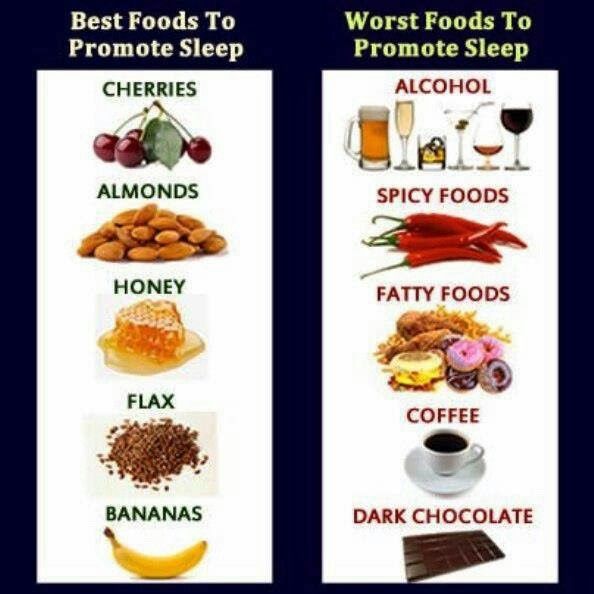
It’s Jobee Knight from Nutrition Breakthroughs. I’ve included a helpful chart below that contains some of the best foods for promoting sleep, as well as some of the worst foods. Some foods can act as a natural sleep aid, while some can make one’s time in bed a struggle with tossing and turning all night.
This news is brought to you by Sleep Minerals II, the original drug-free calcium and magnesium formula for deeper sleep. A new review just came in from Tammy M. of Meridian, Idaho who says: “I was plagued with insomnia for 5 years and desperate for a breakthrough. Nothing has helped me more than Sleep Minerals — I’m so sold on them I could go door to door promoting them. I’m 60 years old and have never slept so soundly.”
For more information, visit the Sleep Minerals II page.
Best of health,
Jobee Knight
www.NutritionBreakthroughs.com
Researchers have identified zinc as one of the most important essential trace metals in human nutrition and lifestyle in a new review article in Comprehensive Reviews in Food Science and Food Safety. Zinc is not only a vital element in various physiological processes; it is also a drug in the prevention of many diseases.
The adult body contains about two to three grams of zinc. It is found in organs, tissues, bones, fluids, and cells. Foods with high protein content, specifically animal protein, are major sources of zinc in the human diet. Zinc can also be used as fortification for other foods as well. Nearly half of the world’s population is at risk for inadequate zinc intake. The article reviewed numerous studies that showed a relationship between zinc and vital human physiological processes such as the following:
Brain: The blood zinc level is less in patients with Alzheimer’s and Parkinson’s disease (Brewer, and others 2010).In a rodent study, it was observed that zinc behaves like an antidepressant (Nowak and others, 2005).
Cardiovascular System: Zinc performs a noteworthy role in the regulation of arterial blood pressure. Males and females were reported to metabolize zinc differently when suffering from hypertension (Tubek, 2007).
Liver: Zinc deficiency in the liver occurs not only in those with liver cirrhosis, but also in less advanced alcoholic and nonalcoholic liver disease (Bode and others, 1998).
Pregnancy: A mild deficiency of zinc during a pregnancy can cause increased maternal diseases, abnormal taste sensation, prolonged pregnancy duration, inefficient labor, and an increased risk to fetuses (Jameson, 1993).
Diabetes: Zinc is very important in the synthesis, storage, and secretion of insulin (Chausmer 1998). A low level of zinc has been shown to play a role in diabetics with associated disease conditions such as coronary artery disease and several related risk factors including hypertension, and elevated levels of fats in the blood (Singh and others, 1998).
Endocrine System: Studies show a correlation between zinc deficiency in geriatric (elderly) patients and reduced activity of the thymus gland, decreased response to vaccinations, and reduced immunity (Haase and Rink, 2009).
Healing: Zinc deficiency has been linked with delayed wound healing, and has been found to be crucial to the healing of gastric ulcers especially at the early stage (Kennan and Morris, 1993; Andrews and Gallagher-Allred, 1999; Watanabe, 1995).
Pneumonia: Zinc may shorten the duration of severe pneumonia and time in the hospital (Brooks, 2004).
This news is provided to you by http://Nutrition Breakthroughs. Since 2001, Nutrition Breakthroughs has provided health articles and effective natural remedies. Their mission is to provide nutritional supplements that work well and help people avoid drugs and their side effects.
Since 2009, their natural sleep aid Sleep Minerals II has been keeping that promise — by soothing even the worst insomnia and helping everyone from teenagers, to women with menopause symptoms, to older seniors, to get a good night’s sleep. Sleep Minerals II contains highly absorbable forms of calcium, magnesium, vitamin D and zinc. For more information on Sleep Minerals II visit this web site.
Article Source: Eight ways zinc affects the human body — ScienceDaily.
How to be Sure Your Water is Pure
Posted on: July 23, 2014
 There’s nothing like the feeling of crisp, fresh water as it slides down your throat, cooling you off on a hot day, or the invigoration of a shower first thing in the morning. Water makes up an amazing two-thirds of our body mass and is vital to many aspects of our health. Inside the body, water acts to stabilize body temperature and it takes part in digestion, blood circulation, absorption and use of nutrients, building new tissue, lubricating the joints and nervous system, and carrying wastes out of the body.
We lose an average of 3 quarts of water a day through perspiration and elimination, and up to 10 quarts daily with strenuous exercise or in desert climates. Water must be frequently replaced to prevent dehydration.
Despite the critical role water plays in our health, the Environmental Protection Agency warns that dozens of substances contained in public drinking water can cause cancer and other illness (1). Rain falls through polluted air containing bacteria, smoke, and chemicals. Our soils contain pesticides, herbicides (weed killers), fertilizers, and many other chemicals that wash into the rivers, lakes and streams — the primary sources of our tap water. Radioactive wastes and poisons from factories (arsenic, etc.) are poured into water supplies.
Chlorine is universally added to public drinking water as a disinfectant. Drinking chlorinated water has been found to promote colon cancer, liver cancer, and breast cancer, according to the British Medical Journal “The Lancet”. In studies of public drinking water, the cancer risk increased in direct proportion to the amount of water consumed (2).
Sewage systems and animal waste runoff are sources of bacteria and viruses that are introduced into tap water. In 1993, the town of Milwaukee, Wisconsin suffered an outbreak of intestinal disease caused by infected water. More than 400,000 people became ill and 100 died. The purification methods there failed to eliminate the eggs of the Cryptosporidium bacteria, which leaked into the water supply from fecal matter at an upstream dairy farm (3).
Fluoride is frequently added to city tap water. The largest study ever done on the effect of fluoride on dental cavities took place in India over the course of 30 years. After much study, the researchers concluded that cavities are actually caused by a high fluoride intake from drinking water and a low consumption of dietary calcium (5). Fluoride can also contribute to hip fractures in older women and men. Elderly people, and those with heart and kidney problems, are unusually susceptible to the toxic effects of fluoride (6).
Showering
New research has uncovered that drinking polluted tap water is far from the only way people are exposed to dangerous substances. According to New Scientist Magazine, taking long hot showers is a serious health risk. During the shower, the chemicals evaporate out of the water and are inhaled into the lungs and absorbed through the skin. This delivers up to 100 times more chlorine to the person than if they drank the water — and directly into the bloodstream (7).
Pure Water
Water filters, purifiers and distillers are available for the home that can turn toxin-filled tap water into healthy water for drinking and bathing. Shower and bath filters generally do a good job of removing pollutants from the water, and good kitchen models are available for the countertop, under the sink, and refrigerator.
Look for kitchen filters that are certified by NSF International (The National Sanitation Foundation) or that meet EPA (Environmental Protection Agency) standards. Choose a shower filter based on how many gallons of water it can clean.
Raw fruits and vegetables are especially good sources of chemically pure water, which is 100 percent pure hydrogen and oxygen. Plants “distill” the water they consume and convert inorganic minerals from the environment into organic minerals, which our bodies can better assimilate (8). Because tap water only contains minimal amounts of minerals, it should not be used as one’s primary source of minerals.
A good supplement should be taken that provides a full spectrum of minerals from a plant-based source. Especially if you drink distilled water, which has had all of the minerals removed from it. Keep pure water with you at all times and drink at least 8 glasses of it each day. Also include raw fruits and vegetables in your diet for the pure water they contain.
Protect yourself and your family from toxic water, and supply your body with the clean, pure water it deserves — both inside and out.
This health information is brought to you by Nutrition Breakthroughs, maker of the effective natural sleep aid Sleep Minerals II, and the natural remedy for joint relief, allergy and asthma, and increased energy – Joints and More.
To your good health.
Jobee Knight
President
Nutrition Breakthroughs
A short glossary of water terms:
GAC: Granulated activated carbon filter
KDF: A filtering medium by KDF Fluid Treatment, Inc. that removes contaminants.
MCL: Maximum contaminant level
PCB’s: Polychlorinated Biphenyls — A highly toxic pesticide made from chlorine
PPB: Parts per billion
PPM: Parts per million
THM’s: Trichlorethanes — Cancer-causing byproducts of chlorine
VOC: Volatile Organic Compound
REFERENCES:
1. Drinking Water Standards and Health Advisories, Office of Water, U.S. Environmental Protection Agency, Wash, D.C., Summer 2000
2. Lancet, 5 December 98, Volume 352, Number 9143 and Lancet 23 August 97, Volume 350, Number 9077
3. American Museum of Natural History: Epidemic, 1993: Cryptosporidiosis In Milwaukee
4. Effect of monochloramine disinfection of municipal drinking water on risk of nosocomial Legionnaires’
disease, The Lancet, Volume 353, Number 9149, 23 January 1999
5. Teotia SPS, Teotia M, Dental caries: a disorder of high fluoride and low dietary calcium interactions (30 years
of personal research), Fluoride, 1994 April, 27:2, 59-66
6. Agency for Toxic Substances and Disease Registry (ATSDR). Toxicological Profile for Fluorides, Hydrogen Fluoride, and Fluorine. US Department of Health and Human Services, Public Health Service. 1991; ATSDR/TP-91/17.
7. New Scientist Magazine, 18 Sept. 1986
8. Nutrition Almanac, McGraw-Hill Books
Greetings to you,
Here is a helpful chart of the healthiest fats in foods for glowing skin and hair, as well as for good nutrition for the organs and hormones. All hormones are formed with healthy fats, so eating more of these foods can nourish one in many ways.
This health information is brought to you by Nutrition Breakthroughs, maker of the effective natural sleep aid Sleep Minerals II, and the natural remedy for joint relief, allergy and asthma relief and increased energy – Joints and More.
To your good health.
Jobee Knight
President
Nutrition Breakthroughs
 From ScienceDaily .com
A placebo-controlled study by the University of Oxford in the United Kingdom suggests that higher levels of omega-3 (DHA), the group of fatty acids found in algae and seafood, are associated with better sleep. The researchers explored whether 16 weeks of daily 600 mg. supplements of algae sources would improve the sleep of 362 children.
The children who took part in the study were not selected for sleep problems, but were all struggling readers at a mainstream primary school. At the outset, the parents filled in a child sleep questionnaire, which revealed that 40% of the children in the study suffered from regular sleep disturbances. Of the children rated as having poor sleep, the researchers fitted wrist sensors to 43 of them to monitor their movements in bed over five nights.
This exploratory study showed that the children on a course of daily supplements of omega-3 had nearly one hour (58 minutes) more sleep and seven fewer waking episodes per night compared with the children taking the corn or soybean placebo. The findings are due to be published in the Journal of Sleep Research.
This news is brought to you by Nutrition Breakthroughs.com. Since 2001 Nutrition Breakthroughs has been providing natural health articles and effective natural remedies. Their mission is to provide nutritional supplements that get results, and therefore help people to avoid addictive drugs and their side effects.
Since 2009, their natural sleep remedy Sleep Minerals II has been keeping that promise — by soothing even the worst insomnia and helping everyone from teenagers, to women with menopause symptoms, to seniors, to get a good night’s sleep.
For more information on the effective natural insomnia remedy Sleep Minerals II, visit http://www.NutritionBreakthroughs.com/html/Sleep_Aid
Article source: http://www.sciencedaily.com/releases/2014/03/140306103931.htm
 Occasionally the stresses of life reduce our immune system defenses and the door opens just wide enough to let a cold or flu sneak in and take hold. Here are some of the best tested immunity boosters in existence. Use them well to build your strength back and show that cold or flu the way to the exit
Special Virus-Killing Foods
Garlic is a commonly used cold medicine. It is widely used in Russia and is known there as “Russian Penicillin”. Garlic supports immune function and it can kill bacteria, parasites, fungus and the flu virus. One test-tube study in the Journal Planta Medica showed that fresh garlic kills various viruses, including one which can cause flu like symptoms. Aged garlic extract can also protect against the flu. One good way to benefit from garlic is to cut up a couple raw cloves into small pieces and swallow the pieces whole at the first sign of a cold, then eat one clove per day until fully
Horseradish is another plant that can ease throat and upper respiratory tract infections. It has good antibiotic properties. Horseradish has been shown specifically to destroy the flu virus and reduce the severity of flu infections in animals per a study in the Journal Virologie. This plant is a member of the mustard family.
You may have found that eating horseradish can make your eyes water and nose run. Indeed, it can create a similar release of watery fluids inside the bronchial passages of the lungs which helps to flush them out and wash away congestion. For this reason, hot foods and spices in general are also very good for colds and flus
Echinacea: The Immunity Herb of Choice
Studies of echinacea show that it plays a critical role in fortifying the immune system to fight illness. Although scientists have had little success developing drugs or vaccines to eradicate the common cold or flu, echinacea improves immune function in humans, and especially improves the virus-fighting white blood cells, even when given in very low doses (Journal of Alternative and Complementary Medicine). Echinacea can cut the duration of a cold in half
Hearty Vitamin for Colds: Vitamin C
A Scandinavian researcher recently conducted a review of 21 studies that tested between 1 and 8 grams (1,000 to 8,000 milligrams) of Vitamin C for the common cold. He concluded that “in each of the twenty-one studies, Vitamin C reduced the duration of the cold and the severity of the symptoms by an average of 23%. Even much lower amounts of vitamin C such as 100 milligrams have been found to be beneficial. In addition to enhancing the activity of immune cells, Vitamin C acts as a vital component in the production of collagen, the principal protein found in all connective tissues. By helping maintain the strength and integrity of connective tissue structures, vitamin C keeps infections from spreading throughout the body (from the Handbook of Vitamins)
Friendly Acidophilus
Supplements of Lactobacillus acidophilus and other friendly bacteria, and the growth factors that encourage their development in the stomach, may help to protect the body from harmful organisms that cause infection (from the Journal Nutrition). Acidophilus and other friendly bacteria are known as probiotics, which means “promoting the growth of microorganisms”. Lactobacillus has been shown to increase the numbers of circulating immune cells and elevate the body’s antibody responses. Its best to use probiotics that also contain a prebiotic such as fructooligosaccharides (FOS). FOS are carbohydrates that support the growth of probiotic organisms in the gastrointestinal tract. A recent study in the Journal Lancet showed that FOS molecules can bind to disease-causing bacteria and prevent their attachment to the body’s cells
Usher that cold or flu out right out the door and keep it away by eating healthy, whole foods, drinking pure water, and taking the right cold-fighting foods and supplements
This health news is provided by www.NutritionBreakthroughs. Since 2001 Nutrition Breakthroughs has been providing natural health articles and effective natural remedies. Their mission is to provide nutritional supplements that get results, and therefore help people to avoid harmful drugs and their side effects.
Since 2009, their natural sleep remedy Sleep Minerals II) has been keeping that promise — by soothing even the worst insomnia and helping everyone from teenagers to seniors to get a good night’s sleep. For more information on Sleep Minerals II visit this page.
Hummus Health Benefits and Recipes
Posted on: May 22, 2014
Greetings to you,
The chickpeas in hummus are a delicious food that can help lower cholesterol, help to protect cells from cancer, and they are also high in protein, fiber, calcium and iron. The chart below gives some great, simple recipe ideas for making your own humus. Enjoy!
Best of health,
Jobee Knight
Nutrition Breakthroughs
Maker of the Effective Natural Insomnia Remedy Sleep Minerals II

 http://www.worldhealth.net/news/quality-sleep-eludes-women/
From World Health .Net
Poor quality sleep, frequent interruptions in sleep duration, and waking earlier than desired are commonplace in today’s 24/7 society.
Paivi Polo-Kantola, from the University of Turku (Finland), and colleagues surveyed 850 mothers about their sleep when they were 42 years old, on average. Sixty percent of the study subjects reported waking up frequently at night, and 42% experienced morning sleepiness with 32% plagued by daytime sleepiness.
The team observed that postmenopausal hot flashes and night sweats further increased the difficulties with sleep. Observing that: “Chronic diseases and use of medications was associated with various sleep disturbances,” the study authors observe that: “Almost one-quarter of middle-aged women is dissatisfied with their quality of sleep.”
This news is brought to you by http://www.NutritionBreakthroughs, maker of the effective natural insomnia remedy Sleep Minerals II. Sleep Minerals II is the original drug-free calcium and magnesium formula for relaxation and better sleep. It contains powerful forms of the best known minerals for relaxation and sleep — calcium and magnesium, in combination with vitamin D and zinc. The ingredients are formulated in a softgel with healthy oils, making them more quickly absorbable than tablets or capsules and providing a deeper, longer-lasting sleep.
Valerie H. of Santa Clarita, California says: “I had such severe menopause insomnia it took me hours to fall asleep even though I was extremely tired. My legs also had crawling and tingling feelings at night. I got the Sleep Minerals and after a few days, it started to work really well. I fall asleep now within 20 minutes and no more restless legs.”
For more information, visit the SleepMinerals II page.
 News on Natural Remedies, Good Sleep and Good Health