News on Natural Remedies, Good Sleep and Good Health

Posts Tagged ‘natural remedies

Blue light at computerBy Kris Gunnars, CEO and Founder of Authority Nutrition, BSc (Bachelor’s Degree in Medicine)

**************************************
Shared by Nutrition Breakthroughs,
maker of the effective calcium and magnesium based sleep aid Sleep Minerals II.

**************************************
Sleep is highly underrated.

It is one of the “pillars” of optimal health… just as important as diet and exercise.

Poor sleep is linked to heart disease, type 2 diabetes and depression. It is also one of the strongest risk factors for obesity.

The problem is that humans are sleeping much less than they did in the past.

But that’s not the end of it, unfortunately… the quality of our sleep has suffered as well.

It turns out that perhaps the single biggest contributor to our collective sleep problems, is the use of artificial lighting and electronics at night.

These devices emit light of a blue wavelength, which tricks our brains into thinking that it is daytime.

Numerous studies suggest that blue light in the evening disrupts the brain’s natural sleep-wake cycles, which are crucial for optimal function of the body.

Fortunately, this problem has a simple solution and there are a few actionable stepsyou can take to get rid of that blue light in the evening, potentially improving your health at the same time.

Let me explain how that works…

Blue Light is Crucial in The Daytime… But a Disaster at Night

Orange Clock

Our bodies have an internal “clock” that is situated in the brain.

This clock regulates our circadian rhythm, the 24-hour biological cycle that influences many internal functions

Most importantly, it determines when our bodies are primed to stay awake and be productive, and when we feel tired and want to go to sleep.

The circadian rhythm isn’t 100% accurate. Sometimes it is a bit longer than 24 hours, sometimes a bit shorter.

For this reason, it needs signals from the external environment in order to adjust itself. The most important signals that adjust this internal clock are daylight and darkness.

This actually makes perfect sense… throughout evolution, brightness meant that it was daytime and that we should be awake and get stuff done, while darkness meant that it was time to sleep and recover.

But not all light is equal, it is primarily light of a blue wavelength (blue light) that stimulates sensors in the eye to send signals to the brain’s internal clock.

Keep in mind that sunlight and white light contain a mixture of various wavelengths. There is a lot of blue light within.

Getting blue light (especially from the sun) in the daytime is very important. It helps us to stay alert, while improving performance and mood.

There has even been some success using blue light therapy devices to treat depression, and blue light bulbs in an office can reduce fatigue and improve the mood, performance and sleep of workers.

But even though blue light is incredibly beneficial during the day, it can be a complete disaster if we are exposed to it in the evening.

The problem is that modern light bulbs and electronic devices (especially computer monitors), also produce large amounts of blue light and “trick” our brains into thinking that it is daytime.

When it gets dark in the evening, a part of the brain called the pineal gland secretes the hormone melatonin, which signals to our bodies and brains that it is time to get tired and go to sleep.

Blue light, whether from the sun or a laptop, is very effective at inhibiting melatonin production.

This means that our bodies don’t get the proper signal that it’s time to go to sleep, reducing both the quantity and quality of our sleep.

Studies have linked melatonin suppression in the evening to various health problems, including metabolic syndrome, obesity and cancer, as well as mental disorders like depression.

Many have speculated that melatonin-disrupting blue light may be one of the key drivers behind obesity and many of the chronic diseases that are so common today.

However… indoor lighting and electronic devices are a major part of the modern lifestyle and they aren’t going away anytime soon.

Fortunately, there is a simple way to block blue light from entering your eyes and disrupting the natural sleep-wake cycle.

Bottom Line: Blue light in the evening tricks the brain into thinking that it is daytime, which inhibits the production of melatonin and reduces both the quantity and quality of sleep.

Using Blue-Blocking Glasses at Night is a Simple Way to Solve This Problem

Orange Glasses

The easiest and most effective way to avoid blue light in the evening, is to use amber-colored glasses.

These glasses effectively block all blue light, so your brain doesn’t get the signal that it is supposed to stay awake.

Studies show that when people use blue-blocking glasses, even in a lit room or using an electronic device, they produce just as much melatonin as if it were dark.

In one study, people’s melatonin levels in the evening were compared during three different lighting conditions.

  1. Dim light.
  2. Bright light.
  3. Bright light with blue-blocking glasses.

The graph below shows what happened to a typical subject’s melatonin levels…

Kayumov et al, 2005 - Light and Melatonin

As you can see, the bright light almost completely suppressed melatonin production, while the dim light did not.

But the people wearing the blue-blocking glasses produced the same amount of melatonin as those being exposed to the dim light. The glasses almost completely blocked the melatonin suppressing effect of the bright light.

Now to the fun part… not only have blue-blocking glasses been shown to increase melatonin, studies also suggest that they can cause major improvements in sleep and mental performance.

In one study, 20 individuals were randomized to use either blue blocking glasses, or glasses that didn’t block blue light, for 3 hours before bedtime. The study went on for two weeks.

The subjects using the blue-blocking glasses had major improvements in both sleep quality and mood.

These glasses have also been shown to greatly improve sleep in shift workers, when they put them on before bedtime.

There was also a study in elderly cataract patients, showing that blue-blocking lenses improved sleep and significantly reduced daytime dysfunction.

Overall, it seems pretty clear that using blue-blocking glasses in the evening is effective. Not only does it improve sleep, but it also improves mood and cognitive function.

Of course, this hasn’t been studied in a large, long-term study… but given the immenseimportance of sleep for health, it wouldn’t surprise me if these glasses could also help prevent chronic disease and lead to a longer life.

Bottom Line: Studies show that blue-blocking glasses increase melatonin production in the evening, leading to major improvements in sleep and mood.

Other Ways to Block Blue Light

Laptop With Orange Screen

If you don’t want to use these glasses every night, then there are a few other ways to reduce blue light exposure in the evening.

One popular way is to install a program called F.lux on your computer.

This program automatically adjusts the color and brightness of your screen based on your timezone. When it is dark outside, the program effectively blocks all blue light from your computer and gives the screen a faint orange color.

Although I’m not aware of any study on it, many people who use the computer a lot in the evening claim that this program helps them fall asleep.

There are a few other things you may want to consider:

  • Turn off all lights in your home 1-2 hours before bedtime.
  • Get a red or orange reading lamp, which doesn’t emit blue light. Candlelight works well too.
  • Keep your bedroom completely dark (highly recommended), or use a sleep mask.

It is also important to expose yourself to plenty of blue light during the day. If you can, go outside during the day and get some natural sunlight.

If that is not an option, consider using a blue light therapy device in the daytime. It is like a strong lamp that simulates the sun and bathes your face and eyes in blue light.

What to Expect

I have a long history of sleeping problems. It usually takes me at least an hour to fall asleep and I tend to wake up frequently throughout the night and feel poorly rested in the morning.

However… about a week ago, I purchased blue-blocking glasses from Amazon. I got the ones made by UVEX – they are cheap but get the job done.

I’ve set a reminder on my phone to always put them on at 8:30 pm. If I’m not home at that time, then I just put them on as soon as I get home in the evening.

After having them on for about 1-2 hours, I start feeling very relaxed and naturally tired.

Since I started using them, I’ve been falling asleep much faster and waking up refreshed in the morning. My mood has improved significantly and I’m finding it a lot easier to think and write.

I’ve personally tried a lot of different things in order to sleep better… but using blue-blocking glasses is by far the most effective sleep “hack” I have tried.

*************************

This health news is shared by Nutrition Breakthroughs, a publisher of nutrition articles and supplier of effective natural remedies since 2002. Nutrition Breakthroughs makes the original calcium and magnesium based sleep aid Sleep Minerals II.

Article Source: https://authoritynutrition.com/block-blue-light-to-sleep-better/

college students improve sleepSleep is such valuable and vital part of life and health.  Almost six out of ten Americans report having sleeplessness and insomnia at least a few nights a week, according to the National Sleep Foundation.

More and more research is being done that connects the benefits of good sleep to greater well-being, lower disease rates, more happiness, sharper mental capabilities and less fatigue.

A newly completed joint study from the Division of Sleep Disorders at Brigham and Women’s Hospital and the Massachusetts Institute of Technology in Boston has found that 204 college students have been benefited greatly by getting regular, good sleep.  These students, who were between the ages of 18 and 25, participated in a 30-day study that measured their sleeping times and duration.

When the students made the transition from irregular sleep patterns to regular sleep during the week, there were measurable, significant improvements in their levels of evening and morning happiness, a higher level of healthiness and better calmness and composure during the week.  There was even increased well-being on the day following the week of improved sleep.

The lead author, Akane Sano, PhD, who is a research scientist at the Massachusetts Institute of Technology in Cambridge, said that:  “Irregular sleep-wake schedules are common in our modern society.  Our results indicate the importance of sleep regularity, in addition to sleep duration, and that regular sleep is associated with improved well-being.”

In another interesting study that was published by the American Academy of Sleep Medicine, professional baseball players increased their hours of sleep over a five night period and then demonstrated significant improvements in mental processing speed.  In addition, their tension, fatigue and sleepiness during the day, all decreased by over one-third.

Cheri D. Mah, lead researcher at the University of California San Francisco Human Performance Center said: “Our study indicates that short-term sleep extension of one additional hour for five days resulted in demonstrated benefits for the visual search abilities of athletes, as well as improvement in their quick response.  Fatigue over a season can negatively impact performance and sleep extension during periods of high training volumes may be a practical recovery strategy.”

For a nutritional approach to insomnia, the minerals calcium and magnesium have been shown to be effective sleep remedies that can increase the quality of life.  In a study from the University of Medical Sciences in Iran, research was done with 46 adults who were experiencing insomnia.  Taking magnesium oxide tablets resulted in significant increases in sleep time and reduced the cortisol levels in their bodies, which is a stress hormone that can keep people awake.

In another research study from the Human Nutrition Research Center of the U.S. Dept. of Agriculture, scientists found that a high magnesium diet is associated with deeper, less interrupted sleep. Foods high in magnesium include green leafy vegetables, black beans, pumpkin seeds, almonds, avocados, figs, bananas, brown rice, and nuts and seeds.

One supplement with highly absorbable forms of magnesium and calcium is Sleep Minerals II from Nutrition Breakthroughs. These are the most well researched minerals for insomnia and waking during the night, as well as for heart health, aches and pains, bone strength and menopause insomnia.  Sleep Minerals II includes vitamin D and zinc and is delivered in a softgel form with healthy carrier oils, making it more quickly absorbable than tablets or capsules.  This provides a deeper, longer-lasting sleep.

L.R.C. of Massachusetts says: “I had become dependent on sleeping drugs and couldn’t sleep without them. Now I take the Sleep Minerals before bed and I can sleep through the night without drugs. I’m also able to easily fall back to sleep if I do have to get up. Another benefit is it helps alleviate my chronic fatigue and aches and pains.”

The benefits of achieving better sleep are appearing in countless research studies and the energy invested in obtaining it is well worth the effort. For more information, visit the Sleep Minerals II page.


Article source: http://www.nutritionbreakthroughs.com/blog/2017/07/29/studies-show-better-sleep-benefits-college-students-and-pro-baseball-players/

Sleep foods chartThe National Institutes of Health reports that about thirty percent of the population experiences disrupted sleep and insomnia. Because sleeping drugs are addictive and come with side effects, many people are reaching out for natural sleep remedies.

Research studies are confirming that certain foods are high in the natural sleep hormone known as melatonin, and other foods are proving themselves good sources of potassium, calcium and magnesium.

In a study from the University of California San Diego, researchers examined the effects of potassium supplementation on sleep quality. A placebo-controlled study compared one week of potassium chloride supplements to one week of identical placebo capsules. Their results were published in the journal “Sleep”, and showed that potassium significantly increased sleep efficiency due to less awakenings after falling asleep.  Good food sources of potassium include bananas, baked potatoes, baked sweet potatoes and broccoli.

The tart “Montmorency” cherry contains a significant level of melatonin per a study done at the University Of Texas Health Science Center. Cherries are available in a concentrated supplement form that can be taken in the evening to improve the quality of sleep. Other ways cherries can be eaten include fresh cherries, frozen cherries and cherry juice. Cherry juice should be diluted with water or sparkling water as it is high in natural sugars.

Researchers have measured the effect that different types of rice have as sleep remedies. Mahatma rice (low carbohydrate rice) was compared to Jasmine rice (high in carbohydrates) for their effects on sleep quality. The rice was eaten either four hours before bedtime or one hour before bedtime. The study from the American Journal of Clinical Nutrition found  that a high carbohydrate-based meal resulted in a significant shortening of the time needed to fall asleep when eating it four hours before bed.  Brown rice is also a healthful choice.

Almonds are a very good source magnesium and can help with better sleep.  James F. Balch, M.D., author of Prescription for Nutritional Healing, writes: “A lack of the nutrients calcium and magnesium will cause you to wake up after a few hours and not be able to return to sleep.” Eating a handful or two of almonds before bed can be helpful.

A recently released study on magnesium supplements for sleep came from the University of Medical Sciences in Iran. It included 46 older adults, aged 60 to 75, who were experiencing insomnia. However, it’s interesting to note that the researchers recommend their results be extended as a helpful aid to all ages of the general population.

The people were divided into two groups. One group received placebos, while the other received magnesium oxide tablets twice a day (250 milligrams each) for eight weeks. In the group that was given magnesium, the subjects experienced significant increases in sleep time, with less night time interruptions and fewer early morning awakenings. Magnesium can be found in dark leafy greens, nuts, seeds, fish, beans, whole grains and avocados.

Jobee Knight, a nutritional researcher and founder of Nutrition Breakthroughs in Glendale, CA., is someone who fought her own battle against sleeplessness and insomnia. She decided to put her background to use by searching out effective natural ingredients for relaxation and deeper sleep.

The result was Sleep Minerals II, which contains highly absorbable forms of the best minerals for sleep and relaxation: Calcium and magnesium with Vitamin D. The ingredients are delivered in a softgel form with healthy carrier oils, making them more easily assimilated than capsules or tablets and providing a deeper, longer-lasting sleep.

Doctor P. of Houston, Texas says: “I had developed severe sleeping problems and took two different sleeping medications over the course of several weeks. When I discontinued them the insomnia came back even worse. Sleep Minerals II was just what I needed. I’ve been taking it and getting many hours of sleep a night. As a doctor I would definitely avoid prescribing sleeping drugs — I would recommend Sleep Minerals II.”

Chris M. of the United Kingdom says: “I take one softgel of Sleep Minerals II before bed every night and within 20 minutes I am asleep. The difference in the quality of my sleep and the ease with which I get to sleep using this product is monumental. I have stopped obsessing about sleep or dreading bedtime — I just take a softgel and drift off. If I stop taking them, within a week my sleep starts to lighten in quality, the amount of my sleep diminishes, and my old insomniac patterns reappear.”

For more information, visit the Sleep Sleep Minerals II page.


Article source: http://www.nutritionbreakthroughs.com/blog/2015/09/30/sleep-foods-chart-top-proven-foods-for-insomnia/

magnesium sleepBy Forrest Nielsen
From the Human Nutrition Research Center of the U.S. Dept. of Agriculture

Can’t sleep? You are not alone. Not being able to sleep, or insomnia, is a common complaint, especially among people older than 50. More than half of all people aged 65 years and older have sleep problems.

Not surprisingly, lack of sleep is caused mainly by factors that are more common later in life, such as breathing problems, illness and medications. Yet, scientists have proved that poor sleep is not a natural part of aging.

Five common complaints are trouble falling asleep, waking up, awaking too early, needing to nap and not feeling rested.

Lack of sleep is a health concern because it can cause attention and memory problems, depressed mood and body chemistry changes that foster heart disease, diabetes and osteoporosis.

A factor getting more attention recently is poor nutrition. A low intake of the mineral magnesium may be one nutritional factor causing sleep problems.

Magnesium plays a key role in the body’s chemistry that regulates sleep. This may be why persons with long-term lack of sleep, or abnormal brain waves during deep sleep, often have low magnesium in their blood.

Some small studies with humans and rats also suggest that magnesium is needed for good sleep. Magnesium treatment increased deep sleep and improved brain waves during sleep in 12 elderly subjects. Magnesium treatment decreased time to fall asleep and improved sleep quality of 11 alcoholic patients who often have a low magnesium status. Magnesium deficiency increased time awake at the expense of deep sleep in rats. Feeding magnesium to the rats restored their sleep patterns to normal.

The diets of many people do not contain enough magnesium for good health and sleep. In 1997, the United States Food and Nutrition Board set the recommended dietary allowance (or daily intake) for magnesium at 320 milligrams for women and 420 milligrams for men between ages 51 and 70.

A national food consumption survey found that many Americans, especially older women, consume less than the recommended amount for magnesium.  Another risk factor for low magnesium status in older women is the use of calcium supplements without magnesium for bone health. High calcium intakes can make magnesium deficiency worse.

Perhaps, you have heard or read of the folk remedy of drinking a glass of warm milk before going to bed if you have trouble with falling asleep. This remedy may work for some people because milk is a fair source for magnesium. A glass of milk provides about 30 milligrams of magnesium. This amount of magnesium could be the difference between a deficient and adequate magnesium status for many people.

Other foods that have good amounts of magnesium are whole grains, nuts and green leafy vegetables. Green leafy vegetables are a good source of magnesium because the green color is chlorophyll, a chemical that contains magnesium and converts sunlight into food energy.

*********************************************

This health news is provided by Nutrition Breakthroughs, maker of the effective natural sleep aid featuring calcium and magnesium, Sleep Minerals II.

Kimberly B. of Troy Michigan says: “I have been taking Sleep Minerals II for about a month now. I have tried everything out there and this supplement is amazing. I have suffered with insomnia for two and a half years and have had restless leg syndrome my entire life. This is the first relief I’ve ever had…it’s gone for a month now.”

For more information, visit the Sleep Minerals II page.

Source: Grand Forks Human Nutrition Research Center : Do you have trouble sleeping? More magnesium might help.

healthy fats for good sleepThe link between what we eat and how we sleep is closely related, especially when it comes to consuming healthy fats.

In an article from the journal “Endocrinology – An Integrated Approach” (endocrinology deals with the glands and hormones), the author writes that all hormones are made from cholesterol.  This includes estrogen, testosterone, progesterone, adrenal gland hormones, vitamin D, and the sleep hormone melatonin.  

Eating healthy fats with our meals can play a vital role in helping us sleep better and achieve greater health, as these provide the basic building blocks for cholesterol production and hormones.  The best fats to eat are nutrient rich foods like eggs, natural butter, salmon, sardines, shrimp, cod liver oil, avocados and coconut oil.

Dr. Joseph Mercola, a physician trained in both traditional and natural medicine who provides up-to-date natural health information says: “If you’re confused about cholesterol, it’s not your fault. Cholesterol has been a highly publicized scapegoat for causing heart disease for decades, and many have diligently cut all cholesterol-rich foods (which are often also nutrient-rich foods) from their diets as a result.”

For good heart health, Dr. Mercola says to: “Replace harmful vegetable oils and synthetic hydrogenated fats such as margarine with healthy fats, including olive oil, butter, avocado, pastured eggs and coconut oil (remember olive oil should be used cold only — use coconut oil for cooking and baking).”

Dr. Natasha Campbell-McBride, M.D., says: “Hormones accomplish a myriad of functions in the body, from regulation of our metabolism, to energy production, mineral assimilation, brain, muscle, and bone formation, to behavior, emotion and reproduction….People whose bodies are unable to produce enough cholesterol do need to have plenty of foods rich in cholesterol in order to provide their organs with this essential-to-life substance.”

Milk is well-known for its positive effects on sleep, and dairy foods contain cholesterol, however some people are not able to digest dairy well and are better able to assimilate fermented dairy foods.  Milk also has the benefit of containing calcium, which has been found in studies to soothe insomnia.

In one study from the European Journal of Clinical Neurology, researchers tested the use of milk that was fermented with yogurt cultures for its effect on sleep quality.  They discovered that there was a significant improvement in the time needed to fall asleep, as well as a reduced number of night time awakenings for the participants who drank the fermented milk daily.  No significant changes in sleep were observed for the placebo group.

Regarding the use of minerals for better sleep, one study called “The Nutritional Relationships of Magnesium”, notes that the type of insomnia associated with a calcium deficiency causes difficulty with falling asleep. The classical sign of magnesium deficiency is insomnia characterized by falling asleep easily, but awakening frequently throughout the night, with individuals finding themselves tired even after several hours of sleep.

A balanced calcium magnesium ratio is important to overall health, and these two minerals should be taken together for best results, in a two to one ratio with twice as much calcium as magnesium.  The original research on this recommended ratio appeared in 1935 in the Journal of Physiological Reviews.

In addition, a softgel form containing healthy carrier oils mixed with the minerals is more digestible than tablets or capsules and provides a deeper, longer-lasting sleep. One popular formula that has these qualities is Sleep Minerals II from Nutrition Breakthroughs.  Sleep Minerals II contains highly absorbable forms of the best minerals for relaxation: calcium and magnesium, combined with vitamin d, zinc, and heart-healthy rice bran oil in a softgel.

Kimberly B. of Troy, Michigan says: “I have been taking Sleep Minerals II for about a month now. I have tried everything out there and this supplement is amazing. I have suffered with insomnia for 2 1/2 years. I have also had restless leg syndrome my entire life and this is the first relief I’ve ever had…gone for a month now.”

In summary, eating good healthy fats and also taking enough sleep-inducing minerals, can be a good combination for achieving better sleep.

For more information on Sleep Minerals II visit this information page.


Article source: http://www.nutritionbreakthroughs.com/blog/2016/12/18/research-shows-healthy-fats-improve-sleep-quality/

sleeping_ladyGreetings,

The Nutrition Breakthroughs Blog has provided several articles on the best foods to help you sleep, and those that follow below are the top 5 most popular ones of all time.

1. Sleep Foods Chart: The Top Proven Foods for Insomnia

This article features a chart that summarizes research studies on foods that are high in the natural sleep hormone known as melatonin. Other foods are proving themselves good sources of potassium, calcium and magnesium – all shown to help remedy insomnia.

2. Melatonin Rich Fruits for Sleep: Studies from Nutrition Breakthroughs   fruit melatonin

Melatonin levels start rising in the evening and go up to a peak level in the early hours of the morning, perhaps around 2:00 or 3:00 a.m, and then they reduce. This may partially explain why some people can sleep fine for a few hours and then suddenly find themselves wide awake.

The research study showing how tropical fruits increase melatonin was published in the Journal of Agriculture and Food Chemistry.  See the details in this article.

3. Insomnia Remedies: The Best and Worst Foods for Promoting Sleep

This article includes a great, short chart that contains the five best foods and five worst foods for promoting sleep.

Some foods can act as natural sleep aids, while others can make your time in bed a struggle with tossing and turning all night.

heathiest foods4. Food for Sleep: Study Says Salmon Remedies Insomnia

Researchers in Norway have proved that eating fish has a positive impact on good sleep and overall daily functioning.

5. Insomnia Remedies: The Science Behind Sleep Inducing Foods

This article focuses on articles from research journals that have studied which foods are best for inducing sleep, and it also has some doctor recommendations on good bedtime snacks.

This collection of natural health articles on foods for sleep is brought to you by Nutrition Breakthroughs, a publisher of nutrition articles and supplier of effective natural remedies since 2001. Nutrition breakthroughs makes Sleep Minerals II, the effective natural sleep aid with calcium, magnesium, zinc, and vitamin D, and also Joints and More, the natural solution for joint relief, aches and pains, stronger hair and nails and more energy.


Article source: http://www.nutritionbreakthroughs.com/blog/2016/10/01/foods-to-help-you-sleep-top-5-articles-from-nutrition-breakthroughs/

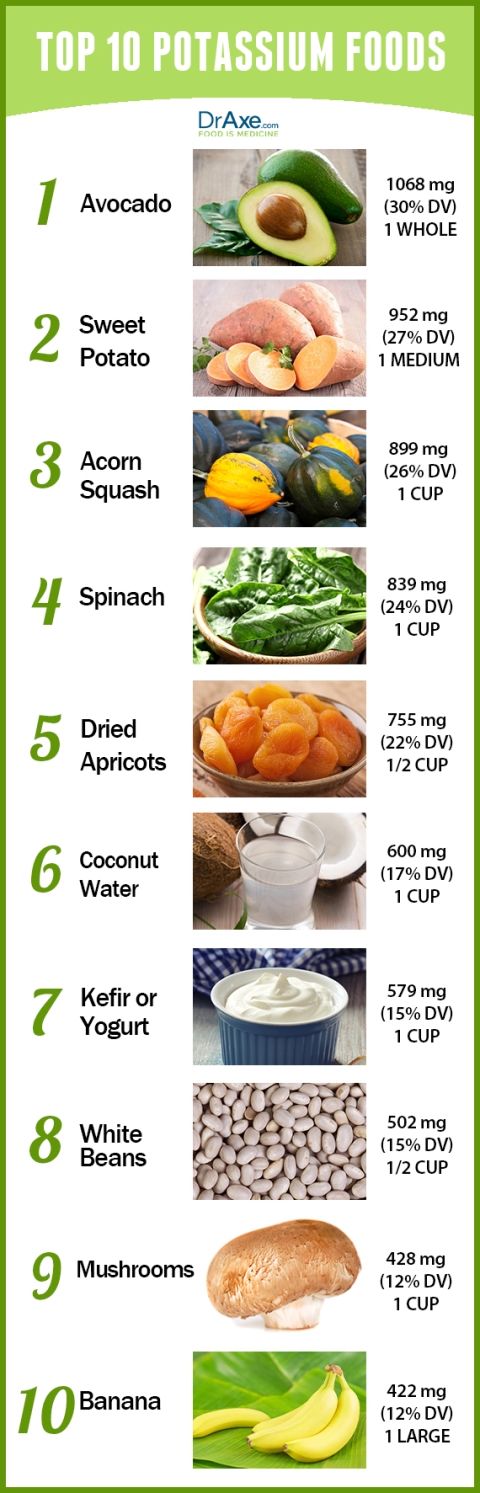
Included is a super-healthy chart below with the top 10 potassium rich foods.  Potassium is found in many fruits and vegetables, so the main source of a potassium deficiency would be not eating enough of these.

Studies have showed that potassium lowers blood pressure, improves blood vessel function, reduces risk of stroke, strengthens muscles, helps preserve bone density, prevents kidney stones and remedies insomnia.

One recent study from the Journal “Sleep” researched the effects of potassium supplements on sleep quality.  The researchers gathered data from wrist monitors and notes made in sleep diaries.  Normal young males on a low-potassium diet participated in the study.  After one week of taking potassium supplements, there were significant improvements in their quality of sleep and less waking up during the night.

One of the healthiest, highest sources of potassium is the banana, which contains 400 milligrams.  Other good sources are avocados, prunes, spinach, sunflower seeds and almonds.

This health news is shared with you by Nutrition Breakthroughs, maker of the original calcium and magnesium based sleep aid Sleep Minerals II, as well as Joints and More, the natural solution for joint relief, aches and pains, and stronger hair and nails.

Potassium Foods
Article source: http://www.nutritionbreakthroughs.com/blog/2015/08/23/top-10-potassium-rich-foods-and-health-benefits/

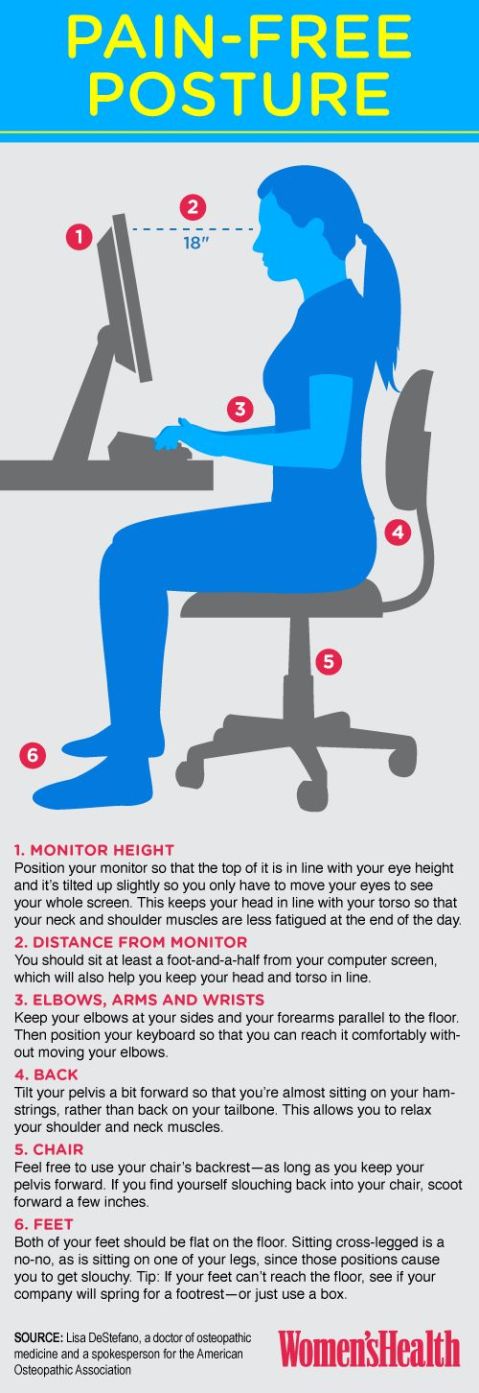
This is a great chart for learning and keeping good posture and staying pain-free at the computer — things we can all use in this Internet Age!

Best of health,

Jobee Knight
NutritionBreakthroughs.com
Maker of the Effective Natural Sleep Remedy Sleep Minerals II

Posture

Article source: http://www.nutritionbreakthroughs.com/blog/2014/01/09/good-tips-for-pain-free-posture-at-the-computer/

vitamin a sleepWhich vitamins and minerals are the most famous ones for their role in supporting good sleep?  These definitely would be calcium, magnesium and vitamin D.

For example, a study in the European Neurology Journal tested calcium levels in the blood during sleep and discovered that calcium peaks at a high point during the deepest levels of sleep such as the rapid eye movement phase (REM), when dreaming occurs.

Recent studies are showing that a lesser-known vitamin also plays a vital role in preventing insomnia – the eye strengthening Vitamin A.

With the National Sleep Foundation reporting that close to 60% of Americans are experiencing sleeplessness and insomnia at least a few nights per week, many people are spending a lot of time and energy searching for some effective, natural ways to sleep better.  One study on vitamin A that’s related to sleep was published in the PLOS Journal (Public Library of Science).

The researchers selected 2,459 adults aged 20 to 85.  They discovered that people who have lower blood levels of vitamin A have higher odds of having a shorter sleep duration (i.e. 5-6 hours per night), compared to those with more vitamin A having a better sleep duration (7-8 hours per night).

Vitamin A, long-known for its benefits to healthy eyes and vision, is also a key to helping regulate the sleep-wake cycle.  When light from the sun enters the eyes, it’s vitamin A that provides the middle step for the brain to then know it’s day and not night.  With adequate vitamin A in the eyes at night when it’s dark, one’s night vision will be strong – unless most of the vitamin A is used up for its light translation duties in the day time. If the eyes are weaker at night, this is a possible sign of vitamin A deficiency. When the vitamin A sunlight signal grows weaker, the body knows it’s nearing time to go to sleep.

The best ways to get adequate vitamin A is through whole foods – namely egg yolks, butter, vegetables with a green, yellow and orange color, liver and cod liver oil.  Vitamin A supplements are also an option, but are best taken as part of a diet that includes healthy sources of vitamin A, as well as good sources of other important vitamins and minerals.  Eating a healthy diet would include grass fed meats, poultry and fish, a rainbow of organic vegetables, and good fats like avocados, coconut oil and olive oil.

Another thing to consider for helping to prevent insomnia is reducing the use of electronics and TV at night or at least turning them off an hour before bed, in order to limit their melatonin-blocking effects. In an article from the Lighting Research Center at Rensselaer Polytechnic Institute, the researchers said: “Our study showed that a two-hour exposure to light from self-luminous electronic displays can suppress melatonin by about 22 percent.  Stimulating the human circadian (wake-sleep cycle) system to this level may affect sleep in those using the devices prior to bedtime.”

Magnesium has been shown in several studies to relieve insomnia. In one study from the University of Iran, people with insomnia were given magnesium tablets twice a day for eight weeks.  They experienced significant increases in quality sleep time, with less night time interruptions and fewer early morning awakenings.  Magnesium can be found in foods such as green leafy vegetables, pumpkin seeds, almonds, avocados, figs, bananas, brown rice, and other nuts and seeds.  Magnesium supplements are a good option as well, particularly those containing magnesium citrate which is highly absorbable.

One supplement shown to have good results for insomnia is Sleep Minerals II from Nutrition Breakthroughs.  This formula contains highly absorbable forms of calcium citrate and magnesium citrate, the best minerals for sleeplessness and insomnia, as well as for heart health, restless legs syndrome, bone strength and menopause insomnia.  It also includes vitamin D and zinc and is delivered in a softgel form with healthy carrier oils, making it more quickly absorbable than tablets or capsules and providing a deeper, longer-lasting sleep.

Tammy M. of Meridian, Idaho says: “I was plagued with insomnia for five years and desperate for a breakthrough. Nothing has helped me more than Sleep Minerals — I*m so sold on them I could go door to door promoting them.  I*m 60 years old and have never slept so soundly.”

To sum it up, good strategies for sleeping well and avoiding insomnia include having some good sun exposure during the day, limiting use of electronic devices at night, doing some regular moderate exercise, eating a nutritious diet, and using some key supplements.

This natural health news is provided by Nutrition Breakthroughs, a publisher of nutrition articles and supplier of effective natural remedies since 2001. Nutrition breakthroughs makes Sleep Minerals II, the effective natural sleep aid with calcium, magnesium, zinc and vitamin D, and also Joints and More, the natural solution for joint relief, aches and pains, stronger hair and nails and more energy.


Article source: http://www.nutritionbreakthroughs.com/blog/2016/10/10/sleep-vitamins-and-remedies-vitamin-a-proven-beneficial/

Chamomile tea benefits.jpgChamomile flowers are a member of the daisy family with their bright gold cones shining in the center of white petals.

With more than one million cups of chamomile tea consumed every day and supplements of chamomile capsules, liquid extracts, ointments, and essential oils in wide use, chamomile is one of the most highly used and research-proven medicinal plants.  It has been studied for use with insomnia, heart conditions, colds, inflammation, skin eczema, upset stomach, osteoporosis, anxiety, sore throat, wound healing and more.

Chamomile for Sleep and Insomnia

Chamomile has long been used as a natural sleep aid and insomnia remedy.  The powerful oils contained in its flowers provide a calming effect for sleeplessness, nervousness and anxiety.  In one study, heart patients were given chamomile tea and then fell into a deep sleep.  In another study with animals done in Japan, relaxation was increased and the time needed to fall asleep was significantly reduced.  In an 8-week study of people with anxiety, chamomile was shown to greatly reduce symptoms and increase well-being.

Stomach Conditions Helped by Chamomile

Chamomile is one of the main “go to” herbs for digestive disorders like upset stomach, ulcers, diarrhea and gas.  It helps to relax muscle contractions, particularly in the smooth muscles that make up the intestines.  In one journal study from Switzerland, the herbal combination of iberis (an herb in the cabbage family), peppermint and chamomile were shown to be effective in the treatment of stomach indigestion, irritation and inflammation.

Eczema and Skin Conditions

Inflammation of the skin is widely treated and remedied by topical chamomile preparations.  It has the ability to penetrate into the deeper layers of the skin and help with eczema and other skin inflammations.  In a European medical journal, a cream with chamomile extract was tested against a hydrocortisone cream.  After a 2-week treatment, the chamomile cream showed a mild superiority in effectiveness over hydrocortisone.

Osteoporosis and Bone Health

In the Journal of Agriculture and Food Chemistry, chamomile extract was studied for its ability to prevent the bone loss that can occur as people age.  Chamomile demonstrated the ability to help mineralize bone cells and showed an anti-estrogenic quality.  The researchers noted that this may be due to chamomile having a quality as a possible regulator of excess estrogen in the body.

Calcium and Chamomile – A Winning Duo

Calcium is also directly related to our good sleep. In one study, called “The Nutritional Relationships of Magnesium”, the author notes that the type of insomnia associated with a calcium deficiency causes difficulty with falling asleep.  This same study says that “Muscle cramps associated with a calcium deficiency often occur at night and without exertion.”

In another study published in the European Neurology Journal, researchers found that calcium levels in the body are higher during some of the deepest levels of sleep, such as the rapid eye movement (REM) phase when most dreaming occurs.  This study discovered that disturbances in sleep, especially the absence of REM deep sleep or disturbed REM sleep, are related to a calcium deficiency.

Best Minerals for Sleep

One natural insomnia remedy showing good results is Sleep Minerals II from Nutrition Breakthroughs.  This sleep aid contains powerful forms of calcium and magnesium, the best known minerals for relaxation and sleep, as well as for restless leg syndrome, stomach health, teenage insomnia and menopause insomnia.  The ingredients include vitamin D and zinc and are formulated in a softgel with healthy oils, making them more quickly absorbable than tablets or capsules and providing a deeper, longer-lasting sleep.

Kimberly B. of Troy, Michigan says: “I have been taking Sleep Minerals II for about a month now. I have tried everything out there and this supplement is amazing. I have suffered with insomnia for 2 1/2 years. I have also had restless leg syndrome my entire life and this is the first relief I’ve ever had…gone for a month now.”

Richard P. of Parkville, Maryland says: “The Sleep Minerals are making quite a difference.  I was regularly waking up at around 3:00 a.m. and after a few days use my sleep improved quite a lot.  I wake up once a night to go to the bathroom, but the great thing is, I then fall back asleep and sleep several more hours.  This has been a great improvement.”

Summary

Anyone who has a strong allergy to plants like daisies or ragweed (with its tiny green flowers) should start with a very small amount of chamomile, whether using it as a tea, supplement or skin ointment.  Most people can gain benefits from chamomile without any reactions.  It is one of nature’s most potent herbs and can help with calming insomnia, anxiety, muscle spasms, PMS, skin inflammations, stomach disorders, hemorrhoids, diarrhea, arthritis and more.

As a first line of defense against sleeplessness and insomnia, chamomile and calcium are good bets.  Coming from the worlds of herbal and mineral sleep aids, they are normally taken safely without addictive qualities or side effects.

This natural health news is provided by Nutrition Breakthroughs, a publisher of nutrition articles and supplier of effective natural remedies since 2001. Nutrition Breakthroughs makes Sleep Minerals II, the effective natural sleep aid with calcium, magnesium, zinc and vitamin D, and also Joints and More, the natural solution for joint relief, aches and pains, stronger hair and nails and more energy.


Article source: http://www.nutritionbreakthroughs.com/blog/2017/02/12/chamomile-tea-benefits-proven-for-sleep-stomach-bone-health/


Archives