
News on Natural Remedies, Good Sleep and Good Health

Posts Tagged ‘magnesium bones

This is a valuable guide and overview of the health benefits of magnesium, its deficiency symptoms, its best food sources and more. According to the National Health and Nutrition Examination Survey, 50% of adults are deficient in magnesium and 75% of older adults are deficient

This health news is shared with you by Nutrition Breakthroughs, maker of the effective natural sleep aid Sleep Minerals II, and the natural solution for joint relief, allergies, pain relief and increased energy, Joints and More.

Tags: , , , , , , , , , , , , , , , , , , , , , , , , , , , , , , , , , , , , , , , , , , , , , , , , , , , , , , , , , , , , , , , , , , , , , , , , , , , , , , , , , , , , , , , , , , , , , , , , , , , , , , , , , , , , , , , , , , , , , , , ,

exercise for bone healthWhat if a research study was conducted with actual real human beings (not animals) that demonstrated a mere one to two minutes a day of exercise could result in better, stronger bones?  Well, there  is one.

With increasing age, our bones become weaker and less dense, particularly in women after menopause due to the decline in estrogen and calcium in the body.  More and more studies are finding that physical movement and activity can counteract the effects of weaker bones and any tendency toward bone fractures.

Epidemiology is the study of how often various diseases occur and also what possible ways or methods might exist to control or eradicate them.  The most recent study on the topic of bone health was published in the International Journal of Epidemiology.  The burning question in the researcher’s minds was this: How do we discover what type of exercise, what quantity of exercise, and what intensity, would provide the most positive, beneficial impact on bone strength.

For the study, both pre and post-menopausal women wore small wrist monitors for a week that measured and recorded the intensity of their physical movements.  It was particularly important to the researchers to be able to record very short amounts of activity.  They looked at data for more than 2,500 women, and compared their activity levels with bone health, which was measured by an ultrasound scan of heel bone.

The outcome?  A mere one to two minutes of flat-out, intense exercise resulted in an increase in bone strength.  This translates to a minute or two of slow jogging for a post-menopausal woman or a minute or two of running for a pre-menopausal woman in order to achieve a 4% increase in bone health.  Women who did more than two minutes had a 6% increase.  (Please see further recommendations below on how to safely transition into more intense exercise).

The lead author of the study, Dr Victoria Stiles of the University of Exeter in the UK, said: “We wanted to make every second count in our analysis, because short snippets of high-intensity activity are more beneficial to bone health than longer, continuous periods. We were careful not to ignore short bursts of activity throughout the day.”

Dr. Stiles makes a suggestion for people who are interested in upping their levels of daily exercise.  She said: “The UK’s National Osteoporosis Society recommends increasing your walking activity first.  Further on, we would suggest adding a few running steps to the walk, a bit like you might do if you were running to catch a bus.”

Another proven way to increase bone health is to include more calcium-rich foods in the diet.  Olive oil, leafy greens, almonds, raw cheeses, yogurt, broccoli and carrots are good choices.  Calcium, magnesium and vitamin D supplements are also beneficial.  Not only do these minerals strengthen bone and muscle health, but they are proven to calm sleeplessness and insomnia as well.

One study published in the European Neurology Journal found that calcium levels in the body are higher during some of the deepest levels of sleep, such as the rapid eye movement (REM) phase. The study concluded that disturbances in sleep, especially the absence of REM deep sleep or disturbed REM sleep, are related to a calcium deficiency.

William Sears, M.D. writes: “Calcium helps the brain use the amino acid tryptophan to manufacture the sleep-inducing substance melatonin. This explains why dairy products, which contain both tryptophan and calcium, are one of the top sleep-inducing foods.”

One calcium-based supplement shown to be effective for insomnia is Sleep Minerals IIfrom Nutrition Breakthroughs.  This formula contains highly absorbable forms of calcium and magnesium, the best minerals for sleeplessness and insomnia, as well as for menopause insomnia, heart health, restless leg syndrome and bone strength.  It also includes vitamin D and zinc and is delivered in a softgel form with healthy carrier oils, making it more quickly absorbable than tablets or capsules and providing a deeper, longer-lasting sleep.

Sadie D. from the Netherlands says: “I am ever so grateful that I discovered Sleep Minerals II after suffering with premenopause and now the real menopause insomnia.  I felt like I was slowly losing my mind due to the continual lack of sleep.  I can’t express the relief of getting a good night’s sleep and being able to function properly.”

Richard P. of Parkville, Maryland says: “The Sleep Minerals are making quite a difference.  I was regularly waking up at around 3:00 a.m. and couldn‘t go back to sleep. Now I wake up once to go to the bathroom, but the great thing is, I then fall back asleep and sleep several more hours.”

The main message is that a combination of exercise and calcium tend to ignite into a dynamic duo that can bring great boosts to bone health, healthy sleep and good overall health.

This health news is provided by Nutrition Breakthroughs, a publisher of nutrition articles and supplier of effective natural remedies since 2002. Nutrition Breakthroughs makes the original calcium and magnesium based natural sleep aid Sleep Minerals II, as well as Joints and More, the natural solution for joint relief, aches and pains, stronger hair and nails and more energy.


Article source: https://www.nutritionbreakthroughs.com/blog/2018/04/21/study-reveals-better-bone-health-from-1-minute-of-exercise/

Tags: , , , , , , , , , , , , , , , , , , , , , , , , , , , , , , , , , , , , , , , , , , , , , , , , , , , , , , , , , , , , , , , , , , , , , , , , , , , , , , , , , , , , , , , , , , , , , , , , , , , , , , , , ,

magnesium sleepBy Forrest Nielsen
From the Human Nutrition Research Center of the U.S. Dept. of Agriculture

Can’t sleep? You are not alone. Not being able to sleep, or insomnia, is a common complaint, especially among people older than 50. More than half of all people aged 65 years and older have sleep problems.

Not surprisingly, lack of sleep is caused mainly by factors that are more common later in life, such as breathing problems, illness and medications. Yet, scientists have proved that poor sleep is not a natural part of aging.

Five common complaints are trouble falling asleep, waking up, awaking too early, needing to nap and not feeling rested.

Lack of sleep is a health concern because it can cause attention and memory problems, depressed mood and body chemistry changes that foster heart disease, diabetes and osteoporosis.

A factor getting more attention recently is poor nutrition. A low intake of the mineral magnesium may be one nutritional factor causing sleep problems.

Magnesium plays a key role in the body’s chemistry that regulates sleep. This may be why persons with long-term lack of sleep, or abnormal brain waves during deep sleep, often have low magnesium in their blood.

Some small studies with humans and rats also suggest that magnesium is needed for good sleep. Magnesium treatment increased deep sleep and improved brain waves during sleep in 12 elderly subjects. Magnesium treatment decreased time to fall asleep and improved sleep quality of 11 alcoholic patients who often have a low magnesium status. Magnesium deficiency increased time awake at the expense of deep sleep in rats. Feeding magnesium to the rats restored their sleep patterns to normal.

The diets of many people do not contain enough magnesium for good health and sleep. In 1997, the United States Food and Nutrition Board set the recommended dietary allowance (or daily intake) for magnesium at 320 milligrams for women and 420 milligrams for men between ages 51 and 70.

A national food consumption survey found that many Americans, especially older women, consume less than the recommended amount for magnesium.  Another risk factor for low magnesium status in older women is the use of calcium supplements without magnesium for bone health. High calcium intakes can make magnesium deficiency worse.

Perhaps, you have heard or read of the folk remedy of drinking a glass of warm milk before going to bed if you have trouble with falling asleep. This remedy may work for some people because milk is a fair source for magnesium. A glass of milk provides about 30 milligrams of magnesium. This amount of magnesium could be the difference between a deficient and adequate magnesium status for many people.

Other foods that have good amounts of magnesium are whole grains, nuts and green leafy vegetables. Green leafy vegetables are a good source of magnesium because the green color is chlorophyll, a chemical that contains magnesium and converts sunlight into food energy.

*********************************************

This health news is provided by Nutrition Breakthroughs, maker of the effective natural sleep aid featuring calcium and magnesium, Sleep Minerals II.

Kimberly B. of Troy Michigan says: “I have been taking Sleep Minerals II for about a month now. I have tried everything out there and this supplement is amazing. I have suffered with insomnia for two and a half years and have had restless leg syndrome my entire life. This is the first relief I’ve ever had…it’s gone for a month now.”

For more information, visit the Sleep Minerals II page.

Source: Grand Forks Human Nutrition Research Center : Do you have trouble sleeping? More magnesium might help.

magnesium and menopauseThe North American Menopause Society writes that menopause is a normal, natural event, defined as the occurrence of the final menstrual period.  It takes place on average, around the age of 51.  Regarding the vital role of magnesium, the University of Maryland Medical Center says that magnesium levels in the body tend to decrease during menopause due to the lowered levels of estrogen.

Restoring magnesium to a healthy level can not only help to reduce menopause symptoms such as insomnia, hot flashes, depression, osteoporosis and anxiety, but it can also help to increase the health of a woman’s organs and her overall health.  Magnesium is one of the most vital minerals and is involved in over 300 functions in the body.

Mark Hyman M.D. says: Think of magnesium as the relaxation mineral. Anything that is tight, irritable, crampy, and stiff — whether it is a body part or an even a mood — is a sign of magnesium deficiency. It is an antidote to stress…and it can help improve your sleep.”

In a study from the University of Medical Sciences in Iran, research was done with 46 adults who were experiencing insomnia.  Taking two magnesium oxide tablets twice a day resulted in significant increases in sleep time and reduced cortisol levels in the body, which is a stress hormone made by the adrenal glands that can keep one awake.

In another research study from the Human Nutrition Research Center of the U.S. Dept. of Agriculture, scientists found that a high magnesium diet is associated with deeper, less interrupted sleep.  The best magnesium-rich foods to eat include dark leafy greens (spinach, chard), nuts and seeds (particularly pumpkin seeds), fish, avocado and fruit.  Bananas and figs are good sources.

Hot flashes and night sweats are the most common complaints in the pre-menopause and menopause time.  Mineral supplements such as magnesium and calcium have been shown to remedy these and provide relief.  One example is a study from the Virginia Commonwealth University Health System.  Women with at least 14 hot flashes a week received 400 milligrams of magnesium oxide for 4 weeks, increasing to 800 mg. per day if needed.

At the end of the study, the magnesium supplements had reduced their frequency of hot flashes from 52 to 28 per week, a 41.4% reduction.  Fatigue, sweating, and distress were also significantly reduced.

The women participating in the study were breast cancer survivors, thus they were unable to take the usual hot flash medications that have estrogenic activity such as hormone replacement or soy supplements.  Many women, breast cancer survivors or not, prefer to take a non estrogen-active natural remedy for hot flashes and night sweats, and the researchers concluded that magnesium appears to safely reduce hot flashes, with few side effects and at minimal cost.

Women after menopause may find themselves with thinner bones, osteoporosis and a larger waistline.  One recent study from Spain involved a study of 78 post menopausal women aged 44 to 76.  The researchers sought to discover a relationship between magnesium deficiency and a risk for obesity and osteoporosis after menopause.  Blood tests were taken to determine their magnesium levels.  The scientists found that magnesium consumption (from magnesium-rich sources) was insufficient in 36% of the women and that 72% had deficient levels of magnesium in their blood.

The study results found positive correlations between magnesium intake and a smaller waist.  Higher magnesium levels in the blood were also correlated with lower cholesterol levels. With 38% of the subjects in the study being overweight, the researchers noted the importance of postmenopausal women maintaining a good intake of magnesium in order to prevent deficiencies and degenerative physical conditions.

One supplement shown to be effective for insomnia and hot flashes is Sleep Minerals II from Nutrition Breakthroughs.  This formula contains highly absorbable magnesium and calcium, the best minerals for sleeplessness and insomnia, as well as for menopause insomnia, heart health, restless legs syndrome and bone strength.  It also includes vitamin D and zinc and is delivered in a softgel form with healthy carrier oils, making it more quickly absorbable than tablets or capsules and providing a deeper, longer-lasting sleep.

Anita L. of New Caney, Texas says: “I was having hot flashes every 30 minutes to an hour through the night and was so miserable.  After about two weeks of taking the Sleep Minerals, I noticed an incredible difference with my sleep.  I have much less interruption from flashes, I’m sleeping much better and I’m a lot more comfortable.”

Sadie D. from The Netherlands says: “I am ever so grateful that I discovered Sleep Minerals II after suffering with premenopause and now the real menopausal insomnia.  I felt like I was slowly losing my mind due to the continual lack of sleep.  I can’t express the relief of getting a good night’s sleep and being able to function properly.”

A healthy plan is to make good use of magnesium-rich foods and supplements for effective, natural relief of menopause symptoms.

This natural health news is provided by Nutrition Breakthroughs, a publisher of nutrition articles and supplier of effective natural remedies since 2001. Nutrition breakthroughs makes Sleep Minerals II, the effective natural sleep aid with calcium, magnesium, zinc and vitamin D, and also Joints and More, the natural solution for joint relief, aches and pains, stronger hair and nails and more energy.




Article source: http://www.nutritionbreakthroughs.com/blog/2016/08/28/magnesium-and-menopause-proven-for-insomnia-and-hot-flashes/

Magnesium deficiency signsMagnesium is one of the most vital minerals for good health. It’s involved in over 300 functions in the body and is a required partner for enzymes which allows them to do their job.

Enzymes are high-energy protein molecules that are the spark for positive reactions in all the cells of the body and magnesium helps to provide the spark. A deficiency of magnesium can result in muscle aches and pains, leg cramps, fatigue, insomnia, migraine headaches, restless leg syndrome, bone loss, anxiety and high blood pressure.

Osteoporosis
From the journal of Biology and Trace Element Research comes a study showing that magnesium prevents bone loss in postmenopausal women. The women were given magnesium citrate for 30 days and at the end of the trial, the structural collagen in their bones increased and bone loss was halted.

Insomnia
In a study from the University of Medical Sciences in Iran, research was done with 46 adults who were experiencing insomnia.  Taking two magnesium oxide tablets twice a day resulted in significant increases in sleep time and reduced cortisol levels in the body, which is a stress hormone that can keep people awake. In another research study from the Human Nutrition Research Center of the U.S. Dept. of Agriculture, scientists found that a high magnesium diet is associated with deeper, less interrupted sleep.

High Blood Pressure
Hypertension or high blood pressure is a leading cause of stroke. A stroke happens when the blood supply to the brain is reduced, which causes damage to brain cells. The American Journal of Clinical Nutrition analyzed the role of magnesium in preventing stroke and found that taking magnesium each day reduces stroke risk by 8%.

Restless Leg Syndrome
A study from the Journal “Sleep” showed positive results for restless leg syndrome. Magnesium was administered orally in the evening over a period of 4-6 weeks. Following magnesium treatment, restless leg movements associated with waking in the night decreased significantly. The researchers said: “Our study indicates that magnesium treatment may be a useful alternative therapy.”

Migraines
Studies have found that people with migraine headaches have low concentrations of magnesium in their body. The word “cephalalgia” literally means head pain or headache. In a German study of 81 migraine patients published in the journal “Cephalalgia”, 42 percent of the people taking oral magnesium reduced both the duration and intensity of their migraine attacks. They also reduced their reliance on medications to control migraines.

One supplement shown to be effective for insomnia and pain is Sleep Minerals II from Nutrition Breakthroughs.  This formula contains highly absorbable magnesium citrate and calcium citrate, the best minerals for sleeplessness and insomnia, as well as for heart health, restless legs syndrome, bone strength and menopause insomnia.  It also includes vitamin D and zinc and is delivered in a softgel form with healthy carrier oils, making it more quickly absorbable than tablets or capsules and providing a deeper, longer-lasting sleep.

L.R.C. of Massachusetts says: “I had become dependent on sleeping drugs and couldn’t sleep without them. Now I take the Sleep Minerals before bed and I can sleep through the night without drugs. I’m also able to easily fall back to sleep if I do have to get up. Another benefit is it helps alleviate my chronic fatigue and aches and pains.”

Magnesium is more than a magnificent supplement. It’s a vital natural measure that can be used to maintain or restore one’s good health. For more information, visit the Sleep Minerals II page.


Article source: http://www.nutritionbreakthroughs.com/blog/2016/01/17/signs-of-magnesium-deficiency-studies-show-remedies/

magnesium sleepWhat qualities make magnesium such an essential mineral, required by the body for literally hundreds of its functions? One key feature of magnesium is that it’s a partner or “co-factor” with enzymes that allows them to do their work.
Enzymes are energized protein molecules that initiate chemical reactions inside the cells – orchestrating life’s processes in every organ, gland, tissue and cell.

Research studies are finding that magnesium affects over 300 processes in the body, relaxes muscles and nerves, and helps insomnia, hot flashes, heart health, bone strength, diabetes, migraine headaches and more.

According to the Human Nutrition Research Center of the U.S. Dept. of Agriculture, one of the main symptoms of magnesium deficiency is chronic insomnia, restless sleep and frequent awakenings during the night. In one of their studies, a diet high in magnesium contributed to deeper sleep with fewer interruptions.

Another study from the University of Medical Sciences in Iran was done with 46 adults who were experiencing insomnia. Two magnesium tablets twice a day (250 mg. each) resulted in significant increases in sleep time and reduced cortisol levels in the body, which is a stress hormone that can keep people awake.

Hot flashes and night sweats are common symptoms of premenopause and menopause. Regarding magnesium for menopause, a study was done at the Virginia University Health System. Women who experienced hot flashes many times per week received 400 milligrams of magnesium for 4 weeks — increasing to 800 milligrams per day if needed. At the end of the study, the magnesium supplements had reduced their frequency of hot flashes by half. Fatigue, sweating, and distress were also significantly reduced.

Magnesium is also magnificent for the heart. In a study from the American Journal of Clinical Nutrition, research scientists examined data from thousands of women over the course of a 26-year follow up period. The women who consumed the highest amounts of magnesium had a 34% reduced risk of sudden cardiac death. Another study from the journal “Circulation” found that magnesium supplements allow people with heart disease to exercise for longer times and it actually helps repair the ability of blood vessels to open up.

Supplements with well-absorbed forms of magnesium are becoming increasingly popular for those with insomnia. One of the more effective sleep aids is Sleep Minerals II from Nutrition Breakthroughs. It contains calcium and magnesium in combination with vitamin D and zinc. The minerals and vitamins are formulated in a softgel with healthy oils; creating a creamy paste inside that results in quick absorption and a deeper, longer-lasting sleep.

Kimberly B. of Troy, Michigan says: “I have been taking Sleep Minerals II for about a month now. I have tried everything out there and this supplement is amazing. I have suffered with insomnia for 2 1/2 years. I have also had restless leg syndrome my entire life and this is the first relief I’ve ever had…gone for a month now.”

Magnesium is one of the super-heroes of natural remedies. This health news is shared by Nutrition Breakthroughs, maker of the original calcium and magnesium based sleep aid Sleep Minerals II. For more information on the many benefits of magnesium and calcium, visit the Sleep Minerals II page.


Article source: http://www.nutritionbreakthroughs.com/blog/2015/08/14/proven-magnesium-benefits-for-insomnia-hot-flashes-heart-bones/

magnesium sleepGreetings,

Below is an informative chart containing five signs of magnesium deficiency.  These include poor sleep and insomnia, ringing ears, muscle cramps, abnormal heart function and kidney stones.

Chronic insomnia is one of the main symptoms of magnesium deficiency.  Sleep in magnesium deficiency is usually agitated with frequent nighttime awakenings.  On the other hand a high magnesium diet has been found to be associated with deeper, less interrupted sleep.  This was proven in a study done at the Human Nutrition Research Center in North Dakota.

When taking magnesium supplements it is important to balance it with calcium.  The recommended ratio is twice as much calcium as magnesium.

This health news is provided by Nutrition Breakthroughs. Since 2001 Nutrition Breakthroughs has provided natural health articles and effective natural remedies.  Their mission is to provide nutritional supplements that get results and help people to avoid drugs and their side effects.

Since 2009, their natural sleep remedy Sleep Minerals II has been keeping that promise — by soothing even the worst insomnia and helping everyone from teenagers, to women with menopause symptoms, to seniors to get a good night’s sleep.

Magnesium deficiency

http://NutritionBreakthroughs

Greetings to you,

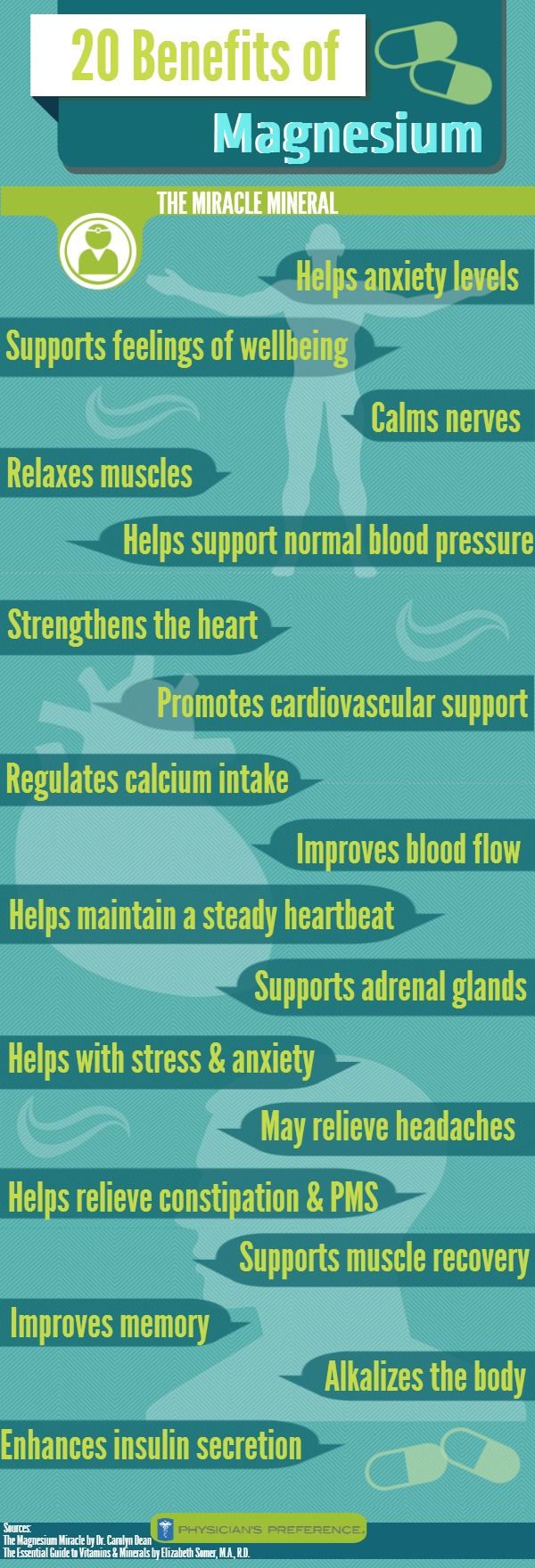
Included below is a vital health chart that contains the top 20 health benefits of magnesium.  Some of these benefits include remedying sleeplessness and insomnia, calming the nerves, strengthening the heart, lowering blood pressure, relieving headaches and soothing PMS.

Chronic insomnia is one of the main symptoms of magnesium deficiency. Sleep in magnesium deficiency is usually agitated with frequent nighttime awakenings.  On the other hand, a high magnesium diet has been found to be associated with deeper, less interrupted sleep. This was shown in a study done by the Human Nutrition Research Center in North Dakota.

This news is brought to you by Nutrition Breakthroughs, maker of Sleep Minerals II.  Sleep Minerals II is the original magnesium and calcium based sleep remedy, known for soothing even the worst insomnia.  It helps everyone from teenagers, to women with menopause symptoms, to older seniors, to get a good night’s sleep.  For more information, visit the Sleep Minerals II page.

To your health,

Jobee Knight
Nutrition Breakthroughs

magnesium benefits - top 20

Provided by http://Nutrition Breakthroughs.com

Tags: , , , , , , , , , , , , , , , , , , , , , , , , , , , , , , , , , , , , , , , , , , , , , , , , , , , , , , , , , , , , , , , , , , , , , , , , , , , , , , , ,