News on Natural Remedies, Good Sleep and Good Health

Posts Tagged ‘vitamin d bones

Vitamin D isn’t just another nutrient — it’s a powerful hormone your body makes when sunlight hits your skin. That’s why it’s often called the “sunshine vitamin.”

But here’s the challenge: Many people don’t get enough sunlight or vitamin D-rich foods, which makes deficiency very common. Studies suggest over 40% of Americans have low levels. (Forrest & Stuhldreher, 2011).


Why Vitamin D Is So Important

Vitamin D does more than support bone strength. It acts like a hormone, influencing multiple systems in the body.

  • Bone and Muscle Health: Vitamin D helps the body absorb calcium and phosphorus, two minerals essential for bone strength and muscle function. A lack of vitamin D increases the risk of osteoporosis and fractures, especially in older adults [(Holick, 2007, New England Journal of Medicine)].
  • Immune Function: Adequate vitamin D levels support the immune system, reducing the risk of respiratory infections and autoimmune conditions
  • Mood and Brain Health: Research links vitamin D deficiency with a higher risk of depression and cognitive decline.
  • Sleep Support:: Vitamin D is proven to provide better sleep quality (“The world epidemic of sleep disorders is linked to vitamin D deficiency” – Gominak & Stumpf, 2012).

Common Sources of Vitamin D

Since few foods naturally contain vitamin D, sunlight and supplementation often play the biggest role in maintaining healthy levels.

  • Sunlight: The body can produce vitamin D after 10–30 minutes of midday sun exposure on the skin, depending on skin tone, location, and season [(Holick, 2007, NEJM)].
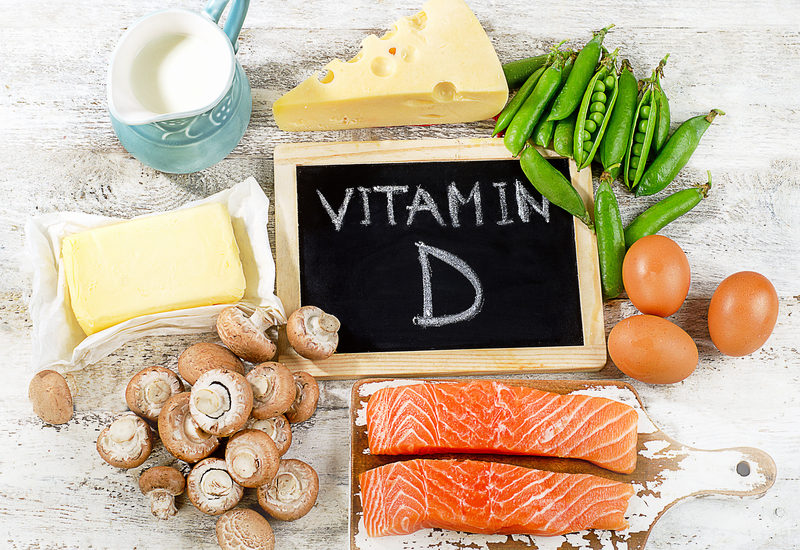
  • Foods: Fatty fish (salmon, sardines, mackerel), egg yolks, and fortified foods such as milk, orange juice, and cereals provide vitamin D.
  • Supplements: Vitamin D3 (cholecalciferol) is more effective at raising blood levels than vitamin D2 (ergocalciferol).

How Much Vitamin D Do You Need?

The recommended dietary allowance (RDA) varies by age:

  • Adults under 70: 600 IU per day
  • Adults over 70: 800 IU per day
  • Some experts suggest higher levels (1,000–2,000 IU daily) may be beneficial for certain populations.

Blood tests are the best way to determine vitamin D status.


Risks of Deficiency

A lack of vitamin D can lead to:

  • Rickets in children, a condition causing bone weakness and deformities
  • Osteoporosis and fractures in adults
  • Higher risk of infections, fatigue, and mood disorders

People at higher risk include those with darker skin, limited sun exposure, older adults, and individuals with digestive disorders that reduce nutrient absorption.

Key Nutrients That Work With Vitamin D

Vitamin D works best with these other nutrients:

  • Magnesium – supports vitamin D metabolism.
  • Vitamin A – balances fat-soluble vitamin intake (naturally found in cod liver oil, along with vitamin D).

Final Thoughts

Vitamin D is more than just a nutrient — it’s a foundation for bone health, immune strength, and mood improvement. If you’re not getting enough from sunlight and food, supplementation can help fill the gap.

FAQ – Frequently Asked Questions

Q: Can I get enough vitamin D from food alone?
A: It’s possible, but difficult. Fatty fish and fortified foods help, but most people still need sunlight or supplements.

Q: Is too much vitamin D harmful?
A: Yes. Excess vitamin D can cause calcium buildup in the blood, leading to kidney and heart issues. Stick to safe daily limits unless advised otherwise by a professional.

Q: Does sunscreen block vitamin D production?
A: Sunscreen can reduce vitamin D synthesis. Moderate sun exposure without burning usually provides enough.

Q: Should I take vitamin D2 or D3?
A: Vitamin D3 is generally more effective at raising blood levels, though both can be beneficial.

Nutrition Breakthroughs

This natural health news is provided by Nutrition Breakthroughs, a publisher of nutrition articles and supplier of effective natural remedies since 2002. Nutrition Breakthroughs makes Sleep Minerals II, the effective natural sleep aid with calcium, magnesium, zinc and vitamin D.

Suzanne G. of Tucson, Arizona says: “I am now taking two Sleep Mineral II capsules each night. I have had insomnia for most of my life and the longer I take Sleep Minerals, the better I sleep. The best thing is that I can now get back to sleep if I wake up in the night. It has given me such a sense of peace to know that I now can be well rested during the day.. I have tried many products on the market and this is the one that is gold. Thank you so much for producing a quality product!”

exercise for bone healthWhat if a research study was conducted with actual real human beings (not animals) that demonstrated a mere one to two minutes a day of exercise could result in better, stronger bones?  Well, there  is one.

With increasing age, our bones become weaker and less dense, particularly in women after menopause due to the decline in estrogen and calcium in the body.  More and more studies are finding that physical movement and activity can counteract the effects of weaker bones and any tendency toward bone fractures.

Epidemiology is the study of how often various diseases occur and also what possible ways or methods might exist to control or eradicate them.  The most recent study on the topic of bone health was published in the International Journal of Epidemiology.  The burning question in the researcher’s minds was this: How do we discover what type of exercise, what quantity of exercise, and what intensity, would provide the most positive, beneficial impact on bone strength.

For the study, both pre and post-menopausal women wore small wrist monitors for a week that measured and recorded the intensity of their physical movements.  It was particularly important to the researchers to be able to record very short amounts of activity.  They looked at data for more than 2,500 women, and compared their activity levels with bone health, which was measured by an ultrasound scan of heel bone.

The outcome?  A mere one to two minutes of flat-out, intense exercise resulted in an increase in bone strength.  This translates to a minute or two of slow jogging for a post-menopausal woman or a minute or two of running for a pre-menopausal woman in order to achieve a 4% increase in bone health.  Women who did more than two minutes had a 6% increase.  (Please see further recommendations below on how to safely transition into more intense exercise).

The lead author of the study, Dr Victoria Stiles of the University of Exeter in the UK, said: “We wanted to make every second count in our analysis, because short snippets of high-intensity activity are more beneficial to bone health than longer, continuous periods. We were careful not to ignore short bursts of activity throughout the day.”

Dr. Stiles makes a suggestion for people who are interested in upping their levels of daily exercise.  She said: “The UK’s National Osteoporosis Society recommends increasing your walking activity first.  Further on, we would suggest adding a few running steps to the walk, a bit like you might do if you were running to catch a bus.”

Another proven way to increase bone health is to include more calcium-rich foods in the diet.  Olive oil, leafy greens, almonds, raw cheeses, yogurt, broccoli and carrots are good choices.  Calcium, magnesium and vitamin D supplements are also beneficial.  Not only do these minerals strengthen bone and muscle health, but they are proven to calm sleeplessness and insomnia as well.

One study published in the European Neurology Journal found that calcium levels in the body are higher during some of the deepest levels of sleep, such as the rapid eye movement (REM) phase. The study concluded that disturbances in sleep, especially the absence of REM deep sleep or disturbed REM sleep, are related to a calcium deficiency.

William Sears, M.D. writes: “Calcium helps the brain use the amino acid tryptophan to manufacture the sleep-inducing substance melatonin. This explains why dairy products, which contain both tryptophan and calcium, are one of the top sleep-inducing foods.”

One calcium-based supplement shown to be effective for insomnia is Sleep Minerals IIfrom Nutrition Breakthroughs.  This formula contains highly absorbable forms of calcium and magnesium, the best minerals for sleeplessness and insomnia, as well as for menopause insomnia, heart health, restless leg syndrome and bone strength.  It also includes vitamin D and zinc and is delivered in a softgel form with healthy carrier oils, making it more quickly absorbable than tablets or capsules and providing a deeper, longer-lasting sleep.

Sadie D. from the Netherlands says: “I am ever so grateful that I discovered Sleep Minerals II after suffering with premenopause and now the real menopause insomnia.  I felt like I was slowly losing my mind due to the continual lack of sleep.  I can’t express the relief of getting a good night’s sleep and being able to function properly.”

Richard P. of Parkville, Maryland says: “The Sleep Minerals are making quite a difference.  I was regularly waking up at around 3:00 a.m. and couldn‘t go back to sleep. Now I wake up once to go to the bathroom, but the great thing is, I then fall back asleep and sleep several more hours.”

The main message is that a combination of exercise and calcium tend to ignite into a dynamic duo that can bring great boosts to bone health, healthy sleep and good overall health.

This health news is provided by Nutrition Breakthroughs, a publisher of nutrition articles and supplier of effective natural remedies since 2002. Nutrition Breakthroughs makes the original calcium and magnesium based natural sleep aid Sleep Minerals II, as well as Joints and More, the natural solution for joint relief, aches and pains, stronger hair and nails and more energy.


Article source: https://www.nutritionbreakthroughs.com/blog/2018/04/21/study-reveals-better-bone-health-from-1-minute-of-exercise/

Tags: , , , , , , , , , , , , , , , , , , , , , , , , , , , , , , , , , , , , , , , , , , , , , , , , , , , , , , , , , , , , , , , , , , , , , , , , , , , , , , , , , , , , , , , , , , , , , , , , , , , , , , , , ,

Vitamin D is known as the “Sunshine Vitamin” because spending time outdoors in the sun vitamin d3is known to increase vitamin D levels in the body via the skin.  Our ancestors spent a considerable amount of their time outdoors, but for the first time in history, large amounts of the world population spend most of their time inside their offices and homes.

This has lead to a widespread vitamin D deficiency.  Spending some time in the sun a few days a week is good, and when taking supplements, vitamin D3 is the best form.

Besides strengthening muscle and bone, researchers have also discovered that vitamin D helps to regulate the sleep-wake cycle and its deficiency has a role in the current global epidemic of sleep disorders. This makes vitamin D a vital benefit in insomnia, which is another condition that can often plague menopausal women.

The newest vitamin D study from Brazil focused on muscle strength in postmenopausal women and took place over a nine-month period.  It was a placebo controlled trial and was double-blinded – which means that neither the participants nor the researchers knew which women received the vitamin D and which didn’t.  Three types of tests were used to measure muscle strength: A chair rising test that measured leg strength when standing up from a chair, a total body x-ray, and a hand-grip test.

At the conclusion of the trial, the women who received the placebo ended up having reduced muscle mass and muscle degeneration of 6.8%.  They also had twice as many falls as the vitamin D group.  On the other hand, the women who took the vitamin D supplement had a major increase in their muscle strength of over 25% — even when taken 12 years after menopause. The results of the research were presented at the annual meeting of the North American Menopause Society.

Dr. L.M Cangussu of the Botucatu Medical School at Sao Paulo State University in Brazil said: “We concluded that the supplementation of Vitamin D alone provided significant protection against the occurrence of sarcopenia, which is a degenerative loss of skeletal muscle.”

Vitamin D has many vital roles in the health of the body, including supporting the heart, brain and nerves.  Additionally, a study from the Journal of Investigative Medicine found that vitamin D is a strong boost to immunity and that deficiency is common in autoimmune disease – a group of diseases where the body’s immune system attacks healthy cells by mistake. These include multiple sclerosis, rheumatoid arthritis, diabetes and inflammatory bowel disease.

Foods containing vitamin D on a wooden background. View from aboveSome good vitamin D-rich foods include cod liver oil, sardines, salmon, mackerel, eggs and herring. The best supplement form to take is vitamin D3, as this is the natural form made by the sun on skin, rather than D2.

This natural health news is provided by Nutrition Breakthroughs, a publisher of nutrition articles and supplier of effective natural remedies since 2001. Nutrition breakthroughs makes Sleep Minerals II, the effective natural sleep aid with calcium, magnesium and vitamin D3, as well as Joints and More, the natural solution for joint relief, aches and pains, stronger hair and nails and more energy.


Article source: http://www.nutritionbreakthroughs.com/blog/2016/06/26/new-menopause-study-vitamin-d-builds-muscle-strength/

Hello,

Included below is a great chart showing the top 10 Vitamin D rich foods. Vitamin D is known as the “Sunshine Vitamin” as spending time outdoors in the sun is known to increase vitamin D in the body via the skin. Our ancestors spent a considerable amount of their time outdoors, but for the first time in history, large amounts of the world population spend most of their time inside their offices and homes.

The American Journal of Clinical Nutrition recommends some regular sun exposure (usually 5–10 min of exposure of the arms and legs or the hands, arms, and face, 2 or 3 times per week) and increased dietary and supplemental vitamin D to guarantee getting enough and preventing a vitamin D deficiency. The foods highest in vitamin D are featured in the chart below.

Vitamin D supports healthy bones, reduces diabetes risk, strengthens the immune system, remedies insomnia and soothes skin conditions. One study on vitamin D supplements for people with insomnia was published in the journal “Medical Hypothesis”. The researchers followed 1500 patients over a 2 year period. A consistent level of vitamin D3 was maintained in their blood over many months.

This produced normal sleep in most of the participants, regardless of their type of sleep disorder. During the research, the authors discovered the presence of high concentrations of vitamin D “receiving sites” or “receptors” in those areas of the brain that are related to the onset and maintenance of sleep.

Vitamin D supports healthy bones. Vitamin D deficiency is a known cause of rickets (soft bones) in children and osteoporosis in adults.The pioneering nutritionist Adelle Davis writes about vitamin D in her book “Let’s Get Well”. She says: “Vitamin D increases calcium absorption…and controls the enzymes necessary to deposit minerals in bones and teeth. This vitamin can be produced on the skin by sunshine provided the oils have not been washed off (the skin).”

A study from the Journal of Investigative Medicine found that vitamin D has important functions beyond those of supporting calcium and bones in the body.  It concluded that vitamin D is a boost to immunity and a deficiency of the vitamin is common in autoimmune disease – a disease where the body’s immune system attacks healthy cells by mistake. These include multiple sclerosis, rheumatoid arthritis, diabetes and inflammatory bowel disease.

In the “Top 10 vitamin D Foods” chart below, the foods are shown with their amounts of vitamin D and what percentage of the recommended daily value (DV) they have. For example, 3 ounces of sardines provides 164 IU (international units) of vitamin D and this is 41% of the recommended daily intake of 400 IU. Daily values are developed by the U.S. Food and Drug Administration to help provide a general guideline, however doses of 1,000 to 2,000 IU or more daily are not uncommon.

Good vitamin D foods include cod liver oil, sardines, salmon, mackerel, eggs, herring, raw maitake mushrooms, and vitamin D fortified milk and yogurt.

This health news is shared by Nutrition Breakthroughs, a provider of natural health articles and effective natural remedies since 2001. Nutrition Breakthroughs makes the original calcium and magnesium based sleep aid Sleep Minerals II, as well as Joints and More, the natural solution for joint relief, aches and pains and stronger hair and nails.

Enjoy the chart….

Vitamin D foodsShared by www.NutritionBreakthroughs

Greetings to you,

I’ve included an interesting chart below with the healthiest foods for building good bones.  Nuts, seeds and selected green vegetables are high in calcium and magnesium, which are known to strengthen bones.  Foods rich in vitamin D are also beneficial.

For vitamin D, spend a bit of time outside in the sunshine and also eat fish like tuna, mackerel and salmon.

To your good health,

Jobee Knight
Nutrition Breakthroughs
Maker of Natural Sleep Aids and Joint Relief Products

bones, best foods

Vitamin D is known as the “Sunshine Vitamin” because spending time outdoors in the sun is known to increase vitamin D in the body via the skin. Our ancestors spent a considerable amount of their time outdoors, but for the first time in history, large amounts of the world population spend most of their time inside their offices and homes. Researchers at the East Texas Medical Center and the University of North Carolina have discovered that vitamin D helps to regulate the sleep-wake cycle. They’ve found a definite link between vitamin D deficiency and the current global epidemic of sleep disorders.

Rapid eye movement sleep (REM) is one of the deepest levels of sleep. It is the level in which dreaming occurs, and its related to good memory and learning. A disruption of REM sleep or an absence of it, is one form of insomnia. Other sleep disorders include sleep apnea – which involves interrupted or obstructed breathing or snoring during the night; insomnia from hormone fluctuations such as with menstruation or menopause; restless leg syndrome; and periodic limb movement disorder, a condition where the person moves their limbs involuntarily during sleep.

The results of the clinical trial of vitamin D supplementation was published in a recent issue of the journal “Medical Hypothesis”. The researchers followed 1500 patients over a 2 year period. A consistent level of vitamin D3 was maintained in their blood over many months. This produced normal sleep in most of the participants, regardless of their type of sleep disorder, which suggests that many types of insomnia may share the same cause. During the research, the authors discovered the presence of high concentrations of vitamin D “receiving sites” or “receptors” in those areas of the brain that are related to the onset and maintenance of sleep.

Calcium is also directly related to our cycles of sleep. In one study, published in the European Neurology Journal, researchers found that calcium levels in the body are higher during the rapid eye movement (REM) phase. This study concluded that disturbances in sleep, especially the absence of REM deep sleep or disturbed REM sleep, are related to a calcium deficiency. Restoration to the normal course of sleep was achieved following the normalization of the blood calcium level. As a note, calcium works best when its balanced with magnesium in a two to one ratio (with twice as much calcium as magnesium).

Natural insomnia remedies containing vitamin D and calcium can be helpful with both falling asleep and staying asleep during the night. One remedy that’s designed for many forms of insomnia is Sleep Minerals II from Nutrition Breakthroughs. This sleep aid contains highly absorbable forms of vitamin D3, calcium, and magnesium, the best ingredients for sleeplessness and insomnia, as well as for heart health, restless legs syndrome, bone strength, menopause insomnia and teenage insomnia. The formula is delivered in a softgel form with healthy carrier oils, making it more rapidly absorbable than tablets or capsules and providing a deeper, longer-lasting sleep.

Doctor P. P. of Houston, Texas says: “I had developed sleeping problems and took two different sleep medications over the course of several weeks. When I discontinued them, the insomnia came back even worse. Sleep Minerals II was just what I needed. I’ve been taking it for a couple weeks now and getting many hours of sleep a night. As a doctor I would definitely avoid prescribing sleeping drugs – I would recommend Sleep Minerals II.”

The authors of the vitamin D study noted that sleeping disorders have played a role in the development of medical conditions such as hypertension, heart disease, stroke, diabetes, depression, and chronic pain — all of which have become widespread similarly to insomnia. The authors suggest further research be done on the management of vitamin D levels in a variety of medical conditions related to sleep.

For more information on Sleep Minerals II, click here.

Researchers at National Jewish Health have discovered specific molecular and signaling (cellular communication) events by which vitamin D inhibits inflammation. In their experiments, they showed that low levels of Vitamin D, comparable to levels found in millions of people, failed to inhibit the inflammatory cascade (response in the body), while levels considered adequate did inhibit inflammatory signaling. They reported their results in the March 1, 2012, issue of The Journal of Immunology.

Here are some excerpts from the ScienceDaily article:

Through a complex series of experiments, the researchers identified a new location where the vitamin-D receptor appears to bind directly to DNA and activate a gene…..that ….interferes with the inflammatory cascade (response).

“This newly identified DNA-binding site for the vitamin-D …, and the specific (inflammation) pathways inhibited by higher levels of vitamin D provide a plausible mechanism for many of the benefits that have been associated with vitamin D,” said Dr. Goleva. ‘The fact that we showed a dose-dependent and varying response to levels commonly found in humans also adds weight to the argument for vitamin D’s role in immune and inflammatory conditions.”

Comment from the blog author Nutrition Breakthroughs:

Vitamin D has been found to be beneficial for many health conditions such as increasing calcium absorption, strengthening bones, and reducing cancer risk. According to the National Institutes of Health, vitamin D might play some role in the prevention and treatment of type 1 and type 2 diabetes, high blood pressure, glucose intolerance, multiple sclerosis, and other medical conditions.

Due to the fact Vitamin D improves the absorption of calcium, it can assist relaxing minerals such as calcium and magnesium to be more effective as insomnia remedies.  Sleep Minerals II from http://www.NutritionBreakthroughs.com is an effective sleep remedy that contains absorbable forms of magnesium and calcium, as well as Vitamin D. For more information on Sleep Minerals II, visit this link:
http://www.nutritionbreakthroughs.com/html/sleep_remedy_for_insomnia_help.html