Posts Tagged ‘teenage insomnia’
 ScienceDaily – A healthy diet is especially important during the menopause — a period in which the risk of suffering from health problems increases. For the current study, various programs have analyzed the diet of peri- and postmenopausal women in Spain, alongside the troubles that come with this transition. The results show that all of those groups studied have a deficient intake of vitamin D.
Marina Pollán, researcher at the Carlos III Institute of Health in Spain and one of the authors of the study explains that “biological and physiological changes in women caused by the menopause come with a greater risk of developing health problems in which diet plays an important role. These include diabetes, osteoporosis, cardiovascular disease and certain types of cancer.”
Therefore, the analysis of dietary patterns during and after the menopause is of particular interest because of its health implications. However, in Spain there have been very few studies that have assessed the diet of peri- and postmenopausal women.
In order to study these dietary habits, the authors of the study analysed 3574 women from the age of 45 to 68 from October 2007 to July 2008. Each program contained a minimum of 500 women from seven Spanish cities and involved a food frequency questionnaire validated by the Spanish population.
The results show that obesity rates stand at 29% whereas 42% of menopausal subjects are overweight. Average calorie intake was 2053 calories (with 43% of energy intake coming from carbohydrates, 36% from fats and 20% from proteins). Researchers highlight that practically all of the women received the recommended intake of all the vitamins, apart from D and E.
The case of vitamin D is striking given that none of the groups reached 50% of their RDA (Recommended Daily Allowance). The average total intake was 2.14 micrograms per day, which constitutes just 39% of the RDA for women of this age group.
“A diet with less fat and protein that is high in vegetables, nuts, and carbohydrate-rich foods will even out the energy balance and correct levels of vitamin D and E,” according to the researchers.
Comments from the blog author Nutrition Breakthroughs:
Women in the pre-menopause and menopause time period can reap many benefits from increasing their intake of vitamin D, calcium and magnesium. These nutrients support the heart and bones, and are also effective remedies for sleeplessness and insomnia.
Regarding mineral deficiency at the time of menopause, nutritionist Adelle Davis says, “The amount of calcium in a woman’s blood parallels the activity of the ovaries. During the menopause, the lack of ovarian hormones (estrogen and progesterone) can cause severe calcium deficiency symptoms to occur, including irritability, hot flashes, night sweats, leg cramps, and insomnia. These problems can be easily overcome if the intakes of calcium, magnesium, and vitamin D are all generously increased and are well absorbed.”
One insomnia remedy becoming popular among menopausal women is Sleep Minerals II from http://www.nutritionbreakthroughs. Sleep Minerals II contains powerful forms of the best known minerals for relaxation and sleep — calcium and magnesium, combined with vitamin D and zinc. The ingredients are formulated in a softgel with healthy oils, making them more quickly absorbable than tablets or capsules and providing a deeper, longer-lasting sleep.
Valerie H. of Santa Clarita, California says: “I had such bad menopause insomnia it took me hours to fall asleep even though I was extremely tired. My legs also had crawling and tingling feelings at night. I got the Sleep Minerals and after a few days, it started to work really well. I fall asleep now within 20 minutes and no more restless legs.”
For more information on Sleep Minerals II, visit http://www.nutritionbreakthroughs.com/html/sleep_remedy_for_insomnia_help
——————————
Greetings to you,
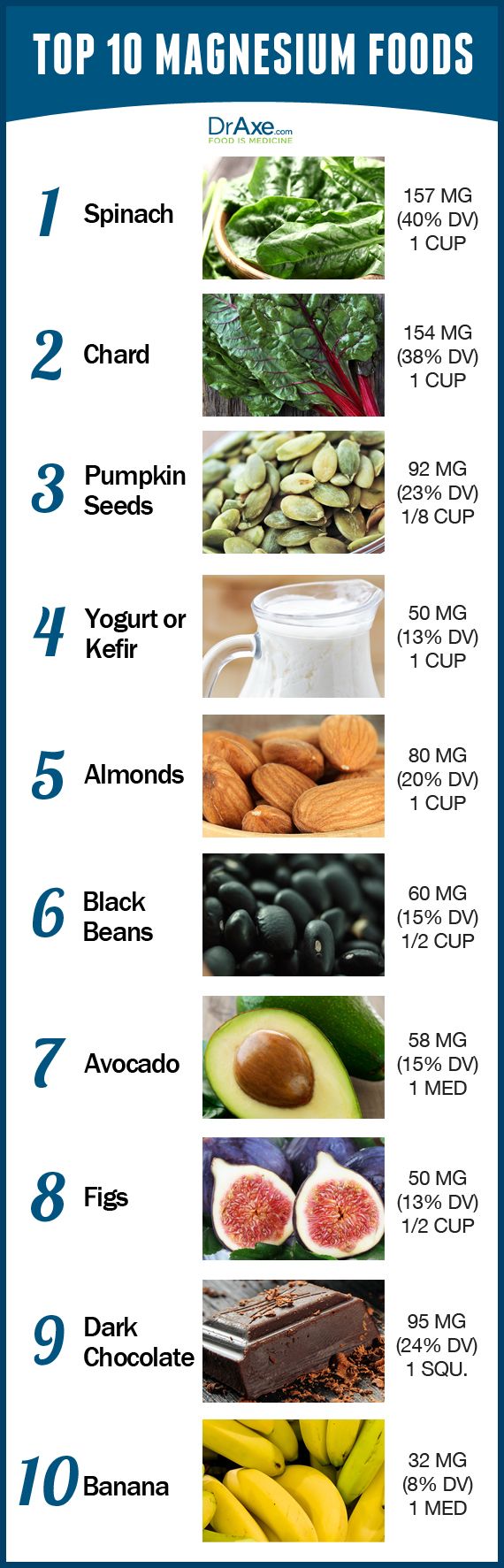
Magnesium deficiency is very common these days. A recent government study shows that 68% of Americans do not consume the recommended daily intake of magnesium. I’ve included a helpful chart below that contains some of the top magnesium rich foods. Magnesium supplements are a good option as well, particularly those containing magnesium citrate which is very absorbable.
Sidney Baker, M.D., a practicing doctor with a special interest in the nutritional aspects of chronic health problems says: “Magnesium deficiency can affect virtually every organ and system of the body. One may experience muscle twitches, cramps, soreness, back aches, neck pain, tension headaches, and fatigue or weakness.”
Studies show that magnesium can soothe insomnia, support heart health, normalize blood sugar, relieve headaches and ease menopause symptoms. In one study from the University of Iran, people with insomnia were given magnesium tablets twice a day for eight weeks. They experienced significant increases in quality sleep time, with less night time interruptions and fewer early morning awakenings.
This news is brought to you by Nutrition Breakthroughs. For more information on the original magnesium and calcium based sleep aid, visit the Sleep Minerals II web page.
To your good health,
Jobee Knight
Nutrition Breakthroughs.com
Frequently Asked Question #1 on Sleep Minerals II, Effective Natural Sleep Aid
Posted on: November 8, 2014
Greetings to you,
Sleep Minerals II is an effective natural sleep aid from Nutrition Breakthroughs. It is the original drug-free calcium and magnesium formula for relaxation and better sleep. It contains powerful forms of these minerals in combination with vitamin D and zinc. The ingredients are formulated in a softgel with healthy oils, making them more quickly absorbable than tablets or capsules and providing a deeper, longer-lasting sleep.
Frequently Asked Question #1:
- Can I continue to take my regular calcium and magnesium supplement, or the calcium and magnesium provided in my multiple vitamin/mineral when I start taking Sleep Minerals II? Will I be getting too many minerals?
It is totally fine to continue to take your regular supplements. These are generally taken during the day, whereas Sleep Minerals II is taken in the evening. Also, the calcium and magnesium in a hard tablet or a capsule is different than the form of minerals found in Sleep Minerals II, and is generally not absorbed as well. So there isn’t a large chance of getting too many minerals.
The minerals in Sleep Minerals II are mixed with healthy rice bran oil and this combination forms a creamy paste inside the softgel. This is why it is assimilated so well into the body and this makes it soothing and effective as a natural sleep remedy.
One thing that can happen if you take too many minerals for your system is your bowels may become too loose or you may become groggy in the morning. If this happens, you can reduce your dose of Sleep Minerals, or take less than one softgel if you’re taking only one. This is done by gently biting one end open and squeezing out half or less, and drinking it down. It can also be spread on some food. Save the rest in a baggie or other container.
Here’s to your good sleep.
Best of health,
Jobee Knight
Nutrition Breakthroughs
For more information on Sleep Minerals II, visit http://www.nutritionbreakthroughs.com/html/sleep_remedy_for_insomnia_help.html
 From the American Journal of Otolaryngology (Diseases of the Ear and Throat)
Introduction: Following animal experiments where correlations were observed between blood magnesium level and noise-induced permanent hearing threshold shifts, we tested the prophylactic (disease preventing) effect of magnesium in human subjects exposed to hazardous noise.
Methods: Subjects were 300 young, healthy, and normal-hearing recruits who underwent 2 months of basic military training. This training necessarily included repeated exposures to high levels of impulse noises while using ear plugs. During this placebo-controlled study, each subject received daily an additional drink containing either 167 mg magnesium aspartate or a similar quantity of placebo.
Results: Noise induced hearing damage was significantly more frequent and more severe in the placebo group than in the magnesium group, and was correlated to the magnesium content of red blood cells. Long-term intake of a small dose of oral magnesium was not accompanied by any notable side effect.
Concluslon: This study may introduce a significant natural agent for the reduction of hearing damages in a noise-exposed population.
This news is provided to you by http://NutritionBreakthroughs.com. Since 2001, Nutrition Breakthroughs has provided natural health articles and effective natural remedies. Their mission is to provide nutritional supplements that work well and help people avoid drugs and their side effects.
Since 2009, their natural sleep aid Sleep Minerals II has been keeping this promise — by soothing even the worst insomnia and helping everyone from teenagers, to women with menopause symptoms, to older seniors, in their quest to get a good night’s sleep. For more information on Sleep Minerals II visit here.
 Article courtesy of Eurekalert. org
The most common joint disease among Americans, osteoarthritis is a condition where the natural cushioning between joints – the cartilage – wears away. Because symptom management is often ineffective and joint replacement is major surgery, many osteoarthritis suffers seek natural approaches.
Grapes are rich in anti-inflammatory compounds that have been shown to reduce inflammation. Shanil Juma, from Texas Woman’s University and colleagues conducted a sixteen week clinical study, in which 72 men and women with knee osteoarthritis were assigned to either consume grapes in the form of a whole grape freeze-dried powder, or a placebo powder.
The data revealed that both men and women consuming a grape-enriched diet had a significant decrease in self-reported pain related to activity and an overall decrease in total knee symptoms – notably, improved joint flexibility and overall mobility.
This beneficial effect was more pronounced in females. Attributing these observed benefits to the anti-inflammatory compounds found in grapes, the lead investigator comments that: “These findings provide promising data that links grape consumption to two very important outcomes for those living with knee osteoarthritis: reduced pain and improvements in joint flexibility.”
This news is provided by Nutrition Breakthroughs. Their mission is to provide nutritional supplements that get results, and therefore help people to avoid addictive drugs and their side effects.
Since 2009, their natural sleep aid Sleep Minerals II has been keeping that promise — by providing highly absorbable forms of calcium and magnesium that soothe even the worst insomnia and help everyone from teenagers, to women with menopause symptoms, to seniors, to get a good night’s sleep.
Their newest product is Joints and More, providing joint relief, allergy relief, hair growth, increased energy and more.
Article source: http://www.eurekalert.org/pub_releases/2014-05/ral-gcm050814.php
A recent issue of “Medicine and Science in Sports and Exercise” published the results of a study on patients with periodic leg movements (PLM). PLM is a night-time problem similar to restless leg syndrome (RLS). It is repetitive cramping or jerking of the legs during sleep. Here are the results of the study, which was done at the Federal University of Sao Paulo, Brazil:
PURPOSE:
Non-drug approaches may lead to an improvement in sleep quality. The objective of our study was to evaluate the effects of intensive (intense short-term) exercise and chronic (regular) exercise on sleep patterns in patients with periodic leg movements (PLM).
METHODS:
The study involved acute and chronic exercise. The acute intensive exercise group consisted of 22 volunteers who underwent testing and also a sleep study on the same night. The chronic exercise group included 11 patients who performed 72 physical training sessions. Blood samples were collected from the groups.
RESULTS:
The results showed that both forms of physical exercise lowered periodic leg moverment levels. The acute physical exercise increased sleep efficiency, rapid eye movement (deeper) sleep, and reduced waking after sleep onset, whereas the chronic physical exercise increased sleep efficiency, rapid eye movement sleep, and reduced the time needed to fall asleep. The researchers also found a significant correlation between the release of natural pain killers in the body after acute intensive exercise and the reduction of periodic leg movement symptoms.
CONCLUSION:
The researchers suggest that physical exercise may be a useful non drug-based treatment for periodic leg movements.
NEWS PROVIDED BY:
This health information is provided by Nutrition Breakthroughs, maker of the effective natural insomnia remedy Sleep Minerals II. Sleep Minerals II contains highly absorbable forms of calcium and magnesium, the best minerals for sleeplessness and insomnia, as well as for heart health, restless legs syndrome, bone strength, and menopause insomnia.
The formula also includes vitamin D and zinc and is delivered in a softgel form with healthy carrier oils, making it more quickly assimilated than tablets or capsules and providing a deeper, longer-lasting sleep.
In one study from the Romanian Journal of Neurology, researchers conducted biochemical and neurological tests in cases of restless leg syndrome. The investigators reported important disorders of sleep organization. They found agitated sleep with frequent periods of nighttime awakenings and a decrease of the duration and percentage of the deeper rapid eye movement (REM) sleep – also found in other forms of insomnia caused by magnesium deficiency.
Kimberly B. of Troy, Michigan says: “I have been taking Sleep Minerals II for about a month now. I have tried everything out there and this supplement is amazing. I have suffered with insomnia for 2 1/2 years. I have also had restless leg syndrome my entire life and this is the first relief I’ve ever had…gone for a month now.”
To learn more, visit the Sleep Minerals II page.
The key to being attractive and looking healthy? A good night’s sleep
Research: Beauty Sleep — Experimental Study on the Perceived Health and Attractiveness of Sleep Deprived People
If you want to look attractive and healthy, the best thing you can do is get a good night’s sleep, according to research from an article published on the website of the British Medical Journal.
For the first time, say the authors, there is scientific backing for the concept of beauty sleep.
The study, led by John Axelsson from the Karolinska Institutet in Sweden, investigated the relationship between sleep and the perceptions other people have of our attractiveness and health. The authors believe this research is important in today’s 24 hour society, with the number of people suffering from sleep disorders and disturbed sleep on the rise.
Twenty-three participants between the ages of 18 to 31 took part in the study. They were photographed between 2pm and 3pm on two occasions, once after normal sleep and once after being deprived of sleep. Smokers were excluded from the research and no alcohol was allowed for two days prior to the experiment.
The photographs were taken in a well-lit room and the distance to the camera was fixed. During both photography sessions participants wore no make-up, had their hair loose (combed back if they had long hair) and underwent similar cleaning or shaving procedures. They were asked to have a relaxed, neutral facial expression for both photos.
Sixty-five observers, who were blinded to the sleep status of the subjects, rated the photographs for attractiveness, a pleasing or non-pleasing appearance, and whether the individuals looked healthy/unhealthy or tired/not tired. The observers judged the faces of the sleep-deprived participants as less healthy, less attractive, and more tired.
The researchers concluded that the facial signals of sleep deprived people affect facial appearance, and judgments of attractiveness, pleasing appearance, health and tiredness. These signs are sufficient for others to judge them as less healthy and less attractive, lending the first scientific support to the concept of “beauty sleep”.
This news is provided by http://Nutrition Breakthroughs. Since 2009, their natural sleep aid Sleep Minerals II has been soothing insomnia and helping everyone from teenagers, to seniors, to women with menopause symptoms, to get a good night’s sleep. Sleep Minerals II can assist with maintaining one’s Beauty Sleep and attractiveness during times of sleeplessness.
Chris M. of the United Kingdom says: “I take one softgel of Sleep Minerals II before bed every night and within 20 minutes I am asleep. The difference in the quality of my sleep and the ease with which I get to sleep using this product is monumental. I have stopped obsessing about sleep or dreading bedtime — I just take a softgel and drift off. If I stop taking them, within a week my sleep starts to lighten in quality, the amount of my sleep diminishes, and my old insomniac patterns reappear.”
For more information, visit the Sleep Minerals II page.
Source: The British Medical Journal: http://www.bmj.com/content/341/bmj.c6614
 From ScienceDaily .com
A placebo-controlled study by the University of Oxford in the United Kingdom suggests that higher levels of omega-3 (DHA), the group of fatty acids found in algae and seafood, are associated with better sleep. The researchers explored whether 16 weeks of daily 600 mg. supplements of algae sources would improve the sleep of 362 children.
The children who took part in the study were not selected for sleep problems, but were all struggling readers at a mainstream primary school. At the outset, the parents filled in a child sleep questionnaire, which revealed that 40% of the children in the study suffered from regular sleep disturbances. Of the children rated as having poor sleep, the researchers fitted wrist sensors to 43 of them to monitor their movements in bed over five nights.
This exploratory study showed that the children on a course of daily supplements of omega-3 had nearly one hour (58 minutes) more sleep and seven fewer waking episodes per night compared with the children taking the corn or soybean placebo. The findings are due to be published in the Journal of Sleep Research.
This news is brought to you by Nutrition Breakthroughs.com. Since 2001 Nutrition Breakthroughs has been providing natural health articles and effective natural remedies. Their mission is to provide nutritional supplements that get results, and therefore help people to avoid addictive drugs and their side effects.
Since 2009, their natural sleep remedy Sleep Minerals II has been keeping that promise — by soothing even the worst insomnia and helping everyone from teenagers, to women with menopause symptoms, to seniors, to get a good night’s sleep.
For more information on the effective natural insomnia remedy Sleep Minerals II, visit http://www.NutritionBreakthroughs.com/html/Sleep_Aid
Article source: http://www.sciencedaily.com/releases/2014/03/140306103931.htm
Greetings to you,
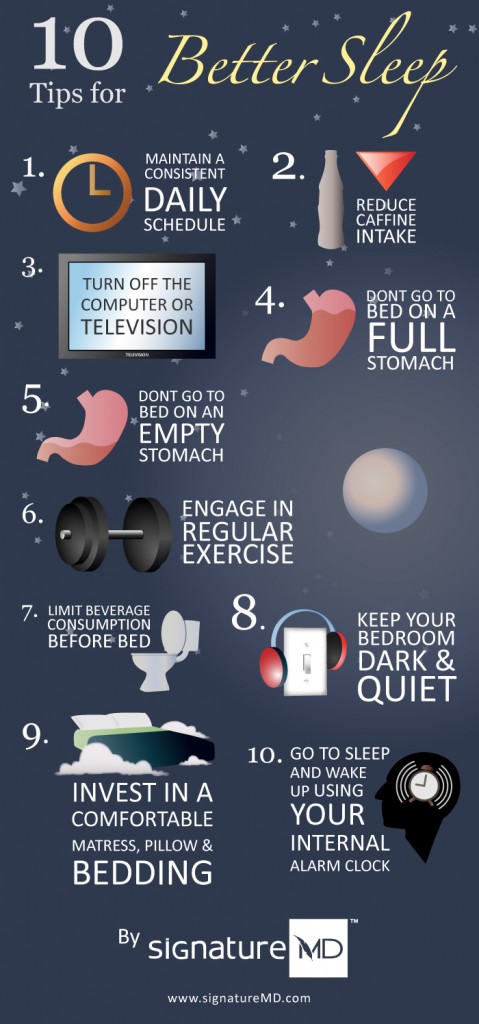
There is a great chart included below with 10 tips for better sleep. The additional tip is to take highly absorbable calcium and magnesium softgels before bed. In one study, published in the European Neurology Journal, researchers found that calcium levels in the body are higher during some of the deepest levels of sleep, such as the rapid eye movement (REM) phase. Restoration to the normal course of sleep was achieved following the normalization of the blood calcium level.
William Sears, M.D. writes: “Calcium helps the brain use the amino acid tryptophan to manufacture the sleep-inducing substance melatonin. This explains why dairy products, which contain both tryptophan and calcium, are one of the top sleep-inducing foods.”
In magnesium deficiency, chronic insomnia is one of the main, central symptoms. Sleep is usually agitated with frequent nighttime awakenings. On the other hand, a high magnesium, low aluminum diet has been found to be associated with deeper, less interrupted sleep. This was proven in a study done by James Penland at the Human Nutrition Research Center in North Dakota.
Sleep Minerals II is an effective insomnia remedy that contains highly absorbable forms of calcium and magnesium – the best minerals for insomnia, as well as for restless legs syndrome, bone strength, teenage insomnia, and menopause insomnia.
The formula also includes vitamin D and zinc and is delivered in a softgel form with healthy carrier oils, making it more quickly assimilated than tablets or capsules and providing a better, longer-lasting sleep. Oils such as rice bran oil have been shown to increase mineral absorption and improve bone density.
Richard P. of Parkville, Maryland says: “The Sleep Minerals are making quite a difference. I was regularly waking up at around 3:00 a.m. and after a few days use my sleep improved quite a lot. I wake up once a night to go to the bathroom, but the great thing is, I then fall back asleep and sleep several more hours. This has been a great improvement.”
For more information on Sleep Minerals II, click here.
Here’s to your good sleep,
Jobee Knight
President
Nutrition Breakthroughs.com
Studies Confirm Best Calcium/Magnesium Ratio – Dynamic Duo Remedies Insomnia
Posted on: March 6, 2014
 Calcium and magnesium have long been major players in the quest for achieving vibrant health. The pioneering nutritionist Adelle Davis says: “Calcium can be as soothing as a mother, as relaxing as a sedative, and as life-saving as an oxygen tent.” And James F. Balch, M.D., author of Prescription for Nutritional Healing says: “Supplementing with magnesium helps prevent irritability, nervousness, muscle weakness, high blood pressure, and heart disease.”
Nutrition-smart consumers should know the correct way to balance calcium and magnesium when taking supplements and be aware that the two act together as a synergistic team. Deficiencies of these minerals can contribute to nervous tension, an inability to relax, and insomnia. Dr. Balch says: “A lack of the nutrients calcium and magnesium will cause you to wake up after a few hours and not be able to return to sleep.”
In a breakthrough analysis study from the American Journal of Clinical Nutrition, Margaret Seelig, M.D. forwards the evidence that calcium and magnesium should be taken in a two to one ratio. Seelig says: “The Ca/Mg ratio of two to one (twice as much calcium as magnesium) has long been considered physiologic and best for normal functioning. This was confirmed on the basis of long-term metabolic studies in young men and women done by the Research Division of the U.S. Department of Agriculture.”
Seelig continues: “There is an example in Finland showing the effects of a diet which provides a high Ca/Mg intake of 4 to1, as well as high salt and alcohol intakes. This high Ca/Mg dietary ratio contributes to that country’s highest stroke and heart disease rate in the world in young and middle aged men. In Finland, this ratio of 4 to1 is common from childhood throughout life and osteoporosis is prevalent. (On the other hand), Japan, which has the most favorable Ca/Mg ratio, has the lowest incidence of heart disease.”
One way that a health-conscious consumer can find their way through the storm of conflicting nutritional advice is to base their choices on sound research studies. Adelle Davis was one of the first nutritionists to form her recommendations on scientific evidence. In her book ”Let’s Eat Right to Keep Fit”, she says: “The correct proportion appears to be approximately twice as much calcium as magnesium…Whenever a calcium supplement is used, magnesium likewise must be increased.”
An example of a well-balanced mineral supplement is Sleep Minerals II from NutritionBreakthroughs.com. It is a natural insomnia remedy which contains highly absorbable forms of calcium and magnesium, the best minerals for sleeplessness and insomnia, as well as for heart health, restless legs syndrome, bone strength, and menopause insomnia. The formula also includes vitamin D and zinc and is delivered in a softgel form with healthy carrier oils, making it more quickly absorbable than tablets or capsules and providing a deeper, longer-lasting sleep.
Richard P. of Parkville, Maryland says: “The Sleep Minerals are making quite a difference. I was regularly waking at around 3:00 a.m. and after a few days use my sleep improved quite a lot. I wake once a night to go to the bathroom, but the great thing is, I then fall back asleep and sleep several more hours. This has been a great improvement.”
Margaret Seelig, M.D. concludes that: “Administration of calcium supplements should be accompanied by appropriate magnesium supplementation. Increasing the magnesium intake protects against the risk of magnesium deficiency.”
For more information, visit the on Sleep Minerals II page.
 News on Natural Remedies, Good Sleep and Good Health