Posts Tagged ‘menopause symptoms’
Greetings to you,
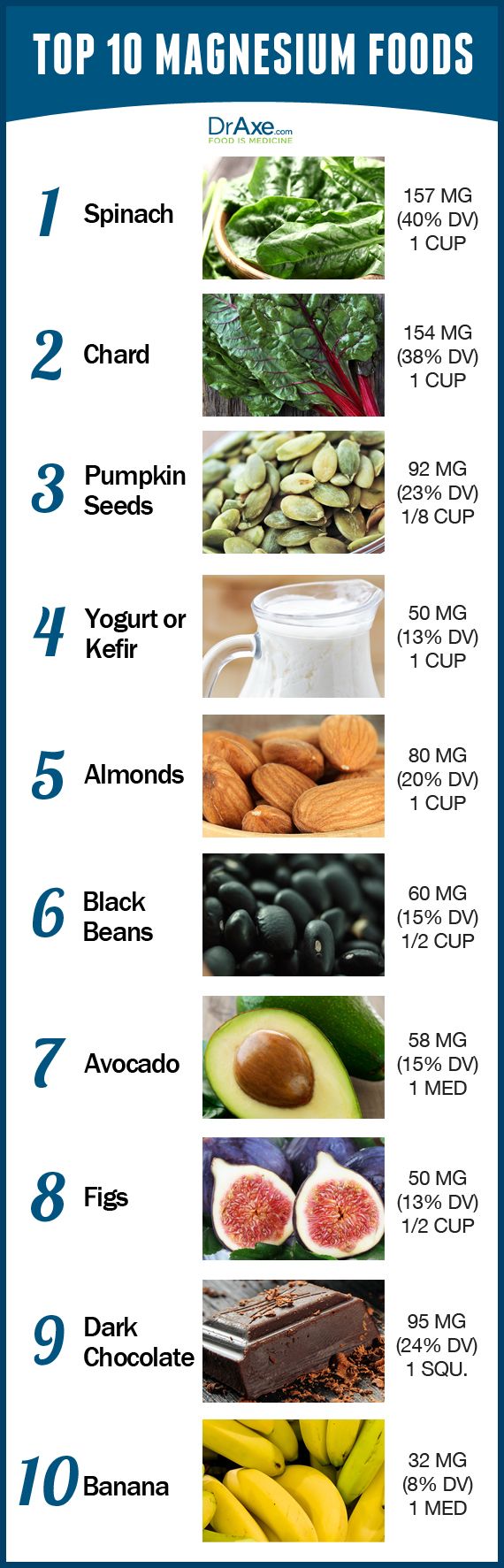
Magnesium deficiency is very common these days. A recent government study shows that 68% of Americans do not consume the recommended daily intake of magnesium. I’ve included a helpful chart below that contains some of the top magnesium rich foods. Magnesium supplements are a good option as well, particularly those containing magnesium citrate which is very absorbable.
Sidney Baker, M.D., a practicing doctor with a special interest in the nutritional aspects of chronic health problems says: “Magnesium deficiency can affect virtually every organ and system of the body. One may experience muscle twitches, cramps, soreness, back aches, neck pain, tension headaches, and fatigue or weakness.”
Studies show that magnesium can soothe insomnia, support heart health, normalize blood sugar, relieve headaches and ease menopause symptoms. In one study from the University of Iran, people with insomnia were given magnesium tablets twice a day for eight weeks. They experienced significant increases in quality sleep time, with less night time interruptions and fewer early morning awakenings.
This news is brought to you by Nutrition Breakthroughs. For more information on the original magnesium and calcium based sleep aid, visit the Sleep Minerals II web page.
To your good health,
Jobee Knight
Nutrition Breakthroughs.com
Frequently Asked Question #1 on Sleep Minerals II, Effective Natural Sleep Aid
Posted on: November 8, 2014
Greetings to you,
Sleep Minerals II is an effective natural sleep aid from Nutrition Breakthroughs. It is the original drug-free calcium and magnesium formula for relaxation and better sleep. It contains powerful forms of these minerals in combination with vitamin D and zinc. The ingredients are formulated in a softgel with healthy oils, making them more quickly absorbable than tablets or capsules and providing a deeper, longer-lasting sleep.
Frequently Asked Question #1:
- Can I continue to take my regular calcium and magnesium supplement, or the calcium and magnesium provided in my multiple vitamin/mineral when I start taking Sleep Minerals II? Will I be getting too many minerals?
It is totally fine to continue to take your regular supplements. These are generally taken during the day, whereas Sleep Minerals II is taken in the evening. Also, the calcium and magnesium in a hard tablet or a capsule is different than the form of minerals found in Sleep Minerals II, and is generally not absorbed as well. So there isn’t a large chance of getting too many minerals.
The minerals in Sleep Minerals II are mixed with healthy rice bran oil and this combination forms a creamy paste inside the softgel. This is why it is assimilated so well into the body and this makes it soothing and effective as a natural sleep remedy.
One thing that can happen if you take too many minerals for your system is your bowels may become too loose or you may become groggy in the morning. If this happens, you can reduce your dose of Sleep Minerals, or take less than one softgel if you’re taking only one. This is done by gently biting one end open and squeezing out half or less, and drinking it down. It can also be spread on some food. Save the rest in a baggie or other container.
Here’s to your good sleep.
Best of health,
Jobee Knight
Nutrition Breakthroughs
For more information on Sleep Minerals II, visit http://www.nutritionbreakthroughs.com/html/sleep_remedy_for_insomnia_help.html
 From the American Journal of Otolaryngology (Diseases of the Ear and Throat)
Introduction: Following animal experiments where correlations were observed between blood magnesium level and noise-induced permanent hearing threshold shifts, we tested the prophylactic (disease preventing) effect of magnesium in human subjects exposed to hazardous noise.
Methods: Subjects were 300 young, healthy, and normal-hearing recruits who underwent 2 months of basic military training. This training necessarily included repeated exposures to high levels of impulse noises while using ear plugs. During this placebo-controlled study, each subject received daily an additional drink containing either 167 mg magnesium aspartate or a similar quantity of placebo.
Results: Noise induced hearing damage was significantly more frequent and more severe in the placebo group than in the magnesium group, and was correlated to the magnesium content of red blood cells. Long-term intake of a small dose of oral magnesium was not accompanied by any notable side effect.
Concluslon: This study may introduce a significant natural agent for the reduction of hearing damages in a noise-exposed population.
This news is provided to you by http://NutritionBreakthroughs.com. Since 2001, Nutrition Breakthroughs has provided natural health articles and effective natural remedies. Their mission is to provide nutritional supplements that work well and help people avoid drugs and their side effects.
Since 2009, their natural sleep aid Sleep Minerals II has been keeping this promise — by soothing even the worst insomnia and helping everyone from teenagers, to women with menopause symptoms, to older seniors, in their quest to get a good night’s sleep. For more information on Sleep Minerals II visit here.
 Article courtesy of Eurekalert. org
The most common joint disease among Americans, osteoarthritis is a condition where the natural cushioning between joints – the cartilage – wears away. Because symptom management is often ineffective and joint replacement is major surgery, many osteoarthritis suffers seek natural approaches.
Grapes are rich in anti-inflammatory compounds that have been shown to reduce inflammation. Shanil Juma, from Texas Woman’s University and colleagues conducted a sixteen week clinical study, in which 72 men and women with knee osteoarthritis were assigned to either consume grapes in the form of a whole grape freeze-dried powder, or a placebo powder.
The data revealed that both men and women consuming a grape-enriched diet had a significant decrease in self-reported pain related to activity and an overall decrease in total knee symptoms – notably, improved joint flexibility and overall mobility.
This beneficial effect was more pronounced in females. Attributing these observed benefits to the anti-inflammatory compounds found in grapes, the lead investigator comments that: “These findings provide promising data that links grape consumption to two very important outcomes for those living with knee osteoarthritis: reduced pain and improvements in joint flexibility.”
This news is provided by Nutrition Breakthroughs. Their mission is to provide nutritional supplements that get results, and therefore help people to avoid addictive drugs and their side effects.
Since 2009, their natural sleep aid Sleep Minerals II has been keeping that promise — by providing highly absorbable forms of calcium and magnesium that soothe even the worst insomnia and help everyone from teenagers, to women with menopause symptoms, to seniors, to get a good night’s sleep.
Their newest product is Joints and More, providing joint relief, allergy relief, hair growth, increased energy and more.
Article source: http://www.eurekalert.org/pub_releases/2014-05/ral-gcm050814.php
A recent issue of “Medicine and Science in Sports and Exercise” published the results of a study on patients with periodic leg movements (PLM). PLM is a night-time problem similar to restless leg syndrome (RLS). It is repetitive cramping or jerking of the legs during sleep. Here are the results of the study, which was done at the Federal University of Sao Paulo, Brazil:
PURPOSE:
Non-drug approaches may lead to an improvement in sleep quality. The objective of our study was to evaluate the effects of intensive (intense short-term) exercise and chronic (regular) exercise on sleep patterns in patients with periodic leg movements (PLM).
METHODS:
The study involved acute and chronic exercise. The acute intensive exercise group consisted of 22 volunteers who underwent testing and also a sleep study on the same night. The chronic exercise group included 11 patients who performed 72 physical training sessions. Blood samples were collected from the groups.
RESULTS:
The results showed that both forms of physical exercise lowered periodic leg moverment levels. The acute physical exercise increased sleep efficiency, rapid eye movement (deeper) sleep, and reduced waking after sleep onset, whereas the chronic physical exercise increased sleep efficiency, rapid eye movement sleep, and reduced the time needed to fall asleep. The researchers also found a significant correlation between the release of natural pain killers in the body after acute intensive exercise and the reduction of periodic leg movement symptoms.
CONCLUSION:
The researchers suggest that physical exercise may be a useful non drug-based treatment for periodic leg movements.
NEWS PROVIDED BY:
This health information is provided by Nutrition Breakthroughs, maker of the effective natural insomnia remedy Sleep Minerals II. Sleep Minerals II contains highly absorbable forms of calcium and magnesium, the best minerals for sleeplessness and insomnia, as well as for heart health, restless legs syndrome, bone strength, and menopause insomnia.
The formula also includes vitamin D and zinc and is delivered in a softgel form with healthy carrier oils, making it more quickly assimilated than tablets or capsules and providing a deeper, longer-lasting sleep.
In one study from the Romanian Journal of Neurology, researchers conducted biochemical and neurological tests in cases of restless leg syndrome. The investigators reported important disorders of sleep organization. They found agitated sleep with frequent periods of nighttime awakenings and a decrease of the duration and percentage of the deeper rapid eye movement (REM) sleep – also found in other forms of insomnia caused by magnesium deficiency.
Kimberly B. of Troy, Michigan says: “I have been taking Sleep Minerals II for about a month now. I have tried everything out there and this supplement is amazing. I have suffered with insomnia for 2 1/2 years. I have also had restless leg syndrome my entire life and this is the first relief I’ve ever had…gone for a month now.”
To learn more, visit the Sleep Minerals II page.
The key to being attractive and looking healthy? A good night’s sleep
Research: Beauty Sleep — Experimental Study on the Perceived Health and Attractiveness of Sleep Deprived People
If you want to look attractive and healthy, the best thing you can do is get a good night’s sleep, according to research from an article published on the website of the British Medical Journal.
For the first time, say the authors, there is scientific backing for the concept of beauty sleep.
The study, led by John Axelsson from the Karolinska Institutet in Sweden, investigated the relationship between sleep and the perceptions other people have of our attractiveness and health. The authors believe this research is important in today’s 24 hour society, with the number of people suffering from sleep disorders and disturbed sleep on the rise.
Twenty-three participants between the ages of 18 to 31 took part in the study. They were photographed between 2pm and 3pm on two occasions, once after normal sleep and once after being deprived of sleep. Smokers were excluded from the research and no alcohol was allowed for two days prior to the experiment.
The photographs were taken in a well-lit room and the distance to the camera was fixed. During both photography sessions participants wore no make-up, had their hair loose (combed back if they had long hair) and underwent similar cleaning or shaving procedures. They were asked to have a relaxed, neutral facial expression for both photos.
Sixty-five observers, who were blinded to the sleep status of the subjects, rated the photographs for attractiveness, a pleasing or non-pleasing appearance, and whether the individuals looked healthy/unhealthy or tired/not tired. The observers judged the faces of the sleep-deprived participants as less healthy, less attractive, and more tired.
The researchers concluded that the facial signals of sleep deprived people affect facial appearance, and judgments of attractiveness, pleasing appearance, health and tiredness. These signs are sufficient for others to judge them as less healthy and less attractive, lending the first scientific support to the concept of “beauty sleep”.
This news is provided by http://Nutrition Breakthroughs. Since 2009, their natural sleep aid Sleep Minerals II has been soothing insomnia and helping everyone from teenagers, to seniors, to women with menopause symptoms, to get a good night’s sleep. Sleep Minerals II can assist with maintaining one’s Beauty Sleep and attractiveness during times of sleeplessness.
Chris M. of the United Kingdom says: “I take one softgel of Sleep Minerals II before bed every night and within 20 minutes I am asleep. The difference in the quality of my sleep and the ease with which I get to sleep using this product is monumental. I have stopped obsessing about sleep or dreading bedtime — I just take a softgel and drift off. If I stop taking them, within a week my sleep starts to lighten in quality, the amount of my sleep diminishes, and my old insomniac patterns reappear.”
For more information, visit the Sleep Minerals II page.
Source: The British Medical Journal: http://www.bmj.com/content/341/bmj.c6614
 A study recently published in the Endocrine Society’s Journal of Clinical Endocrinology and Metabolism suggests that vitamin D—when taken with calcium—can reduce the rate of mortality (death rate) in seniors, therefore providing a possible means of increasing life expectancy.
“This is the largest study ever performed on effects of calcium and vitamin D on mortality,” said Lars Rejnmark, PhD, of Aarhus University Hospital in Denmark and lead author of the study. “Our results showed reduced mortality in elderly patients using vitamin D supplements in combination with calcium, but these results were not found in patients on vitamin D alone.”
During the last decade, there has been increasing recognition of the potential health effects of vitamin D. It is well known that calcium with vitamin D supplements reduces the risk of fractures. The present study assessed mortality among patients taking either vitamin D alone or vitamin D with calcium. The findings from the study found that the reduced mortality was not due to a lower number of fractures, but represents a beneficial effect beyond the reduced fracture risk.
In this study, researchers used pooled data from eight trials with more than 1,000 participants each. The patient data set was comprised of nearly 90 percent women, with an average age of 70 years. During the three-year study, death was reduced by 9 percent in those treated with vitamin D with calcium.
This news is brought to you by Nutrition Breakthroughs. Since 2001 Nutrition Breakthroughs has been providing natural health articles and effective natural remedies. Their mission is to provide nutritional supplements that get results, and therefore help people to avoid addictive drugs and their side effects.
Since 2009, their natural sleep aid Sleep Minerals II has been keeping that promise — by providing highly absorbable forms of calcium and magnesium that soothe even the worst insomnia and help everyone from teenagers to seniors to get a good night’s sleep.
For more information on the Sleep Minerals II, visit http://www.NutritionBreakthroughs.com/html/sleep_remedy_for_insomnia_help.html
Article courtesy of Eurekalert.org
http://www.eurekalert.org/pub_releases/2012-06/tes-vdw061112.php
Researchers have identified zinc as one of the most important essential trace metals in human nutrition and lifestyle in a new review article in Comprehensive Reviews in Food Science and Food Safety. Zinc is not only a vital element in various physiological processes; it is also a drug in the prevention of many diseases.
The adult body contains about two to three grams of zinc. It is found in organs, tissues, bones, fluids, and cells. Foods with high protein content, specifically animal protein, are major sources of zinc in the human diet. Zinc can also be used as fortification for other foods as well. Nearly half of the world’s population is at risk for inadequate zinc intake. The article reviewed numerous studies that showed a relationship between zinc and vital human physiological processes such as the following:
Brain: The blood zinc level is less in patients with Alzheimer’s and Parkinson’s disease (Brewer, and others 2010).In a rodent study, it was observed that zinc behaves like an antidepressant (Nowak and others, 2005).
Cardiovascular System: Zinc performs a noteworthy role in the regulation of arterial blood pressure. Males and females were reported to metabolize zinc differently when suffering from hypertension (Tubek, 2007).
Liver: Zinc deficiency in the liver occurs not only in those with liver cirrhosis, but also in less advanced alcoholic and nonalcoholic liver disease (Bode and others, 1998).
Pregnancy: A mild deficiency of zinc during a pregnancy can cause increased maternal diseases, abnormal taste sensation, prolonged pregnancy duration, inefficient labor, and an increased risk to fetuses (Jameson, 1993).
Diabetes: Zinc is very important in the synthesis, storage, and secretion of insulin (Chausmer 1998). A low level of zinc has been shown to play a role in diabetics with associated disease conditions such as coronary artery disease and several related risk factors including hypertension, and elevated levels of fats in the blood (Singh and others, 1998).
Endocrine System: Studies show a correlation between zinc deficiency in geriatric (elderly) patients and reduced activity of the thymus gland, decreased response to vaccinations, and reduced immunity (Haase and Rink, 2009).
Healing: Zinc deficiency has been linked with delayed wound healing, and has been found to be crucial to the healing of gastric ulcers especially at the early stage (Kennan and Morris, 1993; Andrews and Gallagher-Allred, 1999; Watanabe, 1995).
Pneumonia: Zinc may shorten the duration of severe pneumonia and time in the hospital (Brooks, 2004).
This news is provided to you by http://Nutrition Breakthroughs. Since 2001, Nutrition Breakthroughs has provided health articles and effective natural remedies. Their mission is to provide nutritional supplements that work well and help people avoid drugs and their side effects.
Since 2009, their natural sleep aid Sleep Minerals II has been keeping that promise — by soothing even the worst insomnia and helping everyone from teenagers, to women with menopause symptoms, to older seniors, to get a good night’s sleep. Sleep Minerals II contains highly absorbable forms of calcium, magnesium, vitamin D and zinc. For more information on Sleep Minerals II visit this web site.
Article Source: Eight ways zinc affects the human body — ScienceDaily.
 From ScienceDaily .com
A placebo-controlled study by the University of Oxford in the United Kingdom suggests that higher levels of omega-3 (DHA), the group of fatty acids found in algae and seafood, are associated with better sleep. The researchers explored whether 16 weeks of daily 600 mg. supplements of algae sources would improve the sleep of 362 children.
The children who took part in the study were not selected for sleep problems, but were all struggling readers at a mainstream primary school. At the outset, the parents filled in a child sleep questionnaire, which revealed that 40% of the children in the study suffered from regular sleep disturbances. Of the children rated as having poor sleep, the researchers fitted wrist sensors to 43 of them to monitor their movements in bed over five nights.
This exploratory study showed that the children on a course of daily supplements of omega-3 had nearly one hour (58 minutes) more sleep and seven fewer waking episodes per night compared with the children taking the corn or soybean placebo. The findings are due to be published in the Journal of Sleep Research.
This news is brought to you by Nutrition Breakthroughs.com. Since 2001 Nutrition Breakthroughs has been providing natural health articles and effective natural remedies. Their mission is to provide nutritional supplements that get results, and therefore help people to avoid addictive drugs and their side effects.
Since 2009, their natural sleep remedy Sleep Minerals II has been keeping that promise — by soothing even the worst insomnia and helping everyone from teenagers, to women with menopause symptoms, to seniors, to get a good night’s sleep.
For more information on the effective natural insomnia remedy Sleep Minerals II, visit http://www.NutritionBreakthroughs.com/html/Sleep_Aid
Article source: http://www.sciencedaily.com/releases/2014/03/140306103931.htm
 http://www.worldhealth.net/news/quality-sleep-eludes-women/
From World Health .Net
Poor quality sleep, frequent interruptions in sleep duration, and waking earlier than desired are commonplace in today’s 24/7 society.
Paivi Polo-Kantola, from the University of Turku (Finland), and colleagues surveyed 850 mothers about their sleep when they were 42 years old, on average. Sixty percent of the study subjects reported waking up frequently at night, and 42% experienced morning sleepiness with 32% plagued by daytime sleepiness.
The team observed that postmenopausal hot flashes and night sweats further increased the difficulties with sleep. Observing that: “Chronic diseases and use of medications was associated with various sleep disturbances,” the study authors observe that: “Almost one-quarter of middle-aged women is dissatisfied with their quality of sleep.”
This news is brought to you by http://www.NutritionBreakthroughs, maker of the effective natural insomnia remedy Sleep Minerals II. Sleep Minerals II is the original drug-free calcium and magnesium formula for relaxation and better sleep. It contains powerful forms of the best known minerals for relaxation and sleep — calcium and magnesium, in combination with vitamin D and zinc. The ingredients are formulated in a softgel with healthy oils, making them more quickly absorbable than tablets or capsules and providing a deeper, longer-lasting sleep.
Valerie H. of Santa Clarita, California says: “I had such severe menopause insomnia it took me hours to fall asleep even though I was extremely tired. My legs also had crawling and tingling feelings at night. I got the Sleep Minerals and after a few days, it started to work really well. I fall asleep now within 20 minutes and no more restless legs.”
For more information, visit the SleepMinerals II page.
 News on Natural Remedies, Good Sleep and Good Health