Posts Tagged ‘menopause remedy’
 ScienceDaily – A healthy diet is especially important during the menopause — a period in which the risk of suffering from health problems increases. For the current study, various programs have analyzed the diet of peri- and postmenopausal women in Spain, alongside the troubles that come with this transition. The results show that all of those groups studied have a deficient intake of vitamin D.
Marina Pollán, researcher at the Carlos III Institute of Health in Spain and one of the authors of the study explains that “biological and physiological changes in women caused by the menopause come with a greater risk of developing health problems in which diet plays an important role. These include diabetes, osteoporosis, cardiovascular disease and certain types of cancer.”
Therefore, the analysis of dietary patterns during and after the menopause is of particular interest because of its health implications. However, in Spain there have been very few studies that have assessed the diet of peri- and postmenopausal women.
In order to study these dietary habits, the authors of the study analysed 3574 women from the age of 45 to 68 from October 2007 to July 2008. Each program contained a minimum of 500 women from seven Spanish cities and involved a food frequency questionnaire validated by the Spanish population.
The results show that obesity rates stand at 29% whereas 42% of menopausal subjects are overweight. Average calorie intake was 2053 calories (with 43% of energy intake coming from carbohydrates, 36% from fats and 20% from proteins). Researchers highlight that practically all of the women received the recommended intake of all the vitamins, apart from D and E.
The case of vitamin D is striking given that none of the groups reached 50% of their RDA (Recommended Daily Allowance). The average total intake was 2.14 micrograms per day, which constitutes just 39% of the RDA for women of this age group.
“A diet with less fat and protein that is high in vegetables, nuts, and carbohydrate-rich foods will even out the energy balance and correct levels of vitamin D and E,” according to the researchers.
Comments from the blog author Nutrition Breakthroughs:
Women in the pre-menopause and menopause time period can reap many benefits from increasing their intake of vitamin D, calcium and magnesium. These nutrients support the heart and bones, and are also effective remedies for sleeplessness and insomnia.
Regarding mineral deficiency at the time of menopause, nutritionist Adelle Davis says, “The amount of calcium in a woman’s blood parallels the activity of the ovaries. During the menopause, the lack of ovarian hormones (estrogen and progesterone) can cause severe calcium deficiency symptoms to occur, including irritability, hot flashes, night sweats, leg cramps, and insomnia. These problems can be easily overcome if the intakes of calcium, magnesium, and vitamin D are all generously increased and are well absorbed.”
One insomnia remedy becoming popular among menopausal women is Sleep Minerals II from http://www.nutritionbreakthroughs. Sleep Minerals II contains powerful forms of the best known minerals for relaxation and sleep — calcium and magnesium, combined with vitamin D and zinc. The ingredients are formulated in a softgel with healthy oils, making them more quickly absorbable than tablets or capsules and providing a deeper, longer-lasting sleep.
Valerie H. of Santa Clarita, California says: “I had such bad menopause insomnia it took me hours to fall asleep even though I was extremely tired. My legs also had crawling and tingling feelings at night. I got the Sleep Minerals and after a few days, it started to work really well. I fall asleep now within 20 minutes and no more restless legs.”
For more information on Sleep Minerals II, visit http://www.nutritionbreakthroughs.com/html/sleep_remedy_for_insomnia_help
——————————
Greetings to you,
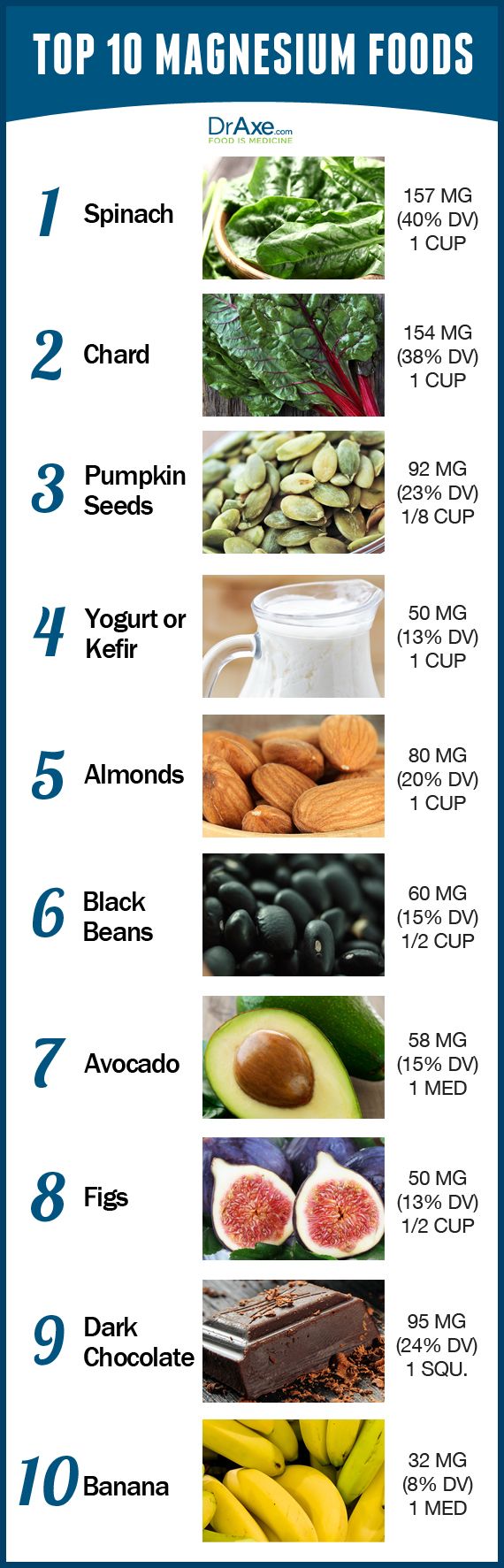
Magnesium deficiency is very common these days. A recent government study shows that 68% of Americans do not consume the recommended daily intake of magnesium. I’ve included a helpful chart below that contains some of the top magnesium rich foods. Magnesium supplements are a good option as well, particularly those containing magnesium citrate which is very absorbable.
Sidney Baker, M.D., a practicing doctor with a special interest in the nutritional aspects of chronic health problems says: “Magnesium deficiency can affect virtually every organ and system of the body. One may experience muscle twitches, cramps, soreness, back aches, neck pain, tension headaches, and fatigue or weakness.”
Studies show that magnesium can soothe insomnia, support heart health, normalize blood sugar, relieve headaches and ease menopause symptoms. In one study from the University of Iran, people with insomnia were given magnesium tablets twice a day for eight weeks. They experienced significant increases in quality sleep time, with less night time interruptions and fewer early morning awakenings.
This news is brought to you by Nutrition Breakthroughs. For more information on the original magnesium and calcium based sleep aid, visit the Sleep Minerals II web page.
To your good health,
Jobee Knight
Nutrition Breakthroughs.com
Frequently Asked Question #1 on Sleep Minerals II, Effective Natural Sleep Aid
Posted on: November 8, 2014
Greetings to you,
Sleep Minerals II is an effective natural sleep aid from Nutrition Breakthroughs. It is the original drug-free calcium and magnesium formula for relaxation and better sleep. It contains powerful forms of these minerals in combination with vitamin D and zinc. The ingredients are formulated in a softgel with healthy oils, making them more quickly absorbable than tablets or capsules and providing a deeper, longer-lasting sleep.
Frequently Asked Question #1:
- Can I continue to take my regular calcium and magnesium supplement, or the calcium and magnesium provided in my multiple vitamin/mineral when I start taking Sleep Minerals II? Will I be getting too many minerals?
It is totally fine to continue to take your regular supplements. These are generally taken during the day, whereas Sleep Minerals II is taken in the evening. Also, the calcium and magnesium in a hard tablet or a capsule is different than the form of minerals found in Sleep Minerals II, and is generally not absorbed as well. So there isn’t a large chance of getting too many minerals.
The minerals in Sleep Minerals II are mixed with healthy rice bran oil and this combination forms a creamy paste inside the softgel. This is why it is assimilated so well into the body and this makes it soothing and effective as a natural sleep remedy.
One thing that can happen if you take too many minerals for your system is your bowels may become too loose or you may become groggy in the morning. If this happens, you can reduce your dose of Sleep Minerals, or take less than one softgel if you’re taking only one. This is done by gently biting one end open and squeezing out half or less, and drinking it down. It can also be spread on some food. Save the rest in a baggie or other container.
Here’s to your good sleep.
Best of health,
Jobee Knight
Nutrition Breakthroughs
For more information on Sleep Minerals II, visit http://www.nutritionbreakthroughs.com/html/sleep_remedy_for_insomnia_help.html
 Article courtesy of Eurekalert. org
The most common joint disease among Americans, osteoarthritis is a condition where the natural cushioning between joints – the cartilage – wears away. Because symptom management is often ineffective and joint replacement is major surgery, many osteoarthritis suffers seek natural approaches.
Grapes are rich in anti-inflammatory compounds that have been shown to reduce inflammation. Shanil Juma, from Texas Woman’s University and colleagues conducted a sixteen week clinical study, in which 72 men and women with knee osteoarthritis were assigned to either consume grapes in the form of a whole grape freeze-dried powder, or a placebo powder.
The data revealed that both men and women consuming a grape-enriched diet had a significant decrease in self-reported pain related to activity and an overall decrease in total knee symptoms – notably, improved joint flexibility and overall mobility.
This beneficial effect was more pronounced in females. Attributing these observed benefits to the anti-inflammatory compounds found in grapes, the lead investigator comments that: “These findings provide promising data that links grape consumption to two very important outcomes for those living with knee osteoarthritis: reduced pain and improvements in joint flexibility.”
This news is provided by Nutrition Breakthroughs. Their mission is to provide nutritional supplements that get results, and therefore help people to avoid addictive drugs and their side effects.
Since 2009, their natural sleep aid Sleep Minerals II has been keeping that promise — by providing highly absorbable forms of calcium and magnesium that soothe even the worst insomnia and help everyone from teenagers, to women with menopause symptoms, to seniors, to get a good night’s sleep.
Their newest product is Joints and More, providing joint relief, allergy relief, hair growth, increased energy and more.
Article source: http://www.eurekalert.org/pub_releases/2014-05/ral-gcm050814.php
A recent issue of “Medicine and Science in Sports and Exercise” published the results of a study on patients with periodic leg movements (PLM). PLM is a night-time problem similar to restless leg syndrome (RLS). It is repetitive cramping or jerking of the legs during sleep. Here are the results of the study, which was done at the Federal University of Sao Paulo, Brazil:
PURPOSE:
Non-drug approaches may lead to an improvement in sleep quality. The objective of our study was to evaluate the effects of intensive (intense short-term) exercise and chronic (regular) exercise on sleep patterns in patients with periodic leg movements (PLM).
METHODS:
The study involved acute and chronic exercise. The acute intensive exercise group consisted of 22 volunteers who underwent testing and also a sleep study on the same night. The chronic exercise group included 11 patients who performed 72 physical training sessions. Blood samples were collected from the groups.
RESULTS:
The results showed that both forms of physical exercise lowered periodic leg moverment levels. The acute physical exercise increased sleep efficiency, rapid eye movement (deeper) sleep, and reduced waking after sleep onset, whereas the chronic physical exercise increased sleep efficiency, rapid eye movement sleep, and reduced the time needed to fall asleep. The researchers also found a significant correlation between the release of natural pain killers in the body after acute intensive exercise and the reduction of periodic leg movement symptoms.
CONCLUSION:
The researchers suggest that physical exercise may be a useful non drug-based treatment for periodic leg movements.
NEWS PROVIDED BY:
This health information is provided by Nutrition Breakthroughs, maker of the effective natural insomnia remedy Sleep Minerals II. Sleep Minerals II contains highly absorbable forms of calcium and magnesium, the best minerals for sleeplessness and insomnia, as well as for heart health, restless legs syndrome, bone strength, and menopause insomnia.
The formula also includes vitamin D and zinc and is delivered in a softgel form with healthy carrier oils, making it more quickly assimilated than tablets or capsules and providing a deeper, longer-lasting sleep.
In one study from the Romanian Journal of Neurology, researchers conducted biochemical and neurological tests in cases of restless leg syndrome. The investigators reported important disorders of sleep organization. They found agitated sleep with frequent periods of nighttime awakenings and a decrease of the duration and percentage of the deeper rapid eye movement (REM) sleep – also found in other forms of insomnia caused by magnesium deficiency.
Kimberly B. of Troy, Michigan says: “I have been taking Sleep Minerals II for about a month now. I have tried everything out there and this supplement is amazing. I have suffered with insomnia for 2 1/2 years. I have also had restless leg syndrome my entire life and this is the first relief I’ve ever had…gone for a month now.”
To learn more, visit the Sleep Minerals II page.
 A study recently published in the Endocrine Society’s Journal of Clinical Endocrinology and Metabolism suggests that vitamin D—when taken with calcium—can reduce the rate of mortality (death rate) in seniors, therefore providing a possible means of increasing life expectancy.
“This is the largest study ever performed on effects of calcium and vitamin D on mortality,” said Lars Rejnmark, PhD, of Aarhus University Hospital in Denmark and lead author of the study. “Our results showed reduced mortality in elderly patients using vitamin D supplements in combination with calcium, but these results were not found in patients on vitamin D alone.”
During the last decade, there has been increasing recognition of the potential health effects of vitamin D. It is well known that calcium with vitamin D supplements reduces the risk of fractures. The present study assessed mortality among patients taking either vitamin D alone or vitamin D with calcium. The findings from the study found that the reduced mortality was not due to a lower number of fractures, but represents a beneficial effect beyond the reduced fracture risk.
In this study, researchers used pooled data from eight trials with more than 1,000 participants each. The patient data set was comprised of nearly 90 percent women, with an average age of 70 years. During the three-year study, death was reduced by 9 percent in those treated with vitamin D with calcium.
This news is brought to you by Nutrition Breakthroughs. Since 2001 Nutrition Breakthroughs has been providing natural health articles and effective natural remedies. Their mission is to provide nutritional supplements that get results, and therefore help people to avoid addictive drugs and their side effects.
Since 2009, their natural sleep aid Sleep Minerals II has been keeping that promise — by providing highly absorbable forms of calcium and magnesium that soothe even the worst insomnia and help everyone from teenagers to seniors to get a good night’s sleep.
For more information on the Sleep Minerals II, visit http://www.NutritionBreakthroughs.com/html/sleep_remedy_for_insomnia_help.html
Article courtesy of Eurekalert.org
http://www.eurekalert.org/pub_releases/2012-06/tes-vdw061112.php
 http://www.worldhealth.net/news/quality-sleep-eludes-women/
From World Health .Net
Poor quality sleep, frequent interruptions in sleep duration, and waking earlier than desired are commonplace in today’s 24/7 society.
Paivi Polo-Kantola, from the University of Turku (Finland), and colleagues surveyed 850 mothers about their sleep when they were 42 years old, on average. Sixty percent of the study subjects reported waking up frequently at night, and 42% experienced morning sleepiness with 32% plagued by daytime sleepiness.
The team observed that postmenopausal hot flashes and night sweats further increased the difficulties with sleep. Observing that: “Chronic diseases and use of medications was associated with various sleep disturbances,” the study authors observe that: “Almost one-quarter of middle-aged women is dissatisfied with their quality of sleep.”
This news is brought to you by http://www.NutritionBreakthroughs, maker of the effective natural insomnia remedy Sleep Minerals II. Sleep Minerals II is the original drug-free calcium and magnesium formula for relaxation and better sleep. It contains powerful forms of the best known minerals for relaxation and sleep — calcium and magnesium, in combination with vitamin D and zinc. The ingredients are formulated in a softgel with healthy oils, making them more quickly absorbable than tablets or capsules and providing a deeper, longer-lasting sleep.
Valerie H. of Santa Clarita, California says: “I had such severe menopause insomnia it took me hours to fall asleep even though I was extremely tired. My legs also had crawling and tingling feelings at night. I got the Sleep Minerals and after a few days, it started to work really well. I fall asleep now within 20 minutes and no more restless legs.”
For more information, visit the SleepMinerals II page.

By: Jay Cao, U.S. Dept. of Agriculture, Human Nutrition Research Center
You probably know that women after menopause are more likely than men to lose bone and develop osteoporosis, a disease in which bones become porous and easy to break. That’s because women
after menopause produce less estrogen, a hormone that helps prevent bone loss.
In the United States, about 10 million people, 80 percent of them women, aged 50 or older have osteoporosis. There are about 1.5 million people who suffer an osteoporotic-related fracture each year. Osteoporosis is responsible for more than $17 billion in direct annual health care expenditures.
Build healthy bones early
Bone is a living tissue that is constantly built and broken down throughout a person’s lifetime. The speed of building and breaking down determines bone mass. Bone mass is like a bank account in which balance is determined by deposits and withdraws. During the first two decades of women’s lives, bone formation outpaces breakdown, and bone grows in length and width. Women reach their peak bone mass, or maximum bone strength and density, before the age of 40 years. In general, women with higher peak bone mass achieved before menopause will be at lower risk for developing osteoporosis later in life.
Because almost half of the adult bone mass is acquired during the growth spurt before puberty, maximizing the peak bone mass in early life is crucial for the prevention of osteoporosis.
Although peak bone mass is strongly influenced by genetic factors that we cannot change, there are many other factors that we can modify to increase bone size and strength — such as nutrition, physical activity, and other lifestyle factors.
Calcium and vitamin D
Adequate calcium and vitamin D intakes are vital for normal bone development throughout womens’ lives. Calcium is the most abundant mineral in the human body. Vitamin D is essential for intestinal calcium absorption by the body. Vitamin D can be synthesized by the skin after exposure to ultraviolet light in sunlight. The Food and Nutrition Board of the Institute of Medicine recommends adult women should take 1,200 milligrams of calcium a day and 400 IU vitamin D/day. Women older than age 70 years should take 600 IU vitamin D/day.
Fortified cereals and juices and dairy products like milk and yogurt are excellent sources of calcium. Good sources of vitamin D include fatty fish, salmon, or fortified orange juice and cereal.
Other dietary factors
Despite many years of research on the roles of calcium and vitamin D in bone health, we still haven’t been able to prevent osteoporosis. Now, we know many other dietary factors may have equal or more important roles affecting calcium absorption, bone formation and bone resorption as calcium and vitamin D.
For example, inadequate magnesium intake affects calcium metabolism, resulting decreased bone strength and volume. Iron may help bone formation. Zinc is also necessary to bone structure. People with low protein intake usually have low intestinal calcium absorption and low bone mass. Antioxidants in foods can reduce bone loss, increase bone formation, and improve bone quality.
And being obese is bad for your bones — the key to getting enough nutrients necessary for healthy bones is to eat balanced foods.
Physical activity
As with many other health disorders such as type 2 diabetes, hypertension and chronic heart disease, physical activity, especially weight-bearing activity, increases your bone mass and reduces your risk of osteoporosis. No matter how old you are, or whether you are male or female, weight-bearing activity increases bone density.
Women especially should engage in at least 30 minutes physical activity per day, as recommended by MyPyramid, a program sponsored by the U.S. Department of Agriculture. Among the many activities to consider are walking, jogging, running, stair-climbing, dancing, and swimming.
No matter what kind of physical activity you choose and how much physical activity you perform, as long as you are active physically, you are helping your bones.
You can visit the website at MyPyramid .gov for physical activity and dietary recommendations to improve your quality of life. These recommendations should also help you build healthy bones.
Comments from the blog author Nutrition Breakthroughs: Calcium, magnesium and vitamin D have many beneficial roles in the body. Calcium strengthens bones, improves heart and stomach health, calms our nerves and muscles, and helps with sleeplessness and insomnia. Magnesium helps remedy migraines and supports healthy blood pressure. Calcium Supplements should be balanced and contain twice as much calcium as magnesium.
Sleep Minerals II from Nutrition Breakthroughs is an effective natural sleep aid for insomnia that contains absorbable forms of calcium and magnesium in a softgel, as well as Vitamin D and zinc. The minerals are mixed with healthy oils in a softgel, making them more readily absorbable than with tablets or capsules. The supplement serves double roles as both a bone supplement and a natural sleep aid.
Valerie H. of Santa Clarita, California says: “I had such severe menopause insomnia it took me hours to fall asleep even though I was extremely tired. My legs also had crawling and tingling feelings at night. I got the Sleep Minerals and after a few days, it started to work really well. I fall asleep now within 20 minutes and no more restless legs.”
For more information on Sleep Minerals II visit http://www.nutritionbreakthroughs.com/html/sleep_aid
Article credit: http://www.ars.usda.gov/News/docs.htm?docid=20330
 From Rensselaer Polytechnic Institute in Troy, New York, the nation’s oldest technological university:
A new study from the Lighting Research Center (LRC) at Rensselaer Polytechnic Institute shows that a two-hour exposure to electronic devices with self-luminous “backlit” displays causes melatonin suppression, which might lead to delayed bedtimes, especially in teens.
The research team, led by Mariana Figueiro, associate professor at Rensselaer and director of the LRC’s Light and Health Program, tested the effects of self-luminous tablets on melatonin suppression. In order to simulate typical usage of these devices, 13 individuals used self-luminous tablets to read, play games, and watch movies.
Results of the study, titled “Light level and duration of exposure determine the impact of self-luminous tablets on melatonin suppression,” were recently published in the journal Applied Ergonomics.
“Our study shows that a two-hour exposure to light from self-luminous electronic displays can suppress melatonin by about 22 percent. Stimulating the human circadian system to this level may affect sleep in those using the devices prior to bedtime,” said Mariana Figueiro.
Until manufacturers develop more “circadian-friendly” (meaning more friendly to our sleep cycles) electronic devices that increase or decrease light exposure based on time of day, Figueiro has several recommendations to reduce their effects on sleep. “We recommended dimming these devices at night as much as possible in order to minimize melatonin suppression, and limiting the amount of time spent using these devices prior to bedtime.”
This health news is provided by NutritionBreakthroughs.com, maker of the effective natural insomnia remedy Sleep Minerals II. Sleep Minerals II contains powerful forms of the best known minerals for relaxation and sleep — calcium and magnesium, combined with vitamin D and zinc. The ingredients are formulated in a softgel with healthy oils, making them more quickly absorbable than tablets or capsules and providing a deeper, longer-lasting sleep.
Lyn K. of Los Angeles, CA. says: “Not only do I sleep much more soundly with Sleep Minerals II, it seems to fill in a missing link in my health. I feel stabilized and I’m carried through my day with a stability from the sound rest. Also my heart and eyes feel healthier and stronger.”
For more information, visit the Sleep Minerals II information page.
Source: From Rensselaer Polytechnic Institute in Troy, New York, the nation’s oldest technological university. http://www.lrc.rpi.edu/resources/newsroom/pdf/2012-2013/iPad8511.pdf
 The magnificent mineral magnesium is the second most abundant mineral in our cells, its involved in more than 300 chemical reactions in the body, and is known to be effective for strengthening heart health, reducing diabetes, and for treating migraines, insomnia and depression. With increasing age, the risk factor for developing magnesium deficiency grows larger.
A National Institutes of Health fact sheet says older adults are at increased risk of magnesium depletion due to a decreased ability to absorb the mineral. And according to the Journal “Sleep”, nearly 50% of older adults are experiencing insomnia and having with difficulties with falling asleep, staying asleep, and waking up early.
Several reports have come out regarding the role of magnesium deficiency in insomnia. The journal “Magnesium Research” writes that magnesium deficiency contributes to sleep disorders and interrupts sleep by reducing melatonin levels in the body. According to the Human Nutrition Research Center in North Dakota, a high magnesium diet has been found to be associated with deeper, less interrupted sleep. Good sources of magnesium in foods include fish, whole grains and green leafy vegetables.
The most recently released study on magnesium for sleep comes from the University of Medical Sciences in Iran. Its subjects were 46 older adults, aged 60 to 75, who were experiencing insomnia. However, it’s interesting to note the researchers recommend their results be extended as a helpful aid to all ages of the general population.
In the University study, the subjects were divided into two groups. One group received placebos, while the other received magnesium oxide tablets twice a day (250 milligrams each) for eight weeks. In the group that was given magnesium, the subjects experienced significant increases in sleep time and sleep efficiency, with less night time interruptions and fewer early morning awakenings.
From blood samples taken, the researchers found that magnesium significantly reduced cortisol levels in the body, which is a stress hormone that can keep people awake. Magnesium also brought about a statistically important increase in melatonin, the hormone involved with sleep-wake cycles.
The researchers concluded that supplementation with magnesium improves subjective and objective measures of insomnia in elderly people and is a useful natural remedy to manage sleep disorders – not only in the elderly but as an effective sleep aid for people of all ages.
Regarding supplements containing magnesium that are taken as an insomnia remedy, the combination of minerals included and the presence of complementary vitamins (such as calcium and vitamin D) are vital. Formulas should contain a 2 to 1 ratio of calcium to magnesium for the best utilization in the body. The original research on this recommended ratio appeared in 1935 in the Journal of Physiological Reviews. In addition, softgels that mix the minerals with natural carrier oils allow them to be more fully absorbed than with tablets or capsules.
One formula that has these qualities and is gaining in popularity is Sleep Minerals II from http://NutritionBreakthroughs. Sleep Minerals II contains highly absorbable forms of calcium and magnesium, the best minerals for sleeplessness and insomnia, as well as for restless legs syndrome, bone strength, teenage insomnia and menopause insomnia. The formula also includes vitamin D and zinc and is delivered in a softgel form with healthy rice bran oil, making it quickly absorbable and allowing it to provide a deeper, longer-lasting sleep.
Sadie D. from The Netherlands says: “I am ever so grateful that I discovered Sleep Minerals II after suffering with premenopause and now the real menopausal insomnia. I felt like I was slowly losing my mind due to the continual lack of sleep. I can’t express the relief of getting a good night’s sleep and being able to function properly.”
Richard P. of Parkville, Maryland says: “The Sleep Minerals are making quite a difference. I was regularly waking at around 3:00 a.m. and after a few days use my sleep improved quite a lot. I wake once a night to go to the bathroom, but the great thing is, I then fall back asleep and sleep several more hours. This has been a great improvement.”
Minerals have come to the forefront as some of the most effective natural remedies for insomnia. For more information on Sleep Minerals II click here.
 News on Natural Remedies, Good Sleep and Good Health