News on Natural Remedies, Good Sleep and Good Health

Posts Tagged ‘magnesium osteoporosis

A recent Gallup Poll survey reported that magnesium consumption decreases as we age, with 79% of adults 55 and over reportedly eating below the recommended dietary allowance  (RDA) of magnesium.

In addition, a National Institutes of Health (NIH) fact sheet says that older adults are at increased risk of magnesium deficiency due to their decreased ability to absorb the mineral. The diseases to which the elderly are vulnerable, and some of the drugs used in therapy, also contribute to magnesium loss.

“A potential magnesium deficiency is a matter of concern for many individuals of all ages, but for the elderly, it could be particularly serious,” said Richard Rivlin, M.D., Chief of the Nutrition Division at New York Hospital, Cornell Medical Center.

“The prevalence of heart disease, diabetes and even leg cramps increases dramatically among older persons, and these are all health conditions in which magnesium deficiency has been found,” Rivlin said.

Diabetes

Researchers at the Harvard School of Public Health evaluated the dietary intake of specific nutrients for more than 85,000 women and more than 42,000 men, in data supplied over 18 years for the women and over 12 years for the men.  They found that the men and women whose diets included the largest amounts of magnesium were the least likely to develop type 2 diabetes.  Most of the participants in the study consumed magnesium through foods, such as whole grains, nuts and green leafy vegetables.

Osteoporosis

A lack of magnesium is also associated with osteoporosis.  Bone health is supported by many factors, most notably calcium and vitamin D. However, some evidence suggests that magnesium deficiency may be an additional risk factor for postmenopausal osteoporosis.  This may be due to the fact that magnesium deficiency alters calcium metabolism and the hormones that regulate calcium.  In one study of older adults from the American Journal of Clinical Nutrition, a greater magnesium intake maintained bone mineral density to a higher degree than a lower intake.

Insomnia Remedy

A recent National Sleep Foundation poll found that a majority of older adults (67%) report having frequent sleep problems. This translates to 37 million older adults in the U.S. having some form of insomnia. Particularly for older people, a possible underlying nutritional cause of insomnia may be a deficiency of certain minerals.  James F. Balch, M.D., author of Prescription for Nutritional Healing, writes: “A lack of the nutrients calcium and magnesium will cause you to wake up after a few hours and not be able to return to sleep.”

Types of Magnesium

Some forms of magnesium are more digestible than others – an important factor because our digestive enzymes and our ability to absorb nutrients lessen with age. Magnesium citrate is a unique form of magnesium in which the magnesium is bonded with citric acid to make it more absorbable.

Supplements with Magnesium

The combination of minerals included in a supplement and the presence of vitamin cofactors (such as calcium and vitamin D) are key. Formulas should contain a 2 to 1 ratio of calcium to magnesium. The original research on this recommended ratio appeared in 1935 in the Journal of Physiological Reviews.  In addition, softgels made with carrier oils allow the minerals to be better absorbed than tablets or capsules.

One formula that has these qualities and is gaining in popularity is Sleep Minerals II from Nutrition Breakthroughs.  Sleep Minerals II contains highly absorbable forms of the best minerals for sleep and relaxation: Calcium, magnesium and Vitamin D. The ingredients are delivered in a softgel form with healthy carrier oils, providing a deeper, longer-lasting sleep.

Wendy R. of Honolulu, Hawaii says: “My friends know that I’ve had insomnia for a very long time. Surprisingly, I received the Sleep Minerals II and took it and I actually slept. This thing really works. I wanted to say, its funny, but people know I have insomnia and once in a while a co-worker will ask me how I slept. In the past, if I ever got a good nights sleep I’d say “I slept like a baby”, but that’s the wrong analogy. Those little guys get up every two hours. I am actually beginning to sleep like an adult — a much-rested adult.”

Richard Rivlin, M.D. summed up the Gallup Poll survey results by saying: “It is clear that consumers are largely unaware of the role of magnesium — a nutrient that is essential for the function of other minerals like calcium, as well as the normal operation of the heart and muscles.”

For more information, visit the Sleep Minerals II page. 

This is a valuable guide and overview of the health benefits of magnesium, its deficiency symptoms, its best food sources and more. According to the National Health and Nutrition Examination Survey, 50% of adults are deficient in magnesium and 75% of older adults are deficient

This health news is shared with you by Nutrition Breakthroughs, maker of the effective natural sleep aid Sleep Minerals II, and the natural solution for joint relief, allergies, pain relief and increased energy, Joints and More.

Tags: , , , , , , , , , , , , , , , , , , , , , , , , , , , , , , , , , , , , , , , , , , , , , , , , , , , , , , , , , , , , , , , , , , , , , , , , , , , , , , , , , , , , , , , , , , , , , , , , , , , , , , , , , , , , , , , , , , , , , , , ,

magnesium and menopauseThe North American Menopause Society writes that menopause is a normal, natural event, defined as the occurrence of the final menstrual period.  It takes place on average, around the age of 51.  Regarding the vital role of magnesium, the University of Maryland Medical Center says that magnesium levels in the body tend to decrease during menopause due to the lowered levels of estrogen.

Restoring magnesium to a healthy level can not only help to reduce menopause symptoms such as insomnia, hot flashes, depression, osteoporosis and anxiety, but it can also help to increase the health of a woman’s organs and her overall health.  Magnesium is one of the most vital minerals and is involved in over 300 functions in the body.

Mark Hyman M.D. says: Think of magnesium as the relaxation mineral. Anything that is tight, irritable, crampy, and stiff — whether it is a body part or an even a mood — is a sign of magnesium deficiency. It is an antidote to stress…and it can help improve your sleep.”

In a study from the University of Medical Sciences in Iran, research was done with 46 adults who were experiencing insomnia.  Taking two magnesium oxide tablets twice a day resulted in significant increases in sleep time and reduced cortisol levels in the body, which is a stress hormone made by the adrenal glands that can keep one awake.

In another research study from the Human Nutrition Research Center of the U.S. Dept. of Agriculture, scientists found that a high magnesium diet is associated with deeper, less interrupted sleep.  The best magnesium-rich foods to eat include dark leafy greens (spinach, chard), nuts and seeds (particularly pumpkin seeds), fish, avocado and fruit.  Bananas and figs are good sources.

Hot flashes and night sweats are the most common complaints in the pre-menopause and menopause time.  Mineral supplements such as magnesium and calcium have been shown to remedy these and provide relief.  One example is a study from the Virginia Commonwealth University Health System.  Women with at least 14 hot flashes a week received 400 milligrams of magnesium oxide for 4 weeks, increasing to 800 mg. per day if needed.

At the end of the study, the magnesium supplements had reduced their frequency of hot flashes from 52 to 28 per week, a 41.4% reduction.  Fatigue, sweating, and distress were also significantly reduced.

The women participating in the study were breast cancer survivors, thus they were unable to take the usual hot flash medications that have estrogenic activity such as hormone replacement or soy supplements.  Many women, breast cancer survivors or not, prefer to take a non estrogen-active natural remedy for hot flashes and night sweats, and the researchers concluded that magnesium appears to safely reduce hot flashes, with few side effects and at minimal cost.

Women after menopause may find themselves with thinner bones, osteoporosis and a larger waistline.  One recent study from Spain involved a study of 78 post menopausal women aged 44 to 76.  The researchers sought to discover a relationship between magnesium deficiency and a risk for obesity and osteoporosis after menopause.  Blood tests were taken to determine their magnesium levels.  The scientists found that magnesium consumption (from magnesium-rich sources) was insufficient in 36% of the women and that 72% had deficient levels of magnesium in their blood.

The study results found positive correlations between magnesium intake and a smaller waist.  Higher magnesium levels in the blood were also correlated with lower cholesterol levels. With 38% of the subjects in the study being overweight, the researchers noted the importance of postmenopausal women maintaining a good intake of magnesium in order to prevent deficiencies and degenerative physical conditions.

One supplement shown to be effective for insomnia and hot flashes is Sleep Minerals II from Nutrition Breakthroughs.  This formula contains highly absorbable magnesium and calcium, the best minerals for sleeplessness and insomnia, as well as for menopause insomnia, heart health, restless legs syndrome and bone strength.  It also includes vitamin D and zinc and is delivered in a softgel form with healthy carrier oils, making it more quickly absorbable than tablets or capsules and providing a deeper, longer-lasting sleep.

Anita L. of New Caney, Texas says: “I was having hot flashes every 30 minutes to an hour through the night and was so miserable.  After about two weeks of taking the Sleep Minerals, I noticed an incredible difference with my sleep.  I have much less interruption from flashes, I’m sleeping much better and I’m a lot more comfortable.”

Sadie D. from The Netherlands says: “I am ever so grateful that I discovered Sleep Minerals II after suffering with premenopause and now the real menopausal insomnia.  I felt like I was slowly losing my mind due to the continual lack of sleep.  I can’t express the relief of getting a good night’s sleep and being able to function properly.”

A healthy plan is to make good use of magnesium-rich foods and supplements for effective, natural relief of menopause symptoms.

This natural health news is provided by Nutrition Breakthroughs, a publisher of nutrition articles and supplier of effective natural remedies since 2001. Nutrition breakthroughs makes Sleep Minerals II, the effective natural sleep aid with calcium, magnesium, zinc and vitamin D, and also Joints and More, the natural solution for joint relief, aches and pains, stronger hair and nails and more energy.


Article source: http://www.nutritionbreakthroughs.com/blog/2016/08/28/magnesium-and-menopause-proven-for-insomnia-and-hot-flashes/

Magnesium deficiency signsMagnesium is one of the most vital minerals for good health. It’s involved in over 300 functions in the body and is a required partner for enzymes which allows them to do their job.

Enzymes are high-energy protein molecules that are the spark for positive reactions in all the cells of the body and magnesium helps to provide the spark. A deficiency of magnesium can result in muscle aches and pains, leg cramps, fatigue, insomnia, migraine headaches, restless leg syndrome, bone loss, anxiety and high blood pressure.

Osteoporosis
From the journal of Biology and Trace Element Research comes a study showing that magnesium prevents bone loss in postmenopausal women. The women were given magnesium citrate for 30 days and at the end of the trial, the structural collagen in their bones increased and bone loss was halted.

Insomnia
In a study from the University of Medical Sciences in Iran, research was done with 46 adults who were experiencing insomnia.  Taking two magnesium oxide tablets twice a day resulted in significant increases in sleep time and reduced cortisol levels in the body, which is a stress hormone that can keep people awake. In another research study from the Human Nutrition Research Center of the U.S. Dept. of Agriculture, scientists found that a high magnesium diet is associated with deeper, less interrupted sleep.

High Blood Pressure
Hypertension or high blood pressure is a leading cause of stroke. A stroke happens when the blood supply to the brain is reduced, which causes damage to brain cells. The American Journal of Clinical Nutrition analyzed the role of magnesium in preventing stroke and found that taking magnesium each day reduces stroke risk by 8%.

Restless Leg Syndrome
A study from the Journal “Sleep” showed positive results for restless leg syndrome. Magnesium was administered orally in the evening over a period of 4-6 weeks. Following magnesium treatment, restless leg movements associated with waking in the night decreased significantly. The researchers said: “Our study indicates that magnesium treatment may be a useful alternative therapy.”

Migraines
Studies have found that people with migraine headaches have low concentrations of magnesium in their body. The word “cephalalgia” literally means head pain or headache. In a German study of 81 migraine patients published in the journal “Cephalalgia”, 42 percent of the people taking oral magnesium reduced both the duration and intensity of their migraine attacks. They also reduced their reliance on medications to control migraines.

One supplement shown to be effective for insomnia and pain is Sleep Minerals II from Nutrition Breakthroughs.  This formula contains highly absorbable magnesium citrate and calcium citrate, the best minerals for sleeplessness and insomnia, as well as for heart health, restless legs syndrome, bone strength and menopause insomnia.  It also includes vitamin D and zinc and is delivered in a softgel form with healthy carrier oils, making it more quickly absorbable than tablets or capsules and providing a deeper, longer-lasting sleep.

L.R.C. of Massachusetts says: “I had become dependent on sleeping drugs and couldn’t sleep without them. Now I take the Sleep Minerals before bed and I can sleep through the night without drugs. I’m also able to easily fall back to sleep if I do have to get up. Another benefit is it helps alleviate my chronic fatigue and aches and pains.”

Magnesium is more than a magnificent supplement. It’s a vital natural measure that can be used to maintain or restore one’s good health. For more information, visit the Sleep Minerals II page.


Article source: http://www.nutritionbreakthroughs.com/blog/2016/01/17/signs-of-magnesium-deficiency-studies-show-remedies/

magnesium sleepGreetings,

Below is an informative chart containing five signs of magnesium deficiency.  These include poor sleep and insomnia, ringing ears, muscle cramps, abnormal heart function and kidney stones.

Chronic insomnia is one of the main symptoms of magnesium deficiency.  Sleep in magnesium deficiency is usually agitated with frequent nighttime awakenings.  On the other hand a high magnesium diet has been found to be associated with deeper, less interrupted sleep.  This was proven in a study done at the Human Nutrition Research Center in North Dakota.

When taking magnesium supplements it is important to balance it with calcium.  The recommended ratio is twice as much calcium as magnesium.

This health news is provided by Nutrition Breakthroughs. Since 2001 Nutrition Breakthroughs has provided natural health articles and effective natural remedies.  Their mission is to provide nutritional supplements that get results and help people to avoid drugs and their side effects.

Since 2009, their natural sleep remedy Sleep Minerals II has been keeping that promise — by soothing even the worst insomnia and helping everyone from teenagers, to women with menopause symptoms, to seniors to get a good night’s sleep.

Magnesium deficiency

http://NutritionBreakthroughs

Greetings to you,

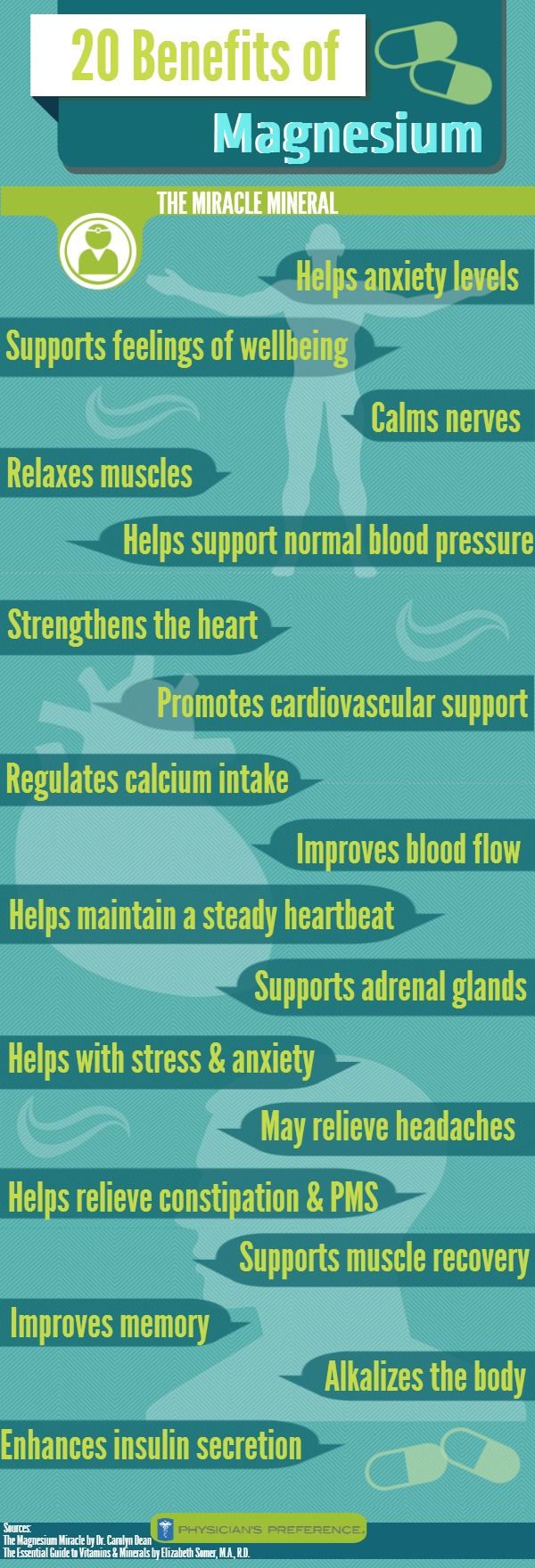
Included below is a vital health chart that contains the top 20 health benefits of magnesium.  Some of these benefits include remedying sleeplessness and insomnia, calming the nerves, strengthening the heart, lowering blood pressure, relieving headaches and soothing PMS.

Chronic insomnia is one of the main symptoms of magnesium deficiency. Sleep in magnesium deficiency is usually agitated with frequent nighttime awakenings.  On the other hand, a high magnesium diet has been found to be associated with deeper, less interrupted sleep. This was shown in a study done by the Human Nutrition Research Center in North Dakota.

This news is brought to you by Nutrition Breakthroughs, maker of Sleep Minerals II.  Sleep Minerals II is the original magnesium and calcium based sleep remedy, known for soothing even the worst insomnia.  It helps everyone from teenagers, to women with menopause symptoms, to older seniors, to get a good night’s sleep.  For more information, visit the Sleep Minerals II page.

To your health,

Jobee Knight
Nutrition Breakthroughs

magnesium benefits - top 20

Provided by http://Nutrition Breakthroughs.com

Tags: , , , , , , , , , , , , , , , , , , , , , , , , , , , , , , , , , , , , , , , , , , , , , , , , , , , , , , , , , , , , , , , , , , , , , , , , , , , , , , , ,