Posts Tagged ‘zinc benefits’
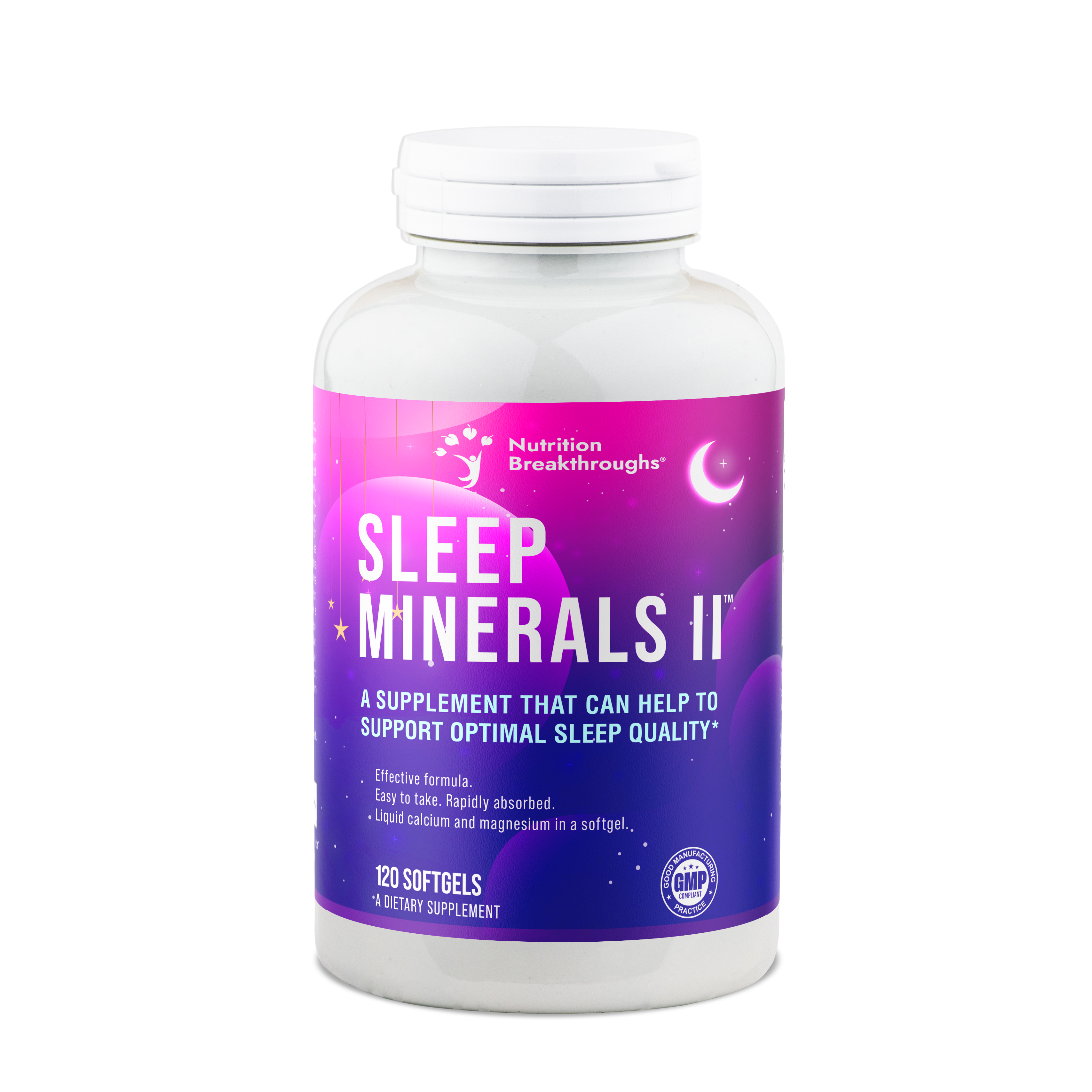
Sleep Minerals II is the original and time-tested calcium and magnesium remedy for better sleep.
Nutrition Breakthroughs has enhanced the product to provide an upgraded formula for those struggling with sleeplessness or insomnia.
With increased amounts of zinc, a shift to sunflower lecithin from soy lecithin, and a reduced serving size, the new formula provides increased benefits for those who seek a more restful night’s sleep.
Sleep Minerals II contains calcium, magnesium, vitamin D and zinc, formulated in a softgel with healthy oils. The softgel is a unique form that is absorbed and digested more rapidly and fully than tablets or capsules.
Zinc is a vital mineral for sleep regulation and it is also the most important mineral for immune function. The amount of zinc present in the body is a factor that can determine the quality and quantity of sleep. Zinc aids in the manufacture of chemical messengers in the brain such as melatonin and serotonin, which support a sound night’s sleep and help to regulate the sleep-wake cycle.
According to the U.S. Human Nutrition Research Center on Aging, about half of U.S. women consume less than two-thirds of the Recommended Dietary Daily Allowance of 11 mg. to 12 mg. of zinc. And the amount of zinc people absorb from their meals decreases with advancing age. The new version of Sleep Minerals II provides 12 mg. of zinc in each softgel.
The balance of calcium and zinc are important to overall health. In one study from the Human Nutrition Research Center, 18 women increased their calcium intake and this resulted in their absorption of zinc significantly reducing. This happened regardless of whether they got the extra calcium from milk or from a calcium supplement.
In a second study from the same source, zinc absorption dropped by half when a group of 10 men and women took a calcium supplement with a single test meal. However, adding zinc to the calcium supplement acted to offset this effect.
On its own, calcium is directly related to our cycles of sleep. In one study published in the European Neurology Journal, researchers found that calcium levels in the body are higher during the deepest levels of sleep, such as the rapid eye movement (REM) phase.
This is the phase where dreaming occurs. The study concluded that disturbances in sleep, especially the absence of REM deep sleep or disturbed REM sleep, are related to a calcium deficiency.
Sleep in magnesium deficiency is usually agitated with frequent nighttime awakenings. Chronic sleeplessness is one of the main symptoms of magnesium deficiency. On the other hand, a high magnesium diet has been found to be associated with deeper, less interrupted sleep. This was proven in a study done by James Penland at the Human Nutrition Research Center in North Dakota.
Regarding vitamin D, researchers in Texas found a definite link between vitamin D deficiency and the current global epidemic of sleep disorders. Their clinical trial followed 1500 patients over a 2-year period.
A consistent level of vitamin D was maintained in the participant’s blood over many months. This produced normal sleep for most of them, regardless of their type of sleep disorder.
Nutrition Breakthroughs is pleased to include sunflower lecithin in the new formula, replacing the former soy lecithin. Sunflower lecithin is not only a more allergen-friendly option but it provides additional health benefits such as supporting brain function and healthier cholesterol levels. When used in nutritional supplements, lecithin is known for improving the stability and smooth mixture of the ingredients.
Sleep Minerals II contains all of the most proven and effective minerals and vitamins for good sleep. It continues to be a safe, drug-free and gentle option for those seeking a time-tested natural sleep remedy. It helps with falling asleep faster, staying asleep longer, sleeping deeper, and waking up refreshed.
***** Wendy R. of Honolulu, Hawaii says: “My friends know that I’ve had chronic insomnia for a long time. Surprisingly, I received the Sleep Minerals II and began taking it and found this thing really works. In the past if I ever got a good night’s sleep I’d say ‘I slept like a baby’, but that’s the wrong comparison. Those little guys get up every two hours. I am actually beginning to sleep like an adult — a much-rested adult.”
***** L.R.C. of Massachusetts says: “I had become dependent on sleeping drugs and couldn’t sleep without them. Now I take the Sleep Minerals before bed and I can sleep through the whole night without drugs. I’m also able to easily fall back to sleep if I do have to get up. Another benefit is this helps alleviate my chronic fatigue and aches and pains.”
Visit the Sleep Minerals II page for more information.
Researchers have identified zinc as one of the most important essential trace metals in human nutrition and lifestyle in a new review article in Comprehensive Reviews in Food Science and Food Safety. Zinc is not only a vital element in various physiological processes; it is also a drug in the prevention of many diseases.
The adult body contains about two to three grams of zinc. It is found in organs, tissues, bones, fluids, and cells. Foods with high protein content, specifically animal protein, are major sources of zinc in the human diet. Zinc can also be used as fortification for other foods as well. Nearly half of the world’s population is at risk for inadequate zinc intake. The article reviewed numerous studies that showed a relationship between zinc and vital human physiological processes such as the following:
Brain: The blood zinc level is less in patients with Alzheimer’s and Parkinson’s disease (Brewer, and others 2010).In a rodent study, it was observed that zinc behaves like an antidepressant (Nowak and others, 2005).
Cardiovascular System: Zinc performs a noteworthy role in the regulation of arterial blood pressure. Males and females were reported to metabolize zinc differently when suffering from hypertension (Tubek, 2007).
Liver: Zinc deficiency in the liver occurs not only in those with liver cirrhosis, but also in less advanced alcoholic and nonalcoholic liver disease (Bode and others, 1998).
Pregnancy: A mild deficiency of zinc during a pregnancy can cause increased maternal diseases, abnormal taste sensation, prolonged pregnancy duration, inefficient labor, and an increased risk to fetuses (Jameson, 1993).
Diabetes: Zinc is very important in the synthesis, storage, and secretion of insulin (Chausmer 1998). A low level of zinc has been shown to play a role in diabetics with associated disease conditions such as coronary artery disease and several related risk factors including hypertension, and elevated levels of fats in the blood (Singh and others, 1998).
Endocrine System: Studies show a correlation between zinc deficiency in geriatric (elderly) patients and reduced activity of the thymus gland, decreased response to vaccinations, and reduced immunity (Haase and Rink, 2009).
Healing: Zinc deficiency has been linked with delayed wound healing, and has been found to be crucial to the healing of gastric ulcers especially at the early stage (Kennan and Morris, 1993; Andrews and Gallagher-Allred, 1999; Watanabe, 1995).
Pneumonia: Zinc may shorten the duration of severe pneumonia and time in the hospital (Brooks, 2004).
This news is provided to you by http://Nutrition Breakthroughs. Since 2001, Nutrition Breakthroughs has provided health articles and effective natural remedies. Their mission is to provide nutritional supplements that work well and help people avoid drugs and their side effects.
Since 2009, their natural sleep aid Sleep Minerals II has been keeping that promise — by soothing even the worst insomnia and helping everyone from teenagers, to women with menopause symptoms, to older seniors, to get a good night’s sleep. Sleep Minerals II contains highly absorbable forms of calcium, magnesium, vitamin D and zinc. For more information on Sleep Minerals II visit this web site.
Article Source: Eight ways zinc affects the human body — ScienceDaily.
 News on Natural Remedies, Good Sleep and Good Health