Posts Tagged ‘natural sleep aids’

Sleep quality is influenced by more than just bedtime routines. One often overlooked factor is blood sugar fluctuations at night. Glucose is the body’s fuel for all of its cells and it travels through the blood – so it has become known as “blood sugar.”
Your body naturally experiences a drop in glucose during the early sleep period, and sometimes in the middle of the night. For some people, especially those sensitive to blood sugar changes, this dip can trigger waking, restlessness, or lighter sleep stages.
When blood sugar drops too low, the body can release stress hormones, such as adrenaline and cortisol, to stabilize glucose levels. These hormones can disrupt sleep and make it harder to achieve deep, restorative rest.
Over time, repeated nighttime awakenings due to blood sugar dips can lead to chronic fatigue, irritability, and even increased risk for metabolic disorders.
How to support stable blood sugar overnight:
- Evening snacks: A small snack combining protein and complex carbohydrates, like a slice of whole-grain toast with almond butter or Greek yogurt with berries, helps maintain steadier blood sugar levels.
- Meal timing: Eating dinner at consistent times each evening helps the body anticipate blood sugar patterns and reduces sudden dips.
- Minerals for balance: Magnesium and zinc help regulate glucose metabolism and insulin function, which in turn supports stable nighttime blood sugar.
- Limit sugar at night: High-sugar desserts late in the evening can trigger spikes and crashes, causing more wakefulness.
Other lifestyle factors also play a role. Getting outside for light exposure, regular activity during the day, and stress management help keep your body’s internal clock aligned, making your blood sugar patterns more predictable and sleep more restorative.
References:
- Magnesium and sleep: Nutrients Journal, 2012
- Zinc and glucose metabolism: Journal of Trace Elements in Medicine and Biology, 2014
FAQ:
Q1: Are snacks always necessary before bed?
A2: Only if your blood sugar tends to dip or if your dinner was early. Choose balanced, nutrient-rich options.
Q2: Can supplements help?
A3: Magnesium or zinc supplements may help maintain steady blood sugar and support deeper sleep.
This natural health news is provided by Nutrition Breakthroughs, a publisher of nutrition articles and supplier of effective natural remedies since 2002. Nutrition Breakthroughs makes Sleep Minerals II, the original drug-free mineral formula for better sleep with calcium, magnesium, zinc and vitamin D.
*****Julianne H. of Canada says: “I continue to tell my friends about how Sleep Minerals II has changed my life. I am fully retired now but still remember driving to work and wondering if I would make it there due to sleep deprivation.”
“And the debilitating leg cramps that used to occur every night have now become history. My legs were sore even into the next day. It’s great to be sleeping so much better, no more sore legs, and my calcium levels are being kept constant.”
Healing Naturally: Home Remedies That Help You Conquer a Cold Faster – Health Shred Blog
Posted on: February 9, 2026

Here’s some mighty good advice for conquering colds and flus faster. Proven natural remedies are the way to go!
This health news is shared with you by Nutrition Breakthroughs, maker of the effective natural sleep aid Sleep Minerals II, and the natural solution for joint relief, allergies, pain relief and increased energy, Joints and More.
6 Everyday Habits That Protect the Brain from Aging – Magic and Beauty Blog
Posted on: February 2, 2026

Here’s a helpful article with some good advice. There are lot’s of easy things one can do to keep their brain young! With the additional comment that some better alternatives to meditation for reducing stress may be:
* Spending time in nature or outdoors
* Writing down your planned actions for the next day
* Listening to music or dancing to a song you like
* Adult coloring books, drawing, or doing crossword puzzles
* Taking a warm bath or shower
* Swimming or cycling
This health news is shared with you by Nutrition Breakthroughs, maker of the effective natural sleep aid Sleep Minerals II, and the natural solution for joint relief, allergies, pain relief and increased energy, Joints and More.
According to the National Sleep Foundation (NSF), almost six out of ten Americans report having insomnia and sleep problems at least a few nights a week.
Insomnia is defined as “An inability to fall asleep or remain asleep long enough to feel rested, especially when the problem continues over time.”
In an effort to combat this, as many as 25 percent of the people in the United States use medications to help them sleep.
Most sleeping pills can have multiple side effects, staying in the bloodstream and giving a hangover effect the next day and beyond.
They tend to be addictive, can increase the risk of car and work accidents and may impair one’s memory and performance on the job and at home.
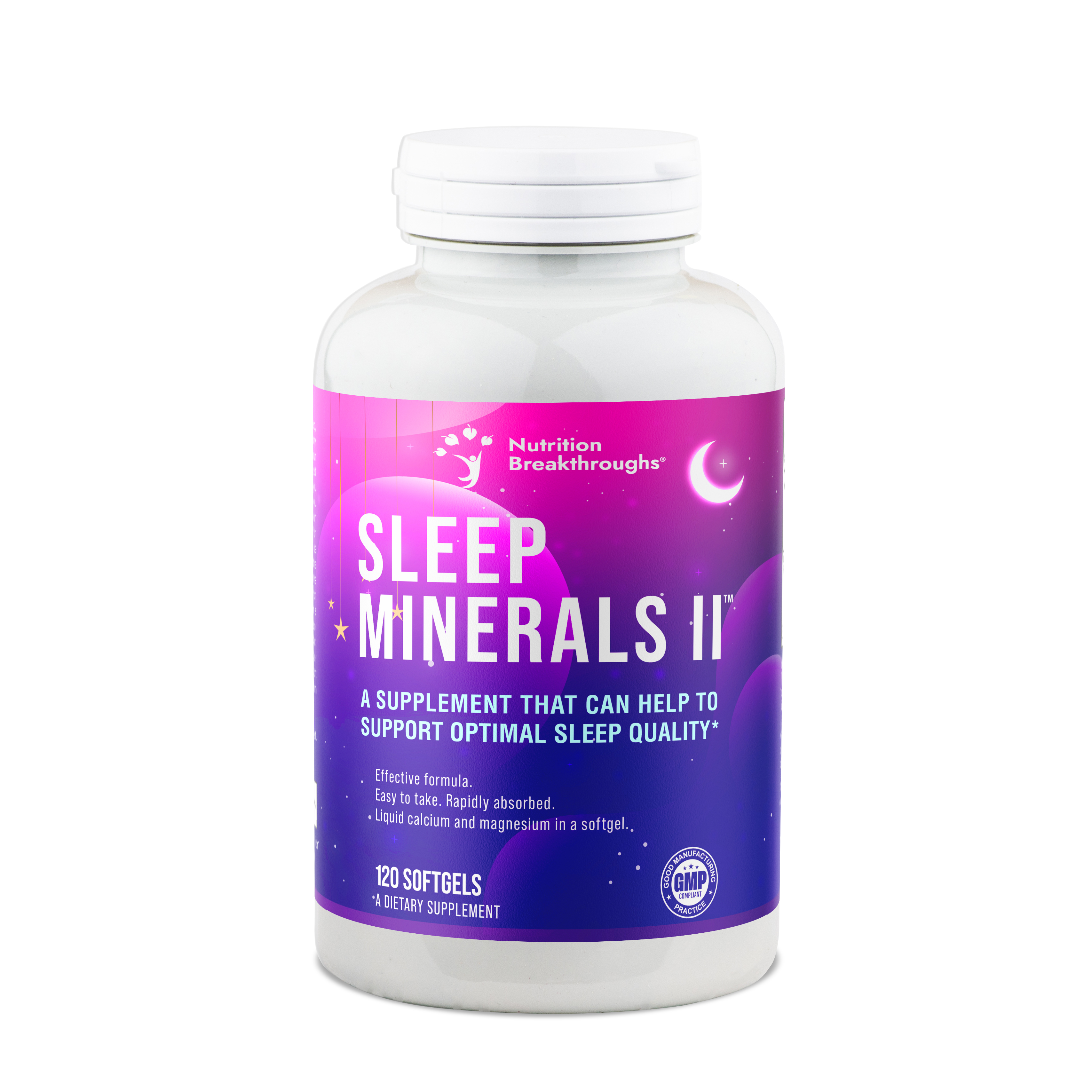
Sleep Minerals II is the original drug-free calcium and magnesium based sleep aid. The minerals are uniquely formulated in a softgel with natural oils, making them highly absorbable. The product soothes insomnia and helps everyone from older adults, to teenagers, to women with menopause symptoms, to get a good night’s sleep. It also calms restless leg syndrome.
James F. Balch, M.D., author of “Prescription for Nutritional Healing,” writes: “A lack of the nutrients calcium and magnesium will cause you to wake up after a few hours and not be able to return to sleep.”
Alex R. of Ramseur, North Carolina shares his review and says: “Sleep Minerals II has been a blessing for me. It has given me the opportunity to withdraw from a highly addictive sleep medication over time, and has allowed me to sleep while going through this most difficult ordeal. What’s great about it is it doesn’t lose its effectiveness, which is something that happens with medications. I am most thankful for this product.”
Chris M. of the United Kingdom says: “I take one softgel of Sleep Minerals II before bed every night and within 20 minutes I am asleep. The difference in the quality of my sleep and the ease with which I get to sleep using this product is monumental. I have stopped obsessing about sleep or dreading bedtime — I just take a softgel and drift off. If I stop taking them, within a week my sleep starts to lighten in quality, the amount of my sleep diminishes, and my old insomniac patterns reappear.”
Richard P. of Parkville, Maryland says: “The Sleep Minerals are making quite a difference. I was regularly waking at around 3:00 a.m. and after a few days use my sleep improved quite a lot. I wake once a night to go to the bathroom, but the great thing is; I then fall back asleep and sleep several more hours. This has been a great improvement.”
Sadie D. from The Netherlands says: “I am ever so grateful that I discovered Sleep Minerals II after suffering with premenopause and now the real menopausal insomnia. I felt like I was slowly losing my mind due to the continual lack of sleep. I can’t express the relief of getting a good night’s sleep and being able to function properly.”
For more information on Sleep Minerals II, visit this information page.
Jill C. of Ellensburg, Washington says: “My husband has been struggling with restless leg syndrome (RLS) his whole life. Coming back from a deployment in Iraq five years ago made his RLS become magnificently worse, creating nightly insomnia. He couldn’t sleep more than three to five hours unless taking an addictive prescribed narcotic, which he became tolerant to and the insomnia came back with no answers. Now he’s been taking Sleep Minerals II for a week and every night has had a great night’s sleep. We are thrilled.”
Tammy M. of Meridian, Idaho says: “I was plagued with insomnia for five years and desperate for a breakthrough. Nothing has helped me more than the Sleep Minerals — I’m so sold on them I could go door to door promoting them. I’m 60 years old and have never slept so soundly. Thank you for making sleep a reality for so many people.”
This news is provided by Nutrition Breakthroughs. Since 2001 Nutrition Breakthroughs has provided natural health articles and effective natural remedies. Their mission is to provide nutritional supplements that get results and help people to avoid drugs and their side effects.
For more information on Sleep Minerals II, visit this information page.

A new study from a University in Taiwan has found that a daily glass of tomato juice slims the waist and reduces body fat and weight
Who would’ve known that the red coloring matter in tomatoes is one of the most powerful natural medicines in existence? The red color comes from a healthy plant chemical called lycopene. Lycopene is what makes the tomato a super-food — one that goes far beyond just providing something tasty to eat.
Lycopene has been shown in studies from the Journal of Nutrition to help protect against heart disease, lower cholesterol, and reduce inflammation for a stronger immune system. Interestingly, a new study has shown that the same traits of tomato juice that can cause these internal health improvements can also enhance one’s appearance by inducing a lower body weight and a thinner waistline.
There are unlimited health benefits from eating all kinds of vegetables and fruits including preventing diabetes, lowering the risk of all types of cancers, strengthening the heart, balancing hormones, smoothing the skin and increasing energy. They are nature’s finest natural remedies.
Lycopene gives the red color to watermelons, pink grapefruits and tomatoes. Spinach, corn and avocado contain the yellow and green shades supplied by lutein which supports good eye health. Grapes and blueberries contain the blue and purple pigments known to benefit everything from memory to arthritis.
The new study on tomato juice comes from the China Medical University in Taiwan. Researchers found that a daily glass of tomato juice taken by women for two months resulted in significantly decreased body fat and body weight, as well as a smaller waist circumference and lower cholesterol. The subjects continued with their normal diet and exercise and made no changes other than drinking one nine ounce glass of tomato juice each day.
The women were divided into two groups: Those that had a reduction in body fat from the tomato juice and those that didn’t. One point that was highlighted by the study is that regardless of whether there was a loss of body fat, the tomato juice still induced a reduction in waist circumference, lowered cholesterol levels, reduced inflammation, and increased lycopene levels in each person. Adding a simple glass of tomato juice daily can do wonders for one’s health.
This health news is provided by Nutrition Breakthroughs. Since 2001 Nutrition Breakthroughs has provided natural health articles and effective natural remedies. Their mission is to provide nutritional supplements that get results and help people to avoid drugs and their side effects.
Since 2009, their natural sleep remedy Sleep Minerals II has been keeping that promise by soothing even the worst insomnia with absorbable calcium and magnesium. It helps everyone from teenagers, to seniors, to women with menopause symptoms to get a good night’s sleep.
For more information on Sleep Minerals II visit this web site.

Avocados are a healthy, creamy, tasty food, whether they sit on top of a sandwich, an omelet or a salad — or become transformed into guacamole. Avocados balance hormones, contain beneficial fats, and feature over twenty vitamins and minerals.
They are a uniquely high source of plant sterols, which is the part of the plant that corresponds to cholesterol in people. Eating plant sterols has been proven to lower cholesterol and increase heart health in several research studies from sources like the American Journal of Clinical Nutrition.
Another key benefit of avocados is their ability to block estrogen absorption in the body. They contain key plant sterols that can reduce excess estrogen. This allows increased progesterone to be present in women and testosterone in men.
Some of the causes of excess estrogen include exposure to toxins and pollutants in the environment, chemical estrogens in plastics, hormones from food, and toxic cleaning products. Eating some avocado regularly can take the edge off the toxic load and provide better hormonal balance.
Increased estrogen levels can lead to weight gain, tiredness, headaches, water retention, breast tenderness and insomnia. Regarding excess weight, one study in the “Nutrition Journal” showed that adding half an avocado to the lunch time meal resulted in a feeling of satisfaction and a 40% reduction in the desire to eat during the 3 hours after lunch.
According to Michael Lam, M.D. who specializes in nutritional medicine: ”Plants contain over 5,000 known sterols that have progesterone enhancing effects. People who eat more wholesome plant foods have a far lower incidence of menopause symptoms because their pre- and post-menopause levels of (hormones) do not drop as significantly.”
The avocado is a pear-shaped fruit that is free of cholesterol and salt and is a high source of potassium. They are high in fiber and also contain lutein, which is a plant pigment that is proven to strengthen the eyes. Eating avocados can help prevent heart disease with its healthy fats that reduce cholesterol in the body. Adding some avocado to meals is a great way to help balance hormones – half an avocado is a good amount.
Avocado oil is another concentrated form of plant sterols that can be used for cooking in any high heat application like stir-fry, bar-b-q or roasting. It also makes a great base for salad dressings and sauces. An avocado in any form is a great food for overall health and particularly good hormonal health.
This news is brought to you by Nutrition Breakthroughs, provider of natural health articles and effective natural remedies since 2001. Learn more about the natural sleep aids and natural joint relief products made by Nutrition Breakthroughs.

If you’ve ever gone to bed tired but found yourself tossing and turning no matter how exhausted you feel, you’re not alone.
Often, the problem isn’t just the day’s stress but also how we transition from the busy hours into bedtime.
A calming routine acts like a signal to your body that it’s time to relax, let go, and prepare for rest. A “Bridge” if you will, between a hectic day and a peaceful night. Here’s a simple, enjoyable evening ritual you can try tonight.
Step 1: Set an Evening Reminder
Sometimes we get caught up in tasks and don’t realize how late it’s gotten. Try setting an alarm about an hour before bed. When it goes off, treat it as your cue to start winding down. This way, bedtime becomes a gentle routine instead of a rushed afterthought.
Step 2: Take a Warm Bath or Shower
A warm bath is more than just relaxing. When you step out of the warm water, your body temperature drops slightly, which naturally signals that it’s time to sleep. You can try adding calming touches like Epsom salts (rich in magnesium) or a few drops of lavender oil (if essential oils agree with you), to make it extra soothing.
Step 3: Do Gentle Stretches
Gentle stretching releases tight muscles and helps calm your nervous system. A few simple moves, like rolling your shoulders, stretching your arms overhead, or bending forward to loosen your back, can make a big difference. A seated twist from side to side can also loosen the back muscles for even deeper relaxation.
Step 4: Read a Book (the Old-Fashioned Kind)
Put away your phone or tablet, since the blue light they give off can make it harder to fall asleep. Instead, pick up a physical book or magazine. Choose something lighthearted or inspiring rather than suspenseful. Within minutes, you’ll feel more relaxed.
Step 5: Listen to Calming Music
Soft, slow-paced music can reduce your heart rate and ease anxiety. Classical, acoustic, or nature sounds like ocean waves or rainfall are all excellent options. Keep the volume low so the music feels more like a background comfort than a performance.
Step 6: Write a To-Do List for Tomorrow
If your brain races at night with thoughts of what needs to get done, this step can be a lifesaver. Jotting down tomorrow’s tasks frees your mind from having to hold onto them. You’ll feel lighter knowing that everything is captured on paper and ready for you the next day.
Step 7: Take Calming Minerals Before Bed
Magnesium and calcium are two minerals that play a key role in relaxation and sleep. Magnesium helps muscles release tension and calms the nervous system, while calcium supports the brain’s ability to use amino acids that promote deeper rest. Taking them in the evening, with a light snack if needed, can set the stage for a smoother night.
Step 8: Dim the Lights and Unplug
Finally, lower the lights around your home to mimic the natural setting of the sun. Bright light tricks the brain into thinking it’s still daytime. By dimming lights, turning off electronics, and letting your environment match your routine, you’re giving your body the strongest signal of all: it’s time for sleep.
Summing it Up
A calming bedtime routine doesn’t need to be complicated. With simple steps like stretching, reading, writing a to-do list, and taking calming minerals, you can create a nightly ritual that tells your body it’s safe to rest. With practice, your evenings will become more peaceful — and your nights more refreshing.
Sleep Minerals II
This natural health news is provided by Nutrition Breakthroughs, a publisher of nutrition articles and supplier of effective natural remedies since 2002. Nutrition Breakthroughs makes Sleep Minerals II, the effective natural sleep aid with calcium, magnesium, zinc and vitamin D
L.R.C. of Massachusetts says: “I had become dependent on sleeping drugs and couldn’t sleep without them. Now I take the Sleep Minerals II before bed and I can sleep through the whole night without drugs. I’m also able to easily fall back to sleep if I do have to get up. Another benefit is this helps alleviate my chronic fatigue and aches and pains.”

There is a great handy chart on the Nutrition Breakthroughs website that contains some of the top natural remedies.
These are well-known healthy counterparts for many common medications. Add these powerhouse foods to your diet for any of the conditions shown.
An example of one of the most effective natural remedies is (Continue reading to see the chart!) …
—————————–
This natural health news is shared by Nutrition Breakthroughs, a publisher of nutrition articles and supplier of natural remedies since 2002. Nutrition Breakthroughs makes Sleep Minerals II, the effective natural sleep aid with calcium, magnesium, zinc and vitamin D, and also Joints and More, the natural solution for joint relief, arthritis, aches and pains, stronger hair, better nails, and more energy.

Vitamin K2 is an often-overlooked vitamin that plays a crucial role in several aspects of our health, from heart and bone health, to dental health, to pregnancy support. In this article from Nutrition Breakthroughs, we explore the fascinating world of Vitamin K2, from its food sources to its remarkable benefits.
——————–
This health news is shared with you by Nutrition Breakthroughs, maker of the effective natural sleep aid Sleep Minerals II, and the natural solution for joint relief, allergies, pain relief and increased energy, Joints and More.
Is magnesium better than melatonin for sleep? Magnesium has many benefits for good health, one of them being its action as an effective natural sleep aid.
Melatonin supplements are also used as a sleep remedy. These two ingredients have different qualities, different health effects, and different possible side effects.
James F. Balch, M.D., author of Prescription for Nutritional Healing, writes: “A lack of the nutrients magnesium and calcium will cause you to wake up after a few hours and not be able to return to sleep.”
In contrast with mineral supplements, melatonin is a hormone which is produced by the pineal gland, located in the center of the brain. At night or in the dark, the pineal gland naturally releases melatonin to regulate the sleep cycle.
The body produces less melatonin with advancing age and while melatonin doesn’t require a prescription, it’s a potent hormone. It can help with sleeplessness. If too much is taken, it can result in grogginess, dizziness, stomach cramps and make it more difficult to wake up in the morning.
Is it better to take magnesium at night? One of the main symptoms of magnesium deficiency is chronic insomnia, accompanied with with frequent nighttime awakenings. On the other hand, a high magnesium diet has been found to be associated with deeper, less interrupted sleep.
This is per a study done by James Penland at the Human Nutrition Research Center in North Dakota. Another study from the Human Nutrition Research Center found that a magnesium citrate supplement increased sleep quality in adults aged 51 to 85.
Magnesium has hundreds of health effects in the body. According to the University of Maryland Medical Center web site, inadequate magnesium appears to reduce serotonin levels in the brain. One study found that magnesium was just as effective as an antidepressant drug in treating depression.
In addition, researchers at Stockholm’s Karolinska Institute reported that for every 100 milligram increase in magnesium intake, the risk of developing type-2 diabetes decreased by 15 per cent. Other studies have shown that people with migraine headaches have low concentrations of magnesium in their body.
Mildred Seelig, M.D., the leading medical researcher on magnesium says: “Many people needlessly suffer pain – including … migraines and muscle cramps – because they don’t get enough magnesium.”
Which form of magnesium is best for sleep? A recent study on magnesium for sleep came from the University of Medical Sciences in Iran. Its subjects were 46 older adults, aged 60 to 75, who were experiencing insomnia. However, it’s interesting to note that the researchers recommend their results be extended to all ages of the general population as helpful advice.
In the University study, the subjects were divided into two groups. One group received placebos, while the other received magnesium oxide tablets twice a day (250 milligrams each) for eight weeks.
In the group that was given magnesium, the subjects experienced significant increases in sleep time and sleep efficiency (which is the time spent in bed vs the time spent sleeping). They also had less night time interruptions and fewer early morning awakenings. Magnesium citrate is another form that has been proven helpful for better sleep.
One possible side effect from taking too much magnesium is that the bowels may become too loose or stomach discomfort can occur — at which point less can be taken. If this side effect happens, magnesium should be taken with a full meal or a healthy snack.
Another important nutritional tip that can help to avoid any deficiencies is to balance magnesium with calcium and vitamin D rather than taking it alone. The recommended ratio is 2 to 1 or twice as much calcium as magnesium.
According to the Mayo Clinic, possible side effects of melatonin include stomach cramps, anxiety, irritability, confusion and short-term depression. Melatonin supplements can interact with various medications such as blood-thinning medications, medications that suppress the immune system, diabetes medications and birth control pills. Prolonged use may also inhibit the body’s own natural ability to produce melatonin.
This health news is brought to you by Nutrition Breakthroughs and their natural sleep aid Sleep Minerals II. Sleep Minerals II is the original magnesium and calcium based remedy and is known for soothing even the worst, long-term insomnia. It also contains vitamin D and zinc and helps everyone from teenagers, to women with menopause symptoms, to older seniors, to get a good night’s sleep.
Richard P. of Parkville, Maryland says: “The Sleep Minerals are making quite a difference. I was regularly waking up at around 3:00 a.m. and after a few days use my sleep improved quite a lot. I wake up once a night to go to the bathroom, but the great thing is, I then fall back asleep and sleep several more hours. This has been a great improvement.”
Tammy M. of Meridian, Idaho says: “I was plagued with insomnia for five years and desperate for a breakthrough. Nothing has helped me more than Sleep Minerals. I’m so sold on them I could go door to door promoting them. I’m 60 years old and have never slept so soundly.”
For more information, visit Sleep Minerals II.
 News on Natural Remedies, Good Sleep and Good Health