Posts Tagged ‘fall asleep’
 From Rensselaer Polytechnic Institute in Troy, New York, the nation’s oldest technological university:
A new study from the Lighting Research Center (LRC) at Rensselaer Polytechnic Institute shows that a two-hour exposure to electronic devices with self-luminous “backlit” displays causes melatonin suppression, which might lead to delayed bedtimes, especially in teens.
The research team, led by Mariana Figueiro, associate professor at Rensselaer and director of the LRC’s Light and Health Program, tested the effects of self-luminous tablets on melatonin suppression. In order to simulate typical usage of these devices, 13 individuals used self-luminous tablets to read, play games, and watch movies.
Results of the study, titled “Light level and duration of exposure determine the impact of self-luminous tablets on melatonin suppression,” were recently published in the journal Applied Ergonomics.
“Our study shows that a two-hour exposure to light from self-luminous electronic displays can suppress melatonin by about 22 percent. Stimulating the human circadian system to this level may affect sleep in those using the devices prior to bedtime,” said Mariana Figueiro.
Until manufacturers develop more “circadian-friendly” (meaning more friendly to our sleep cycles) electronic devices that increase or decrease light exposure based on time of day, Figueiro has several recommendations to reduce their effects on sleep. “We recommended dimming these devices at night as much as possible in order to minimize melatonin suppression, and limiting the amount of time spent using these devices prior to bedtime.”
This health news is provided by NutritionBreakthroughs.com, maker of the effective natural insomnia remedy Sleep Minerals II. Sleep Minerals II contains powerful forms of the best known minerals for relaxation and sleep — calcium and magnesium, combined with vitamin D and zinc. The ingredients are formulated in a softgel with healthy oils, making them more quickly absorbable than tablets or capsules and providing a deeper, longer-lasting sleep.
Lyn K. of Los Angeles, CA. says: “Not only do I sleep much more soundly with Sleep Minerals II, it seems to fill in a missing link in my health. I feel stabilized and I’m carried through my day with a stability from the sound rest. Also my heart and eyes feel healthier and stronger.”
For more information, visit the Sleep Minerals II information page.
Source: From Rensselaer Polytechnic Institute in Troy, New York, the nation’s oldest technological university. http://www.lrc.rpi.edu/resources/newsroom/pdf/2012-2013/iPad8511.pdf
 The magnificent mineral magnesium is the second most abundant mineral in our cells, its involved in more than 300 chemical reactions in the body, and is known to be effective for strengthening heart health, reducing diabetes, and for treating migraines, insomnia and depression. With increasing age, the risk factor for developing magnesium deficiency grows larger.
A National Institutes of Health fact sheet says older adults are at increased risk of magnesium depletion due to a decreased ability to absorb the mineral. And according to the Journal “Sleep”, nearly 50% of older adults are experiencing insomnia and having with difficulties with falling asleep, staying asleep, and waking up early.
Several reports have come out regarding the role of magnesium deficiency in insomnia. The journal “Magnesium Research” writes that magnesium deficiency contributes to sleep disorders and interrupts sleep by reducing melatonin levels in the body. According to the Human Nutrition Research Center in North Dakota, a high magnesium diet has been found to be associated with deeper, less interrupted sleep. Good sources of magnesium in foods include fish, whole grains and green leafy vegetables.
The most recently released study on magnesium for sleep comes from the University of Medical Sciences in Iran. Its subjects were 46 older adults, aged 60 to 75, who were experiencing insomnia. However, it’s interesting to note the researchers recommend their results be extended as a helpful aid to all ages of the general population.
In the University study, the subjects were divided into two groups. One group received placebos, while the other received magnesium oxide tablets twice a day (250 milligrams each) for eight weeks. In the group that was given magnesium, the subjects experienced significant increases in sleep time and sleep efficiency, with less night time interruptions and fewer early morning awakenings.
From blood samples taken, the researchers found that magnesium significantly reduced cortisol levels in the body, which is a stress hormone that can keep people awake. Magnesium also brought about a statistically important increase in melatonin, the hormone involved with sleep-wake cycles.
The researchers concluded that supplementation with magnesium improves subjective and objective measures of insomnia in elderly people and is a useful natural remedy to manage sleep disorders – not only in the elderly but as an effective sleep aid for people of all ages.
Regarding supplements containing magnesium that are taken as an insomnia remedy, the combination of minerals included and the presence of complementary vitamins (such as calcium and vitamin D) are vital. Formulas should contain a 2 to 1 ratio of calcium to magnesium for the best utilization in the body. The original research on this recommended ratio appeared in 1935 in the Journal of Physiological Reviews. In addition, softgels that mix the minerals with natural carrier oils allow them to be more fully absorbed than with tablets or capsules.
One formula that has these qualities and is gaining in popularity is Sleep Minerals II from http://NutritionBreakthroughs. Sleep Minerals II contains highly absorbable forms of calcium and magnesium, the best minerals for sleeplessness and insomnia, as well as for restless legs syndrome, bone strength, teenage insomnia and menopause insomnia. The formula also includes vitamin D and zinc and is delivered in a softgel form with healthy rice bran oil, making it quickly absorbable and allowing it to provide a deeper, longer-lasting sleep.
Sadie D. from The Netherlands says: “I am ever so grateful that I discovered Sleep Minerals II after suffering with premenopause and now the real menopausal insomnia. I felt like I was slowly losing my mind due to the continual lack of sleep. I can’t express the relief of getting a good night’s sleep and being able to function properly.”
Richard P. of Parkville, Maryland says: “The Sleep Minerals are making quite a difference. I was regularly waking at around 3:00 a.m. and after a few days use my sleep improved quite a lot. I wake once a night to go to the bathroom, but the great thing is, I then fall back asleep and sleep several more hours. This has been a great improvement.”
Minerals have come to the forefront as some of the most effective natural remedies for insomnia. For more information on Sleep Minerals II click here.
Greetings to you,
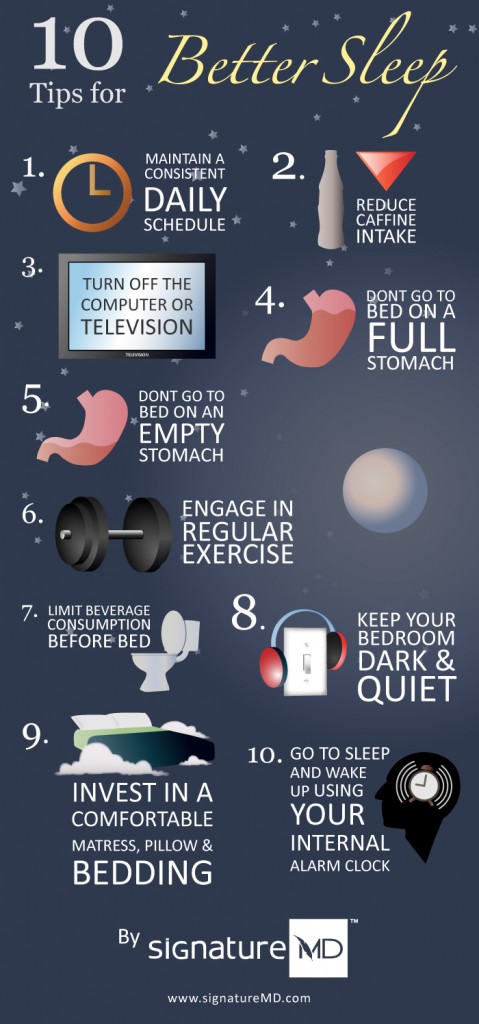
There is a great chart included below with 10 tips for better sleep. The additional tip is to take highly absorbable calcium and magnesium softgels before bed. In one study, published in the European Neurology Journal, researchers found that calcium levels in the body are higher during some of the deepest levels of sleep, such as the rapid eye movement (REM) phase. Restoration to the normal course of sleep was achieved following the normalization of the blood calcium level.
William Sears, M.D. writes: “Calcium helps the brain use the amino acid tryptophan to manufacture the sleep-inducing substance melatonin. This explains why dairy products, which contain both tryptophan and calcium, are one of the top sleep-inducing foods.”
In magnesium deficiency, chronic insomnia is one of the main, central symptoms. Sleep is usually agitated with frequent nighttime awakenings. On the other hand, a high magnesium, low aluminum diet has been found to be associated with deeper, less interrupted sleep. This was proven in a study done by James Penland at the Human Nutrition Research Center in North Dakota.
Sleep Minerals II is an effective insomnia remedy that contains highly absorbable forms of calcium and magnesium – the best minerals for insomnia, as well as for restless legs syndrome, bone strength, teenage insomnia, and menopause insomnia.
The formula also includes vitamin D and zinc and is delivered in a softgel form with healthy carrier oils, making it more quickly assimilated than tablets or capsules and providing a better, longer-lasting sleep. Oils such as rice bran oil have been shown to increase mineral absorption and improve bone density.
Richard P. of Parkville, Maryland says: “The Sleep Minerals are making quite a difference. I was regularly waking up at around 3:00 a.m. and after a few days use my sleep improved quite a lot. I wake up once a night to go to the bathroom, but the great thing is, I then fall back asleep and sleep several more hours. This has been a great improvement.”
For more information on Sleep Minerals II, click here.
Here’s to your good sleep,
Jobee Knight
President
Nutrition Breakthroughs.com
Studies Confirm Best Calcium/Magnesium Ratio – Dynamic Duo Remedies Insomnia
Posted on: March 6, 2014
 Calcium and magnesium have long been major players in the quest for achieving vibrant health. The pioneering nutritionist Adelle Davis says: “Calcium can be as soothing as a mother, as relaxing as a sedative, and as life-saving as an oxygen tent.” And James F. Balch, M.D., author of Prescription for Nutritional Healing says: “Supplementing with magnesium helps prevent irritability, nervousness, muscle weakness, high blood pressure, and heart disease.”
Nutrition-smart consumers should know the correct way to balance calcium and magnesium when taking supplements and be aware that the two act together as a synergistic team. Deficiencies of these minerals can contribute to nervous tension, an inability to relax, and insomnia. Dr. Balch says: “A lack of the nutrients calcium and magnesium will cause you to wake up after a few hours and not be able to return to sleep.”
In a breakthrough analysis study from the American Journal of Clinical Nutrition, Margaret Seelig, M.D. forwards the evidence that calcium and magnesium should be taken in a two to one ratio. Seelig says: “The Ca/Mg ratio of two to one (twice as much calcium as magnesium) has long been considered physiologic and best for normal functioning. This was confirmed on the basis of long-term metabolic studies in young men and women done by the Research Division of the U.S. Department of Agriculture.”
Seelig continues: “There is an example in Finland showing the effects of a diet which provides a high Ca/Mg intake of 4 to1, as well as high salt and alcohol intakes. This high Ca/Mg dietary ratio contributes to that country’s highest stroke and heart disease rate in the world in young and middle aged men. In Finland, this ratio of 4 to1 is common from childhood throughout life and osteoporosis is prevalent. (On the other hand), Japan, which has the most favorable Ca/Mg ratio, has the lowest incidence of heart disease.”
One way that a health-conscious consumer can find their way through the storm of conflicting nutritional advice is to base their choices on sound research studies. Adelle Davis was one of the first nutritionists to form her recommendations on scientific evidence. In her book ”Let’s Eat Right to Keep Fit”, she says: “The correct proportion appears to be approximately twice as much calcium as magnesium…Whenever a calcium supplement is used, magnesium likewise must be increased.”
An example of a well-balanced mineral supplement is Sleep Minerals II from NutritionBreakthroughs.com. It is a natural insomnia remedy which contains highly absorbable forms of calcium and magnesium, the best minerals for sleeplessness and insomnia, as well as for heart health, restless legs syndrome, bone strength, and menopause insomnia. The formula also includes vitamin D and zinc and is delivered in a softgel form with healthy carrier oils, making it more quickly absorbable than tablets or capsules and providing a deeper, longer-lasting sleep.
Richard P. of Parkville, Maryland says: “The Sleep Minerals are making quite a difference. I was regularly waking at around 3:00 a.m. and after a few days use my sleep improved quite a lot. I wake once a night to go to the bathroom, but the great thing is, I then fall back asleep and sleep several more hours. This has been a great improvement.”
Margaret Seelig, M.D. concludes that: “Administration of calcium supplements should be accompanied by appropriate magnesium supplementation. Increasing the magnesium intake protects against the risk of magnesium deficiency.”
For more information, visit the on Sleep Minerals II page.

In a study published in the European Journal of Nutrition, researchers found that drinking tart cherry juice resulted in significant improvements in sleep behaviors. These included longer sleep time, less daytime napping, and increased overall sleep efficiency (the ratio of the time spent in bed to the time spent sleeping).
They compared the results to other participants who were given a non-cherry juice drink. These benefits are credited to the high natural melatonin content of cherry juice. Melatonin is a natural hormone produced by the brain that regulates the sleep/wake cycles.
Regarding minerals as natural sleep aids, calcium is also directly related to our cycles of sleep. In one study, published in the European Neurology Journal, researchers found that calcium levels in the body are higher during some of the deepest levels of sleep, such as the rapid eye movement (REM) phase. The study concluded that disturbances in sleep, especially the absence of REM deep sleep or disturbed REM sleep, are related to a calcium deficiency. Restoration to the normal course of sleep was achieved following the normalization of the blood calcium level.
This health tip is provided by http://www.NutritionBreakthroughs, maker of the effective natural insomnia remedy Sleep Minerals II. Sleep Minerals II contains highly absorbable forms of the best known minerals for relaxation and sleep — calcium and magnesium, combined with vitamin D and zinc. The ingredients are formulated in a softgel with healthy oils, making them more quickly and fully assimilated than with tablets or capsules and providing a deeper, longer-lasting sleep.
Kimberly B. of Troy, Michigan says: “I have been taking Sleep Minerals II for about a month now. I have tried everything out there and this supplement is amazing. I have suffered with insomnia for 2 1/2 years. I have also had restless leg syndrome my entire life and this is the first relief I’ve ever had…gone for a month now.”
For more information on Sleep Minerals II visit http://www.nutritionbreakthroughs.com/html/sleep_remedy

The U.S. Food and Drug Administration has announced it is requiring users of the insomnia drug Ambien and its generic counterparts (all drugs containing the active ingredient zolpidem), to take a lower recommended dose of these medications. They are particularly aiming this toward women, as the drug stays in their system much longer than with men. Women at the time of menopause frequently have sleep problems and insomnia, and some may turn to sleep medications.
Ellis Unger, M.D., director of the Office of Drug Evaluation in the FDA’s Center for Drug Evaluation and Research said: “Over the years FDA has received spontaneous adverse event reports of driving impairment and motor vehicle accidents associated with zolpidem, but these reports lacked the information necessary to fully understand whether and how zolpidem affected people’s mental alertness and ability to drive. Recently, data from clinical trials and other types of studies have become available, which allowed FDA to better characterize the risk of next-morning impairment.”
According to the FDA press release: “The FDA has informed the manufacturers that the recommended dosage of zolpidem for women should be lowered from 10 milligrams (mg) to 5 mg for immediate-release products (Ambien, Edluar, and Zolpimist) and from 12.5 mg to 6.25 mg for extended-release products (Ambien CR). For men, the FDA has informed the manufacturers that the labeling should recommend that health care professionals consider prescribing these lower doses.”
Along the lines of natural insomnia remedies, nature has provided us with some natural sleep aids and relaxants that have stood the test of time. Regarding mineral deficiency as we age and at the time of menopause, the pioneering nutritionist Adelle Davis says, “The amount of calcium in a woman’s blood parallels the activity of the ovaries. During the menopause, the lack of ovarian hormones (estrogen and progesterone) can cause severe calcium deficiency symptoms to occur, including irritability, hot flashes, night sweats, leg cramps, and insomnia. These problems can be easily overcome if the intakes of calcium, magnesium, and vitamin D are all generously increased and are well absorbed.”
Chronic insomnia is one of the main symptoms of magnesium deficiency. Sleeping with a magnesium deficiency is usually agitated, with frequent nighttime awakenings. On the other hand, a high magnesium diet has been found to be associated with deeper, less interrupted sleep. This was shown in a study done by James Penland at the Human Nutrition Research Center in North Dakota.
One natural sleep aid that is gaining in popularity is Sleep Minerals II from Nutrition Breakthroughs. It contains highly absorbable forms of calcium and magnesium, the best minerals for sleeplessness and insomnia, as well as for restless leg syndrome, bone strength, aches and pains, and menopause insomnia. The formula also includes vitamin D and zinc and is delivered in a softgel form with healthy carrier oils, making the minerals more quickly assimilated than tablets or capsules. The softgel formulation provides a deeper, longer-lasting sleep and is an effective alternative to medications.
L.R.C. of Massachusetts says: “Due to some very stressful issues in my life, I hadn’t slept much in two and a half months before being prescribed sleeping drugs. I had become dependent on them and couldn’t sleep without them. I did my research on the Internet and came across Sleep Minerals II. I take this before bed and now I can sleep through the night without drugs. If I do have to get up, I can fall right back asleep. Another benefit is it also helps alleviate my chronic fatigue and aches and pains.”
Natural sleep aids can be effective against insomnia, without risking the side effects of drugs.
For more information on Sleep Minerals II visit this page: http://www.nutritionbreakthroughs.com/sleep minerals ii

Some people as they approach middle age may find it more difficult to stay asleep during the night. This may be due to the decline of hormones in the body, such as estrogen in women or testosterone in men. They can fall asleep okay and the first part of their night is fine, but at around 2:00 or 3:00 a.m. or at multiple times, some find themselves habitually awake and unable to get back to sleep. Here are some sleep tips that may help:
1. Use a black eye mask to cover your eyes and use earplugs to keep the noise out. A dark, cool room is most ideal to help the body produce melatonin, the hormone produced by the brain which helps to regulate sleep and wake cycles.
2. Get some sunlight by taking a walk during the day. Being out in the sun will also set your wake-sleep cycle in a good way. Additionally, the exercise and body movement helps with a better, more restful sleep at night.
3. If headaches or tension are keeping you up, try using some magnesium. One German study found that 42 percent of the people taking magnesium reduced the duration and intensity of their migraine headaches.
4. For females that experience hot flashes and night sweats during the night, take some extra steps to keep yourself and your bedroom cool at night. Wear lighter bedclothes, use less blankets, and you can also use a slightly damp washcloth on your forehead or neck.
5. Calcium is directly related to our cycles of sleep, therefore highly absorbable calcium and magnesium supplements are effective. The pioneering nutritionist Adelle Davis advises that during pre-menopause or menopause, the lack of estrogen and progesterone can cause severe calcium deficiency symptoms to occur such as irritability, leg cramps, insomnia, hot flashes and night sweats.
6. It can work well for some people to take a calcium and magnesium supplement before bed. These minerals are natural relaxants that can carry one through the night better, and with less sleep interruptions. Softgels that use natural oils mixed with the minerals are more fully absorbed. These should have a 2 to 1 calcium to magnesium ratio (twice as much calcium as magnesium).
An example of an effective mineral-based insomnia remedy is Sleep Minerals II by www.NutritionBreakthroughs.com. This natural sleep aid contains absorbable forms of calcium and magnesium, the best minerals for sleep and insomnia, heart health, restless legs syndrome, bone strength, and menopause insomnia. The formula is delivered in a softgel form with healthy carrier oils, making it more quickly absorbable than tablets or capsules and providing a deeper, longer-lasting sleep.
Richard P. of Parkville, Maryland says: “The Sleep Minerals are making quite a difference. I was regularly waking up at around 3:00 a.m. and after a few days use my sleep improved quite a lot. I wake up once a night to go to the bathroom, but the great thing is, I then fall back asleep and sleep several more hours. This has been a great improvement.”
For more information on Sleep Minerals II visit: http://www.nutritionbreakthroughs.com/html/sleep_remedy
The U.S. Food and Drug Administration has announced it is requiring users of the insomnia drug Ambien and its generic counterparts (all drugs containing the active ingredient zolpidem), to take a lower recommended dose of these medications. They are particularly aiming this toward women, as the drug stays in their system much longer than with men. Women at the time of menopause frequently have sleep problems and insomnia, and some may turn to sleep medications.
Ellis Unger, M.D., director of the Office of Drug Evaluation in the FDA’s Center for Drug Evaluation and Research said: “Over the years FDA has received spontaneous adverse event reports of driving impairment and motor vehicle accidents associated with zolpidem, but these reports lacked the information necessary to fully understand whether and how zolpidem affected people’s mental alertness and ability to drive. Recently, data from clinical trials and other types of studies have become available, which allowed FDA to better characterize the risk of next-morning impairment.”
According to the FDA press release: “The FDA has informed the manufacturers that the recommended dosage of zolpidem for women should be lowered from 10 milligrams (mg) to 5 mg for immediate-release products (Ambien, Edluar, and Zolpimist) and from 12.5 mg to 6.25 mg for extended-release products (Ambien CR). For men, the FDA has informed the manufacturers that the labeling should recommend that health care professionals consider prescribing these lower doses.”
Along the lines of natural insomnia remedies, nature has provided us with some natural sleep aids and relaxants that have stood the test of time. Regarding mineral deficiency as we age and at the time of menopause, the pioneering nutritionist Adelle Davis says, “The amount of calcium in a woman’s blood parallels the activity of the ovaries. During the menopause, the lack of ovarian hormones (estrogen and progesterone) can cause severe calcium deficiency symptoms to occur, including irritability, hot flashes, night sweats, leg cramps, and insomnia. These problems can be easily overcome if the intakes of calcium, magnesium, and vitamin D are all generously increased and are well absorbed.”
Chronic insomnia is one of the main symptoms of magnesium deficiency. Sleeping with a magnesium deficiency is usually agitated, with frequent nighttime awakenings. On the other hand, a high magnesium diet has been found to be associated with deeper, less interrupted sleep. This was shown in a study done by James Penland at the Human Nutrition Research Center in North Dakota.
One natural sleep aid that is gaining in popularity is Sleep Minerals II from www.NutritionBreakthroughs. It contains highly absorbable forms of calcium and magnesium, the best minerals for sleeplessness and insomnia, as well as for restless leg syndrome, bone strength, aches and pains, and menopause insomnia. The formula also includes vitamin D and zinc and is delivered in a softgel form with healthy carrier oils, making the minerals more quickly assimilated than tablets or capsules. The softgel formulation provides a deeper, longer-lasting sleep and is an effective alternative to medications.
L.R.C. of Massachusetts says: “Due to some very stressful issues in my life, I hadn’t slept much in two and a half months before being prescribed sleeping drugs. I had become dependent on them and couldn’t sleep without them. I did my research on the Internet and came across Sleep Minerals II. I take this before bed and now I can sleep through the night without drugs. If I do have to get up, I can fall right back asleep. Another benefit is it also helps alleviate my chronic fatigue and aches and pains.”
Natural sleep aids can be effective against insomnia, without risking the side effects of drugs.
For more information on Sleep Minerals II visit this web site:

What are hot flashes?
A hot flash, also called hot flush, is a sudden feeling of warmth and often a breakout of sweating in the upper half of the body. When these occur at night, they are called night sweats. Hot flashes are caused by a reduced function in the body’s temperature regulation, which is brought about by changing hormone levels.
When estrogen in women, or testosterone in men is depleted, a rapid increase in skin temperature can occur due to dilatation (widening) of the skin blood vessels — and it can become frequent. This process of blood vessel dilation is the body’s way to release the heat.
Night sweats and hot flashes can become a form of insomnia in which a woman wakes up drenched in sweat and unable to sleep. Regarding mineral deficiency at the time of menopause, the pioneering nutritionist Adelle Davis says, “The amount of calcium in a woman’s blood parallels the activity of the ovaries. During the menopause, the lack of ovarian hormones (estrogen and progesterone) can cause severe calcium deficiency symptoms to occur, including irritability, hot flashes, night sweats, leg cramps, and insomnia. These problems can be easily overcome if the intakes of calcium, magnesium, and vitamin D are all generously increased and are well absorbed.”
One natural remedy that is showing good results for hot flashes and night sweats, as well as insomnia, is Sleep Minerals II from www.NutritionBreakthroughs. Sleep Minerals II contains powerful forms of calcium and magnesium, the best known minerals for sleeplessness, bone strength, and menopause symptoms such as hot flashes. The ingredients are formulated in a softgel with healthy oils, making them more quickly absorbable than tablets or capsules and providing a deeper, longer-lasting sleep.
Anita L. of New Caney, Texas says: “I was having hot flashes every 30 minutes to an hour through the night and was so miserable. After about two weeks of taking the Sleep Minerals, I noticed an incredible difference with my sleep. I have much less interruption from flashes, I’m sleeping much better, and I’m a lot more comfortable.”
Valerie H. of Santa Clarita, California says: “I had such severe menopause insomnia it took me hours to fall asleep even though I was extremely tired. My legs also had crawling and tingling feelings at night. I got the Sleep Minerals and after a few days, it started to work really well. I fall asleep now within 20 minutes and no more restless legs.”
For more information, visit the Sleep Minerals II page.

Source: http://www.lifed.com/the-5-best-natural-sleep-remedies
There are few things that feel worse than being exhausted, yet unable to sleep. In addition to insomnia (the inability to fall or stay asleep), many people also suffer from poor sleep quality, which can cause you to feel sleepy during the day despite getting eight or more hours of rest.
If you frequently have trouble getting a decent night’s sleep, it’s a good idea to see your doctor to rule out/treat any underlying conditions, such as sleep apnea or depression. For many people, sleep problems can be remedied naturally with lifestyle changes and proper nutrition. The following are five natural, safe and effective remedies that might help you get some good shut-eye.
1. Magnesium
Magnesium is an essential mineral that our bodies need for a multitude of biological roles, ranging from bone health to mental health. Human and animal studies also indicate that magnesium plays an important role in sleep, and that magnesium therapy can help insomnia sufferers. Although magnesium is available in a multitude of foods, the USDA says that 57 percent of Americans do not meet the recommended daily allowance (RDA) for magnesium. So how can you get more of this essential sleep nutrient? One method is to eat more foods with magnesium – fibrous foods, such as whole grains, nuts and vegetables are generally high in this mineral. Magnesium supplements in daily doses of less than 350 mg are also considered safe for most adults. Magnesium supplements can also help relieve constipation – another common consequence of a typical fiber-deficient American diet.
2. Sunlight
Although it may seem counterintuitive that bright light can actually help you sleep, getting enough natural light during the day is important for maintaining circadian rhythms that control our sleep-wake cycles. While many of us don’t get sufficient sunlight because we work indoors all day and/or live in a place that doesn’t get a lot of sunlight for much of the year, people who work night-shifts can be especially light-deprived. There is also a growing body of evidence suggesting that vitamin D, a nutrient we get from certain foods and from exposure to ultraviolet light, has wide-ranging health implications, and that a lack of it may cause insomnia and other serious health problems. To get enough sunlight and vitamin D for good health and good sleep, experts recommend getting 10 to 20 minutes of direct sunlight exposure each day – ideally, in the morning hours. Light therapy boxes and vitamin D supplements (in typical therapeutic doses) are also considered safe and effective.
3. Yoga
Another major culprit for poor sleep is a lack of physical activity. America’s population is largely sedentary, spending most of the day sitting in a chair at work, sitting in the car while commuting, and sitting in front of the TV when we get home. Unless we find a way to incorporate some exercise into our daily routine, your body may not be tired enough to sleep well at night – even though your mind is exhausted. Exercise is also important for relieving stress and tension that accompany our modern, hectic lifestyles. Although you should aim to get at least 20 to 30 minutes of exercise every day for good sleep and for good health in general, exercising vigorously within several hours of bedtime can actually interfere with your sleep. For this reason, gentle yoga, with its series of tension-relieving stretches and meditative elements, is an excellent type of exercise that you can practice in the evening to help you sleep – you can even do certain poses in bed! A 2010 University of Rochester study found that cancer survivors with insomnia who practiced gentle yoga for four weeks reported improved sleep quality and decreased use of sleep aids during the program’s duration.
4. Good sleep hygiene
Although it sounds like it might have to do with the cleanliness of your sheets, the term “sleep hygiene” is actually used to refer to your overall sleep environment and habits that can affect your sleep quality. Many of the factors that impact our sleep quality are environmental or have to do with our nighttime behaviors. The following elements are considered by sleep experts to be important components of good sleep hygiene:
* Going to sleep at the same time every night, and waking up at the same time each morning.
* Limiting or avoiding consumption of caffeine, nicotine and alcohol – all of which can impair sleep quality or make it hard to fall asleep.
* Avoiding late-night exposure to bright electronic screens, e.g., iPads, smartphones, TVs, computers, etc., which can disrupt circadian rhythms.
* Relaxing before bed with a warm bath or another restful activity. Lavender aromatherapy may also help relax you before bed to combat insomnia.
* Using the bedroom only for sleep and sex – not for watching TV or working from your laptop, for example.
* Making sure your sleeping environment is sufficiently cool, dark and quiet.
5. B-vitamins
Like magnesium and vitamin D, B-vitamins are also important nutrients for sleep. In particular, B-6 is important for the production of serotonin, a “feel good” hormone which aids sleep and combats anxiety and restlessness that can keep you awake; and folic acid (B-9) deficiency has been found in those with insomnia and in those with depression, a condition which is often implicated in insomnia. Vitamin B-12 is also needed for good sleep and mental health, and certain populations, including seniors and vegans, are more likely to be deficient in this vitamin. Additionally, niacin, or B-3, has been shown to increase REM sleep and help with depression. Good food sources of B vitamins include animal products such as fish and dairy, and whole, unprocessed foods such as whole grains, beans, and green, leafy vegetables. Taken at recommended doses, B vitamin supplements are also generally considered to be quite safe, as they are water-soluble, meaning that any excess vitamins will be excreted through the urine.
Comment from the blog author Nutrition Breakthroughs: This information is provided by http://NutritionBreakthroughs.com, maker of the effective natural insomnia remedy Sleep Minerals II. Sleep Minerals II contains highly absorbable forms of calcium and magnesium, the best minerals for sleep, relaxation, heart health, restless legs syndrome, bone strength and menopause insomnia. The formula also includes vitamin D and zinc, and is delivered in a softgel form with healthy carrier oils, making it more quickly absorbable than tablets or capsules and providing a deeper, longer-lasting sleep.
Kimberly B. of Troy, Michigan says: “I have been taking Sleep Minerals II for about a month now. I have tried everything out there and this supplement is amazing. I have suffered with insomnia for 2 1/2 years. I have also had restless leg syndrome my entire life and this is the first relief I’ve ever had…gone for a month now.”
For more information on Sleep Minerals II visit www.nutritionbreakthroughs.com/html/sleep_remedy_for_insomnia_help.html
 News on Natural Remedies, Good Sleep and Good Health